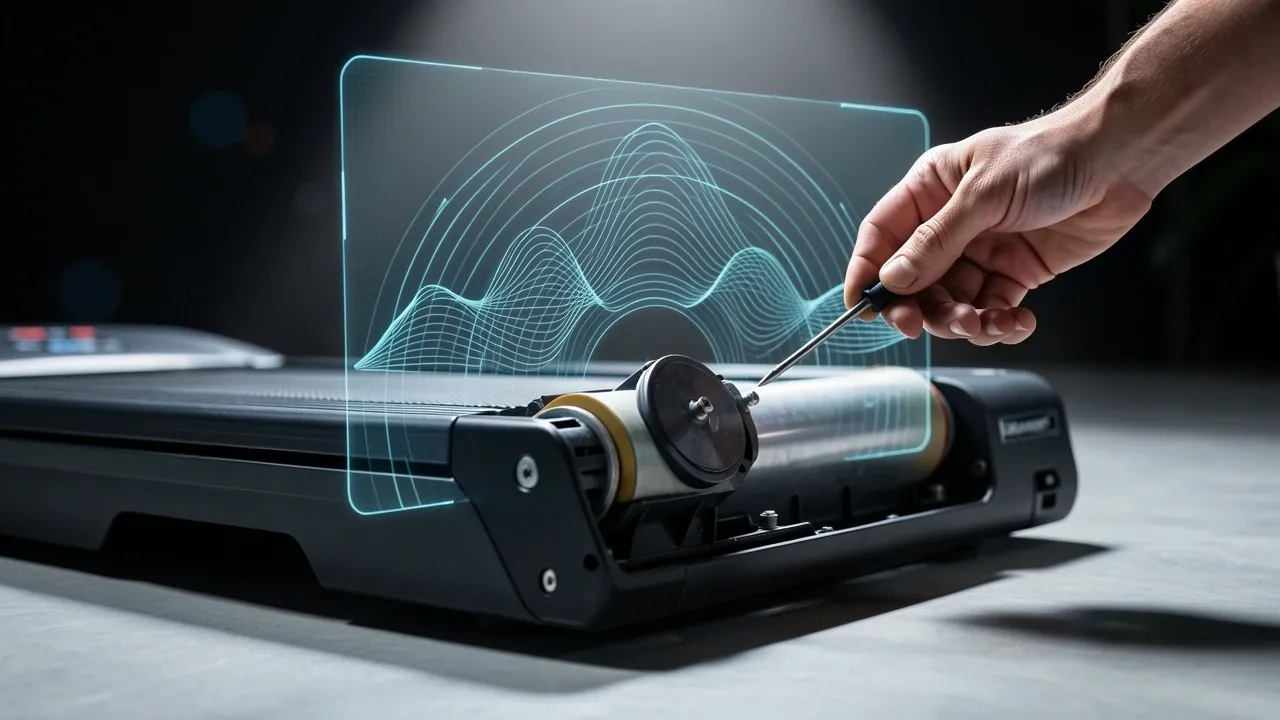
Why Does My Walking Pad Keep Tripping the Breaker

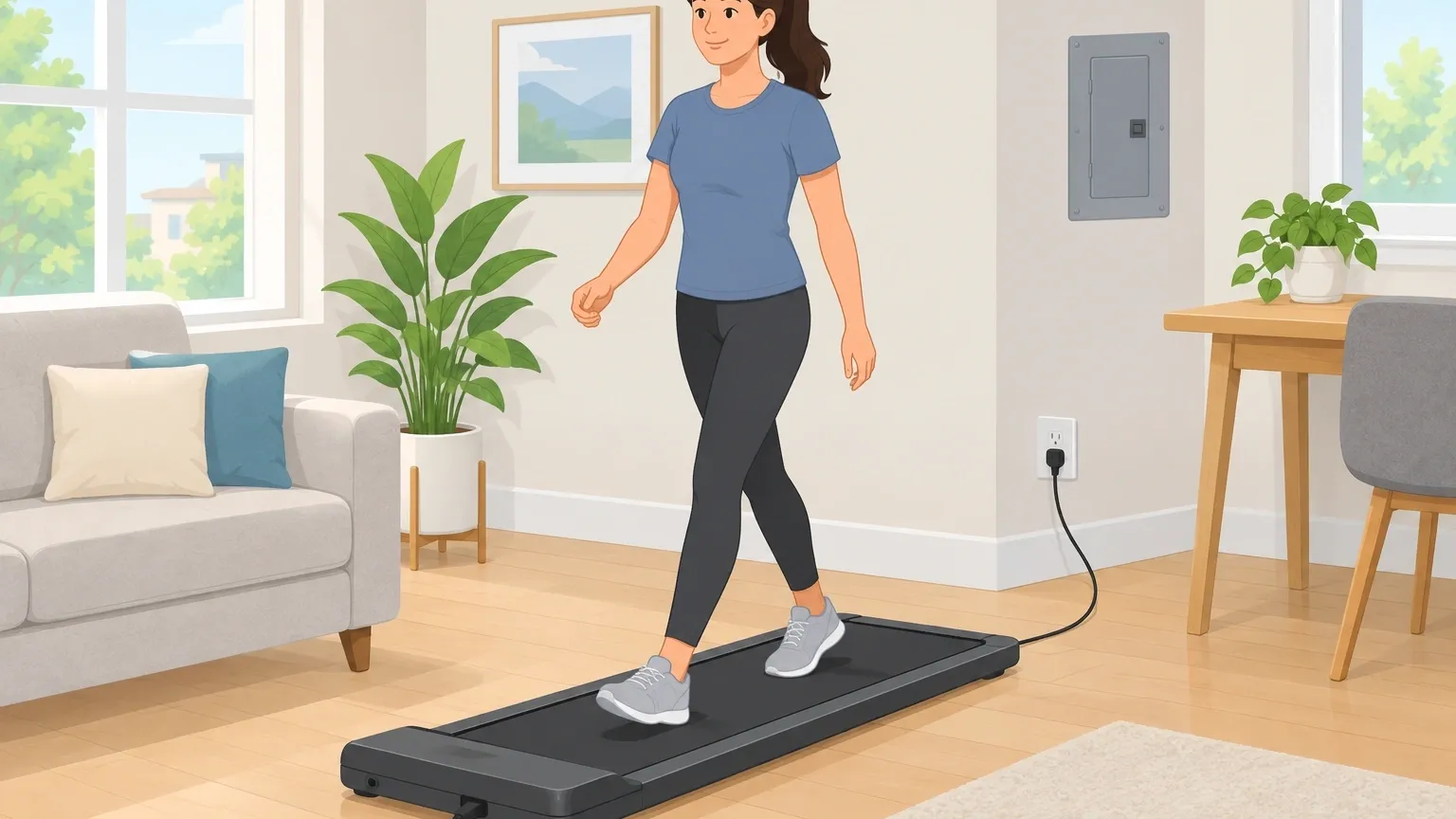
You are in the middle of a good walk, you nudge the speed up a notch, and boom — the whole thing shuts off. The breaker flips, the lights flicker, and your workout is done.
I have been there, and I know how frustrating it is. The good news is that this problem is almost never a sign that your walking pad is broken beyond repair.
It is almost always an electrical mismatch between what the motor needs and what your home’s wiring can handle.
In my experience fixing these machines and talking to other owners, the breaker trip when you increase speed comes down to three things: a failing motor component, a hypersensitive breaker, or an underpowered circuit.
Let me walk you through each one so you can pinpoint the fix and get back to walking.
What Actually Happens Inside the Walking Pad When You Speed Up
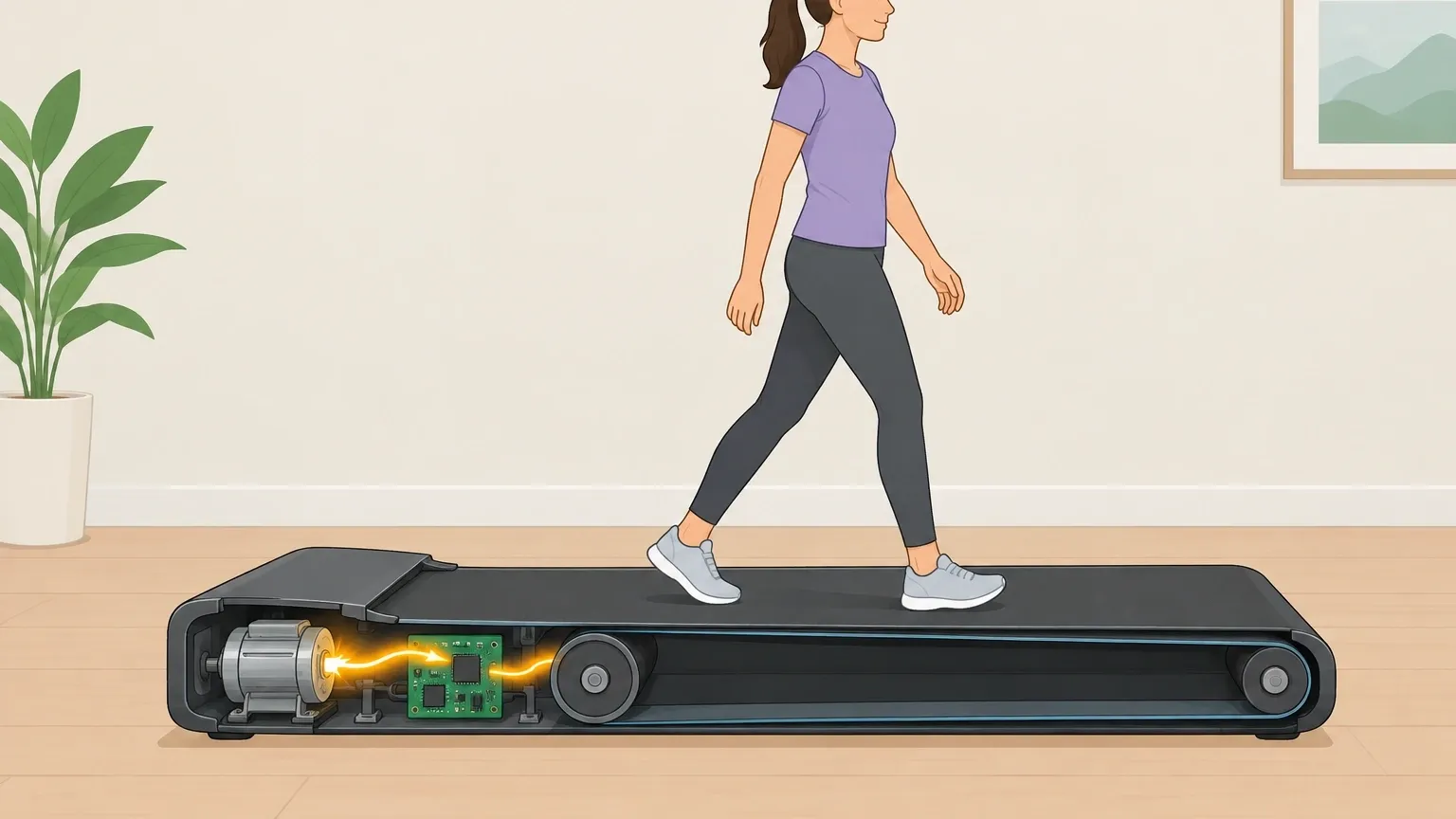
When you press the speed button, the motor controller sends a burst of power to the motor to overcome inertia.
That initial surge — called inrush current — can be two to three times higher than the running current. A healthy motor with good capacitors and brushes handles this surge cleanly.
But if any part is worn, the electrical load turns into a chaotic spike that modern safety breakers interpret as a fault.
Most homes built in the last 20 years have either GFCI (ground fault) or AFCI (arc fault) breakers in garages and basements. These breakers are designed to detect tiny imbalances or electrical noise.
The noise from a walking pad’s motor controller, especially during speed transitions, looks exactly like a ground fault or arc to them. So they trip, even though nothing is truly dangerous.
If you are in a garage or on a concrete floor, static electricity can also play a role.
But in my experience, consistent tripping only at speed changes points to something inside the machine, not static.
Step 1: Confirm What Kind of Breaker You Are Dealing With
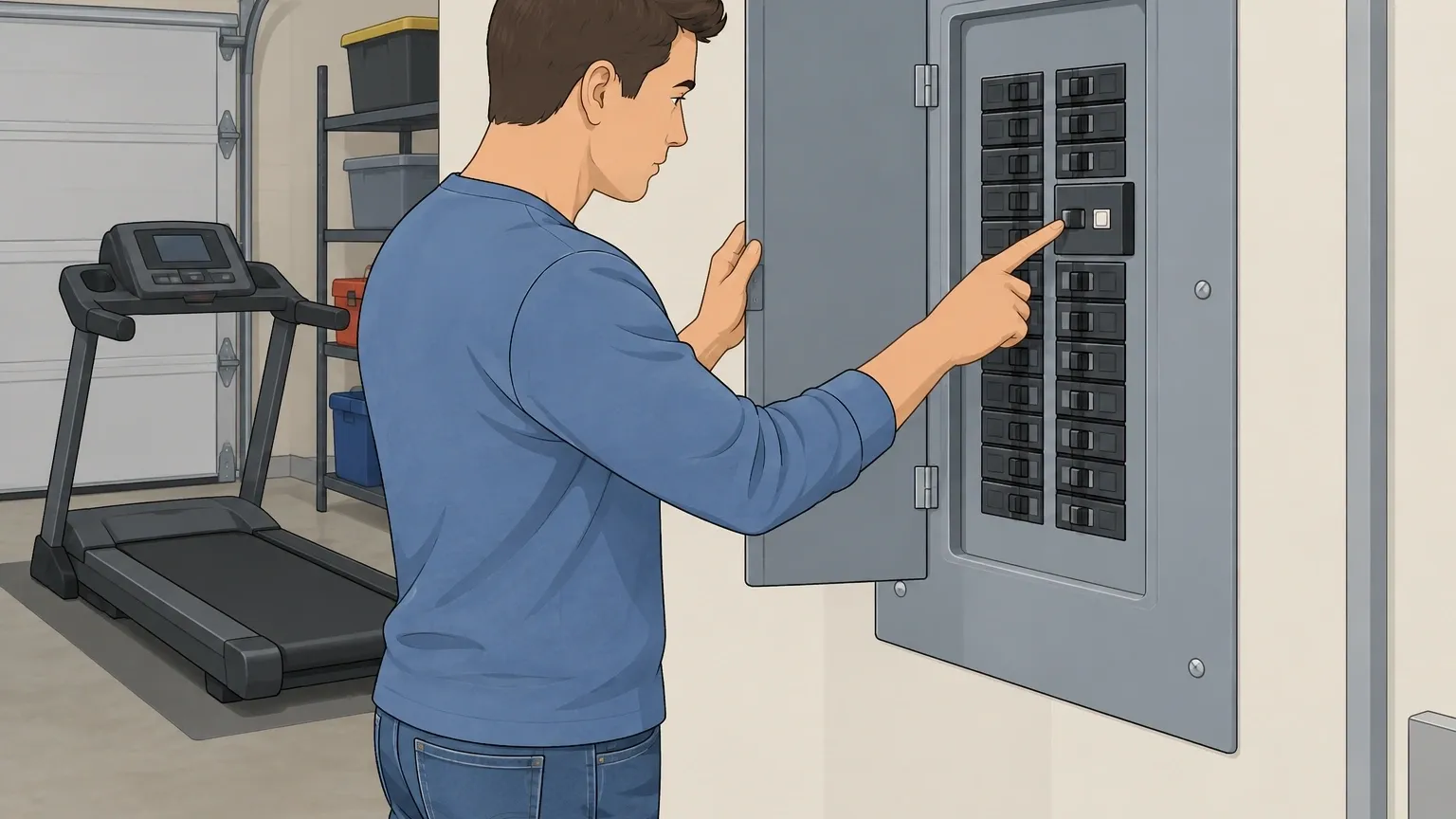
Before you open anything, look at your breaker panel. Find the breaker that controls the outlet where your walking pad is plugged in. Does it have a test button? Is it labeled “GFCI” or “AFCI”?
- Standard breaker (no test button): Trips only on overload (too many amps drawn for too long). If this trips during speed increase, the motor is pulling seriously high current — likely a mechanical or electrical problem inside the pad.
- GFCI breaker: Trips on small current imbalances. This is the most common culprit. The walking pad’s motor controller leaks a tiny amount of current or noise that the GFCI misreads as a ground fault.
- AFCI breaker: Trips on arc-like signatures. These are hypersensitive to the electrical noise from PWM motor controllers. Speed changes create sharp voltage spikes that look like arcs to the breaker.
If you have a GFCI or AFCI, the problem might not be a worn part at all — it could just be the breaker’s sensitivity. But do not jump to replacing the breaker yet. First, check the machine itself.
Step 2: Inspect the Three Motor Components That Cause Tripping
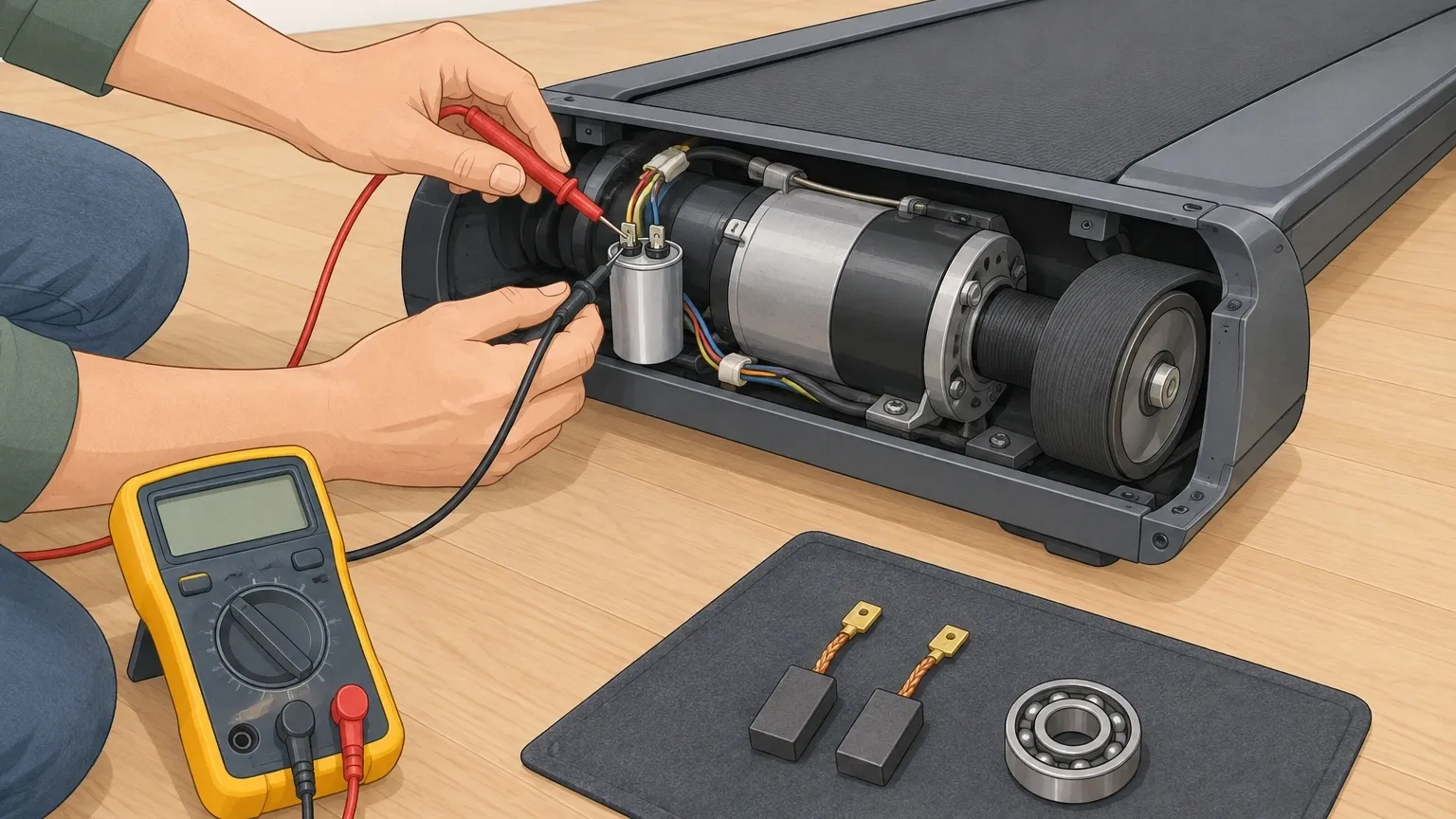
I have fixed dozens of walking pads that tripped breakers only during speed changes, and nine times out of ten the fix was cheap and simple.
These are the components that wear out and cause the motor to demand too much power or send dirty power back to the breaker.
Motor Capacitor
The capacitor stores energy and releases it during startup to give the motor extra torque.
If the capacitor is weak — bulging, leaking, or reading more than 20% below its rated microfarads — it cannot supply that startup surge cleanly.
The motor then tries to pull that energy directly from the wall, spiking the current and tripping the breaker.
To test a capacitor, you need a multimeter with a capacitance setting. Discharge the capacitor first (safely, with a resistor or screwdriver), remove it, and read the value.
A typical walking pad motor uses a capacitor rated between 10 µF and 40 µF. If it reads 8 µF on a 10 µF cap, replace it. Capacitors cost around $10 to $20 and are easy to swap.
Carbon Brushes
Brushes are the small carbon blocks that press against the motor armature to transfer power. Over time they wear down.
When they get shorter than a quarter inch, or if the contact surface is chipped or uneven, they start to arc under high load. That arcing creates electrical noise and voltage instability.
The breaker — especially an AFCI — sees that arcing and trips immediately.
I recommend pulling the motor housing and checking the brushes first. Most walking pads have removable brush caps. If the brushes are worn, replace them.
A pair of brushes costs about $5 to $15, and this alone fixes the speed-change tripping in a huge number of cases.
Motor Bearings
Bearings that are dry or seized create mechanical drag. The motor has to work harder to spin the belt. At higher speeds, the resistance increases, and the motor draws more current to compensate.
That extra draw can exceed the breaker’s rating or create enough electrical noise to trip a sensitive breaker.
Spin the walking belt by hand with the power off. If you feel grinding or the belt moves stiffly, the bearings are likely bad.
Replacing bearings is a bit more involved, but still a DIY job if you are handy.
Step 3: Rule Out the “Shared Circuit” Trap
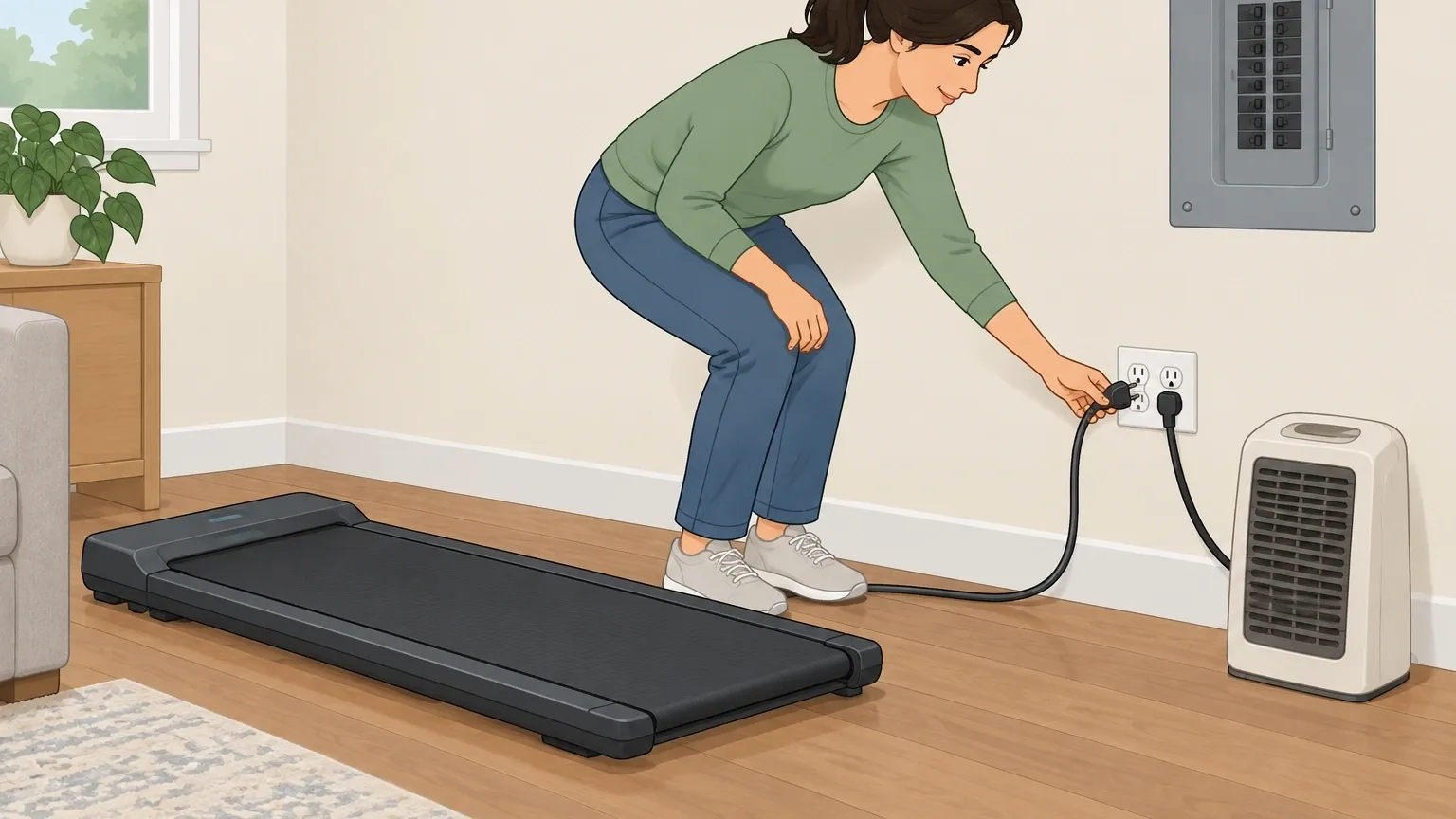
A walking pad with a 1HP or larger motor can pull 10 to 12 amps continuously. At startup, that can spike to 15 or even 20 amps for a fraction of a second.
If your circuit is also powering a freezer, a space heater, or other appliances, the cumulative load can push the breaker over its limit — especially during that startup spike.
But here is the key: if the breaker trips only when you increase speed, and not when you start from a stop at a low speed, the issue is likely not a simple overload.
Overloads usually happen when you are running at a high speed for a while, or when multiple devices are on at once.
Tripping exactly at the moment of a speed change suggests the inrush current is too high for the circuit’s tolerance — either because of a weak motor component (see Step 2) or because the circuit is already close to its limit.
Unplug everything else on that circuit and try again. If the tripping stops, you know the problem is an overloaded circuit.
Consider running a dedicated 15-amp circuit for the walking pad, or at least ensure nothing else is sharing that outlet during use.
Step 4: The Difference Between a Power Conditioner and a Surge Protector
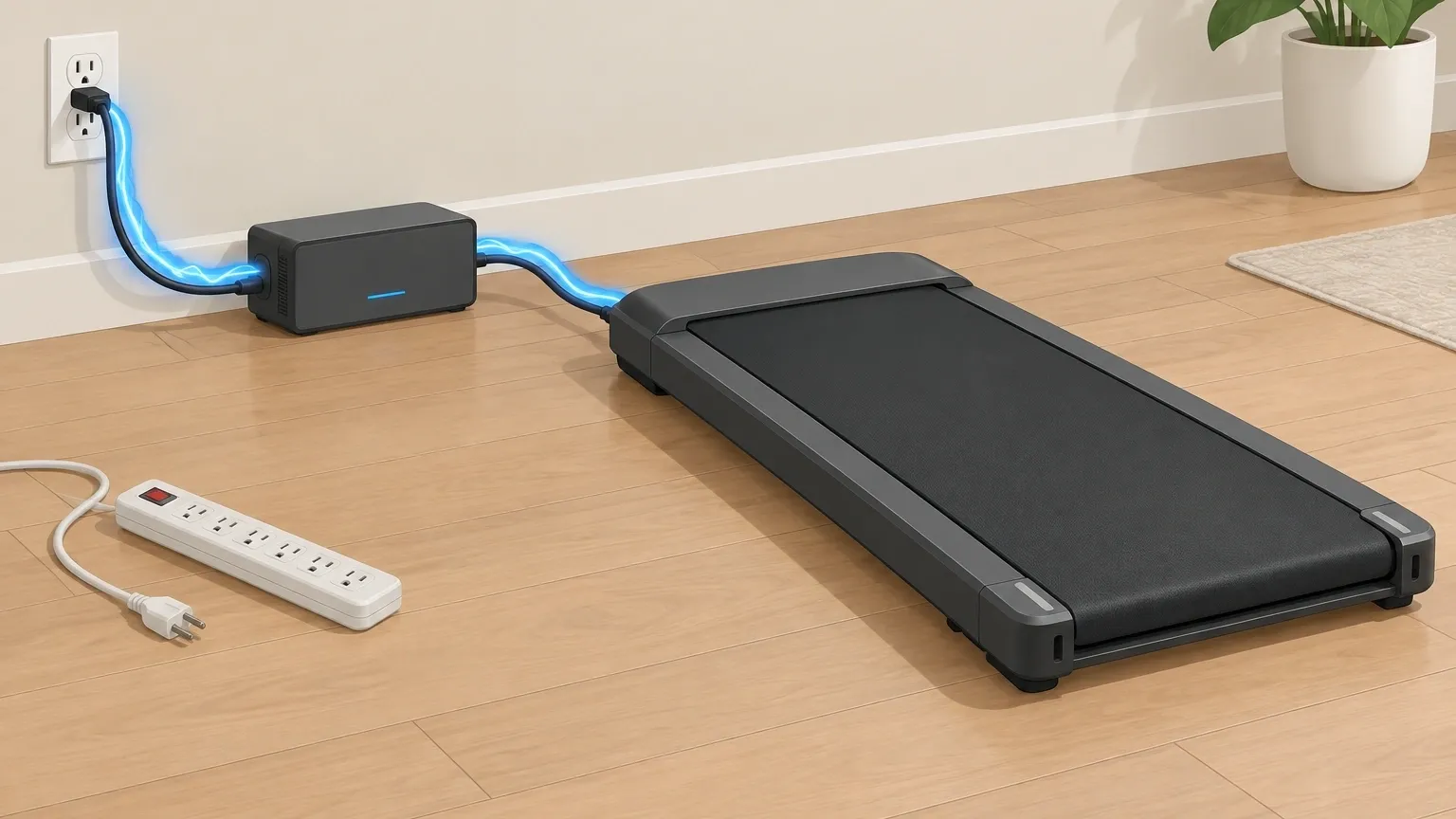
Some people recommend plugging your walking pad into a power conditioner or isolation transformer. These devices filter out the electrical noise that GFCI and AFCI breakers hate.
They do not fix a worn motor, but they can solve a pure sensitivity issue.
A power conditioner is different from a basic surge protector.
A surge protector only clamps voltage spikes — like from lightning — but does nothing to clean up the constant noise from a motor controller.
A power conditioner (or line filter) smooths out those high-frequency spikes so the breaker sees clean power.
I have seen power conditioners work well when the walking pad is healthy but the breaker is just too sensitive. They cost between $30 and $80.
But I always recommend doing the component checks first, because if the motor brushes or capacitor are bad, a power conditioner will only mask the problem until the motor fails completely.
Step 5: When to Call an Electrician
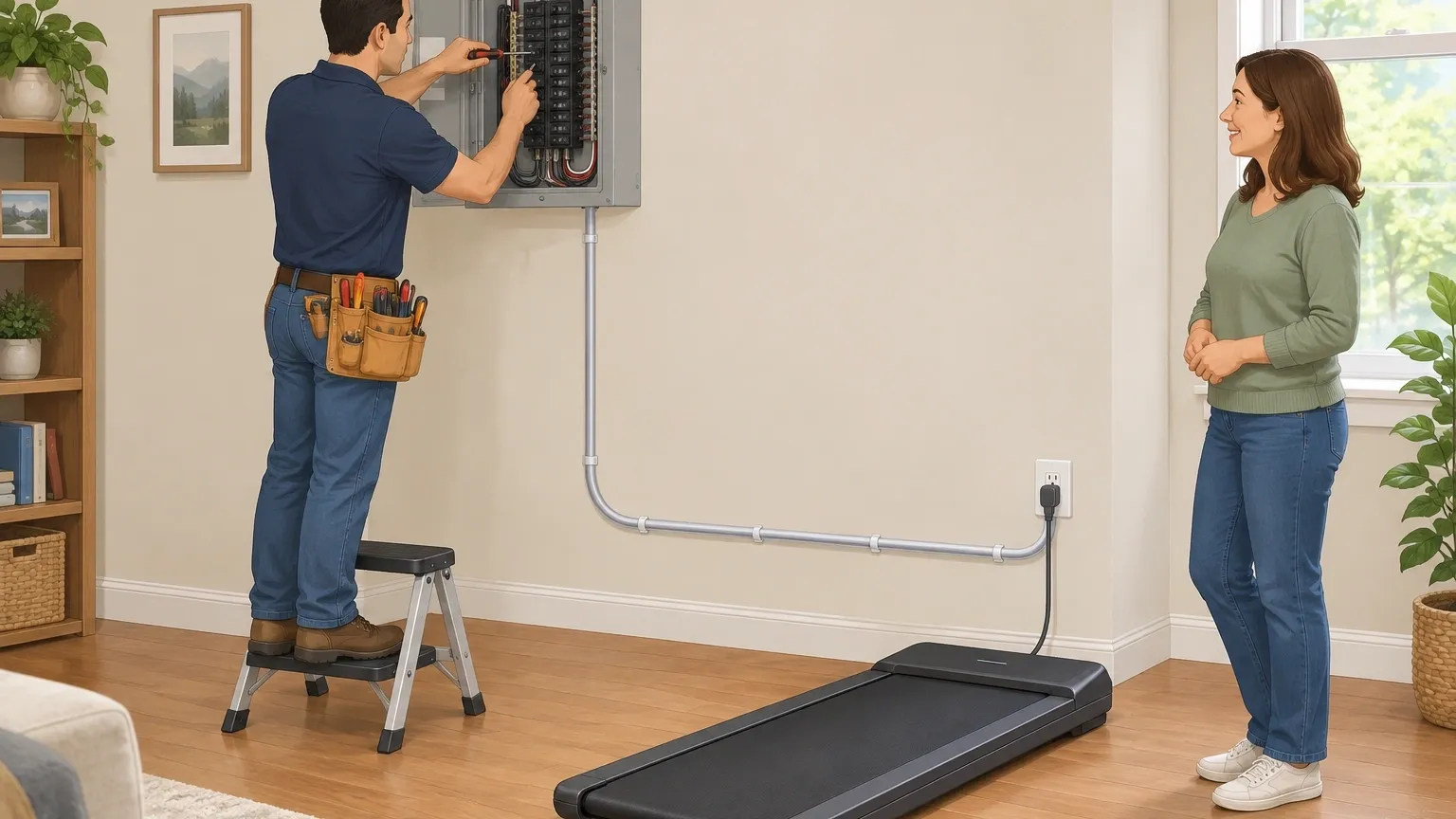
If you have replaced the brushes and capacitor, confirmed the circuit is not overloaded, and even tried a power conditioner, but the breaker still trips when you increase speed — it might be time for a dedicated circuit.
An electrician can run a new 15-amp line from your panel to the outlet. This gives the walking pad its own path with no other loads and no shared breakers.
Do not be tempted to swap a 15-amp breaker for a 20-amp breaker on the same wiring. That is dangerous. The wiring is sized for the breaker rating.
A bigger breaker will allow more current before tripping, but the wires could overheat and start a fire. Always follow code.
Another option is to replace the GFCI or AFCI breaker with a “high magnetic” or “industrial” type breaker that is less sensitive to motor noise.
But this should only be done by a licensed electrician, and only after you have confirmed the machine itself is safe.
Myths About Walking Pad Breaker Trips
I want to clear up a couple of common misconceptions I hear from owners.
Myth: “I just need a 20-amp circuit.” A higher amp breaker does not fix dirty power.
If the problem is noise or arcing from worn brushes, a 20-amp breaker will still trip if it is a GFCI or AFCI.
And if the motor is pulling that much current, the motor itself will burn out before the breaker trips. Fix the motor first.
Myth: “Walking pads don’t need dedicated circuits.” They do if you are sharing an outlet with major appliances. A 1.5HP motor can easily pull 12 amps continuous.
Add a freezer pulling 5 amps, and you are right at the limit of a 15-amp circuit. The startup surge pushes it over. A dedicated 15-amp circuit is the cleanest solution.
Frequently Asked Questions
My walking pad trips the breaker after exactly 10 minutes of running. Why?
This is often a thermal overload. The motor has a thermal cutout that trips when it gets too hot. The cutout might be failing prematurely, or the internal ventilation is blocked.
Clean the motor vents and check for dust buildup. If the problem persists, the motor windings may be damaged from overuse.
Does the incline setting affect breaker tripping?
Absolutely. Incline increases the mechanical load on the motor. If the walking pad only trips when you raise the deck, the motor is struggling to turn the mass.
The capacitor is likely failing under high torque. Replace the capacitor first.
Can heavy static electricity in the walkway cause the GFCI to trip?
Yes, but it is rare. If you feel shocks when touching the machine, static buildup could be causing the GFCI to see a false ground fault. A rubber mat under the walking pad can help.
But if the tripping is consistent with speed changes and not just random static discharges, the issue is motor noise, not static.
What if my walking pad motor smells like burnt plastic after a trip?
Stop using it immediately. The motor windings are overheating. This is a sign of a seized bearing or a dead capacitor. Running it further will destroy the motor.
Have it serviced or replace the motor assembly.
Most of the time, a walking pad that trips the breaker only when you increase speed is fixable with a simple part swap. Check the brushes, test the capacitor, and clean the bearings.
Do that, and chances are you can skip the electrician call and get back to walking within an hour.