Are Walking Pads Easy to Move?

If you are asking whether walking pads are easy to move, the honest answer is: for most people, no. But how hard it is depends on a few specific things you can control.
I bought one expecting to slide it under my desk and back out again without thinking.
After the first week, I realized the marketing photos left out the awkward shimmying, the scratched baseboards, and the heavy front end that makes lifting feel uneven. Here is what I learned.
Why Most Walking Pads Are Hard to Move
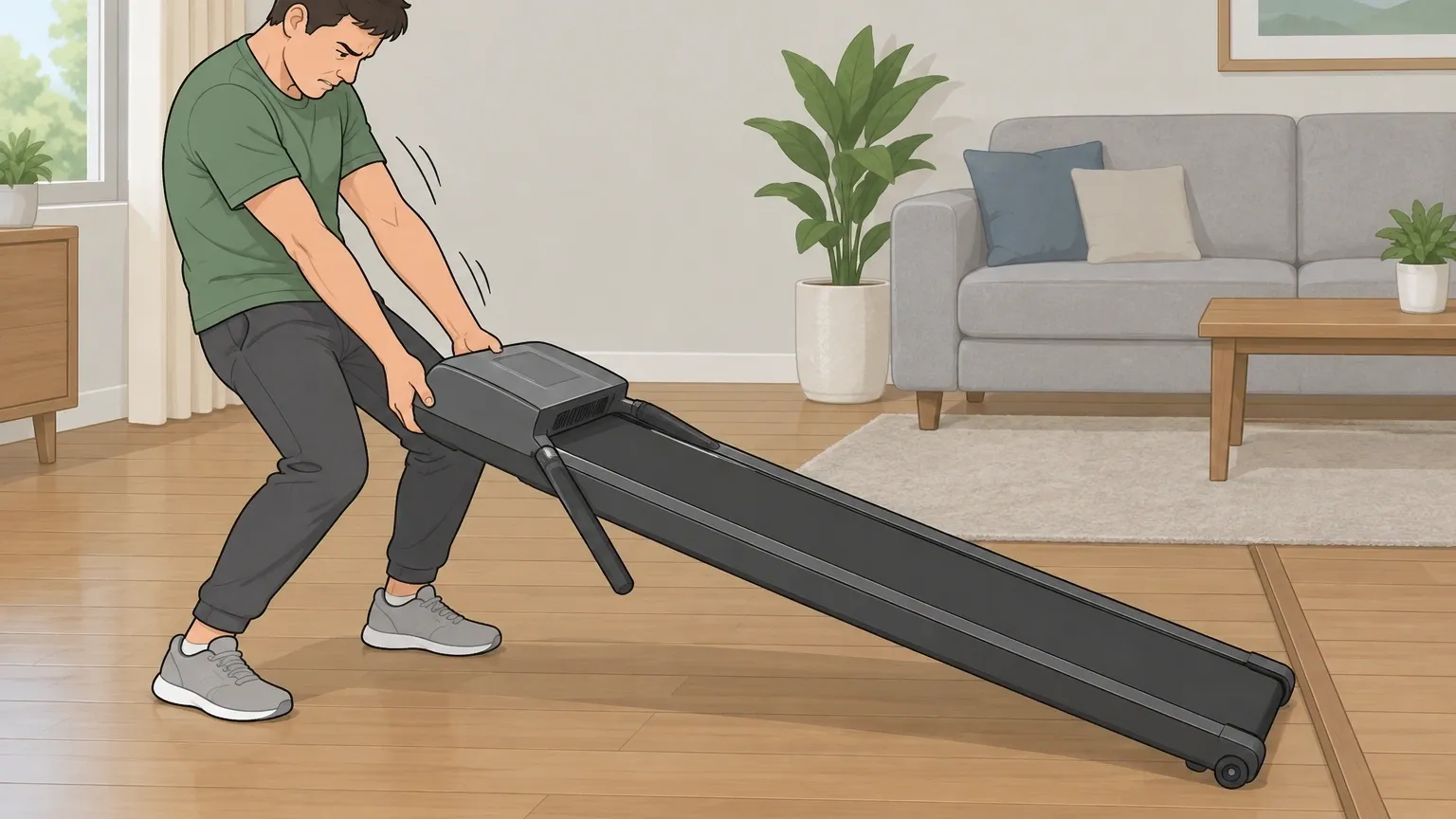
Three design choices make most walking pads stubborn to reposition. Weight distribution is uneven. The motor sits at the front, so the machine is nose‑heavy.
Even if the total weight is only 20 kg (44 lb), the front feels like it weighs twice that when you try to lift it. Picking up the rear is easy, but then the front drags or tips.
Wheels only roll one way. Almost every walking pad has wheels on the back that let it roll forward and backward. They do not swivel.
That means you can push the pad straight ahead, but turning it or sliding it sideways requires lifting the whole thing.
If you need to tuck it under a desk that is against a wall, you have to back it in like a trailer.
The handle is not designed for carrying. Foldable handles are common, but they often have no latch to lock them upright. When you try to grab the handle, it flops down.
Some models have a small cutout on the side, but it is usually too narrow to grip comfortably. You end up hugging the pad and walking sideways.
How to Know If You Can Handle a Walking Pad
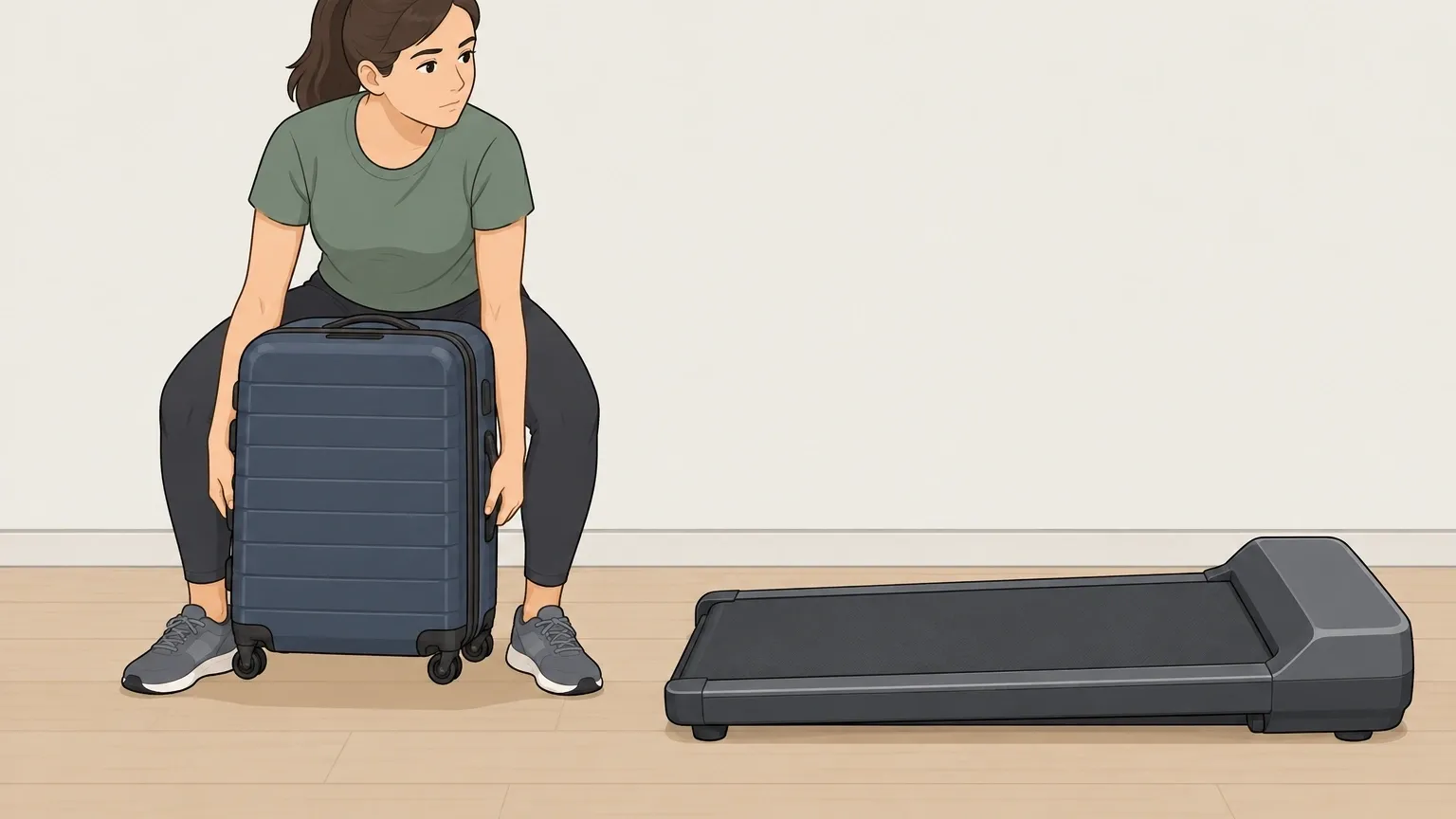
“Easy” is relative. Here is a quick self‑check to decide if a walking pad’s weight and shape will be a problem for you. Grip strength. Can you deadlift a 20 kg dumbbell with one hand?
If not, lifting the front of a walking pad alone will be hard. Try this test: pick up a suitcase that weighs 18–22 kg and carry it a few meters without using your legs to brace it.
That is roughly what you will do when you tilt the pad onto its wheels. Floor type. Hardwood or tile makes sliding easier, but the wheels can scratch the surface. Carpet adds friction.
If you have thick carpet, the wheels will dig in and you will have to lift more. Storage clearance. Measure the gap under your desk, bed, or sofa.
If the clearance is less than the thickness of the pad (typically 12–15 cm), you cannot slide it under. You have to lift it over the obstacle or store it upright, which brings its own risks.
Available path width. If your desk sits in a corner or you have furniture tightly spaced, you need to pivot the pad.
With one‑way wheels, pivoting means lifting the rear and rotating the whole unit. That requires space to swing it.
The Reality Check: What “Portable” Really Means
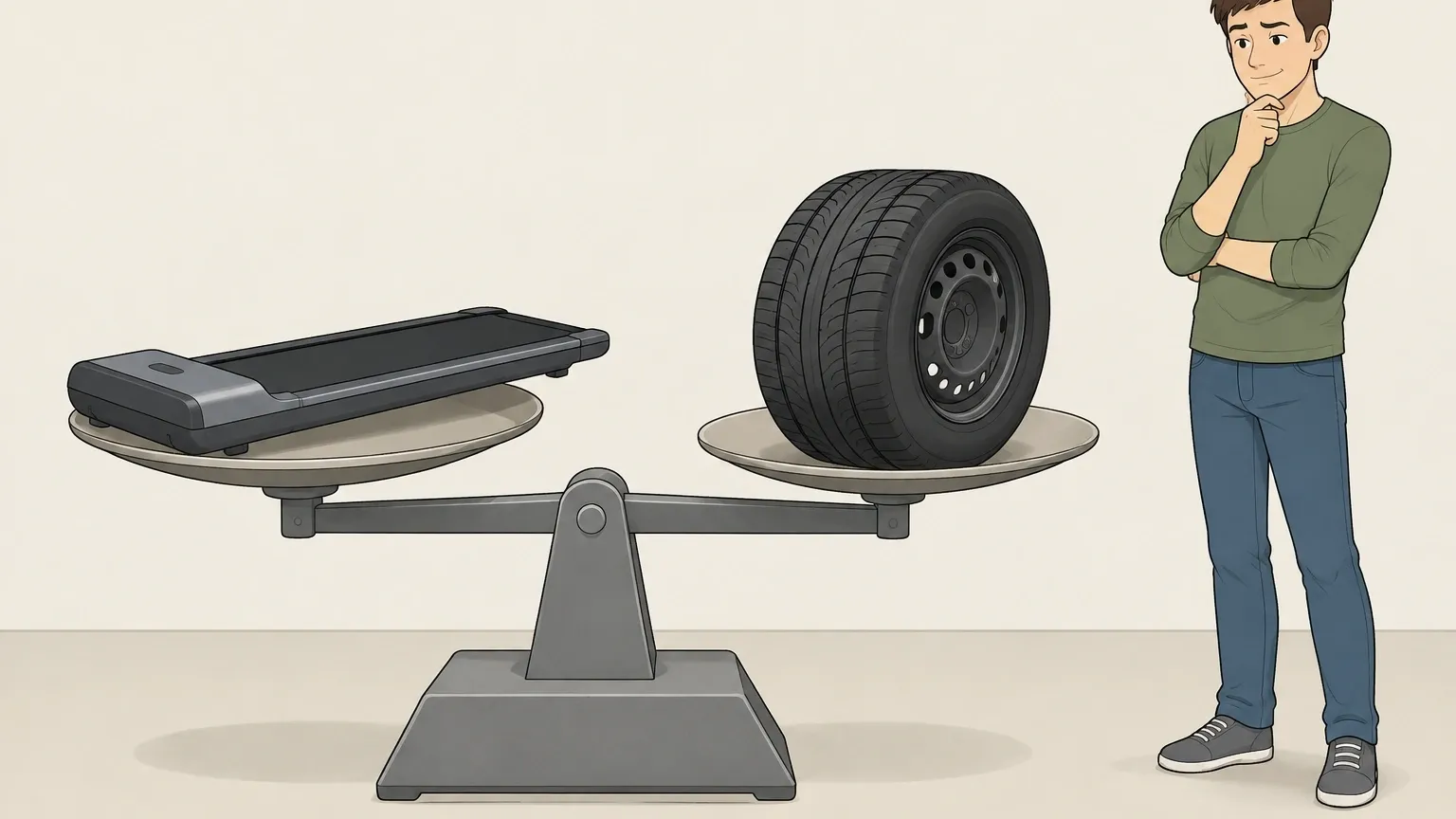
Marketing words like “ultra‑light,” “slide‑and‑store,” and “easy to move” set false expectations. “Ultra‑light” usually means 16–18 kg, which is the weight of a large car tire. “Slide‑and‑store” assumes you have a perfectly smooth floor and enough room to push the pad straight in.
The photos showing a person lifting a pad with one hand are staged — the person is either very strong or the pad is a different model. I tested this myself. My pad weighs 22 kg.
I can deadlift 50 kg in the gym, but lifting that pad by its flimsy handle while keeping it balanced was much harder. The shape makes it awkward.
It is like carrying a long, heavy box with no handholds. Do not trust the “vertical storage” claims either.
Many manufacturers advise against storing the pad upright because it can tip and fall on a child or pet. The few models that allow vertical storage have a locking mechanism, but they are the exception.
How to Make Moving Your Walking Pad Easier
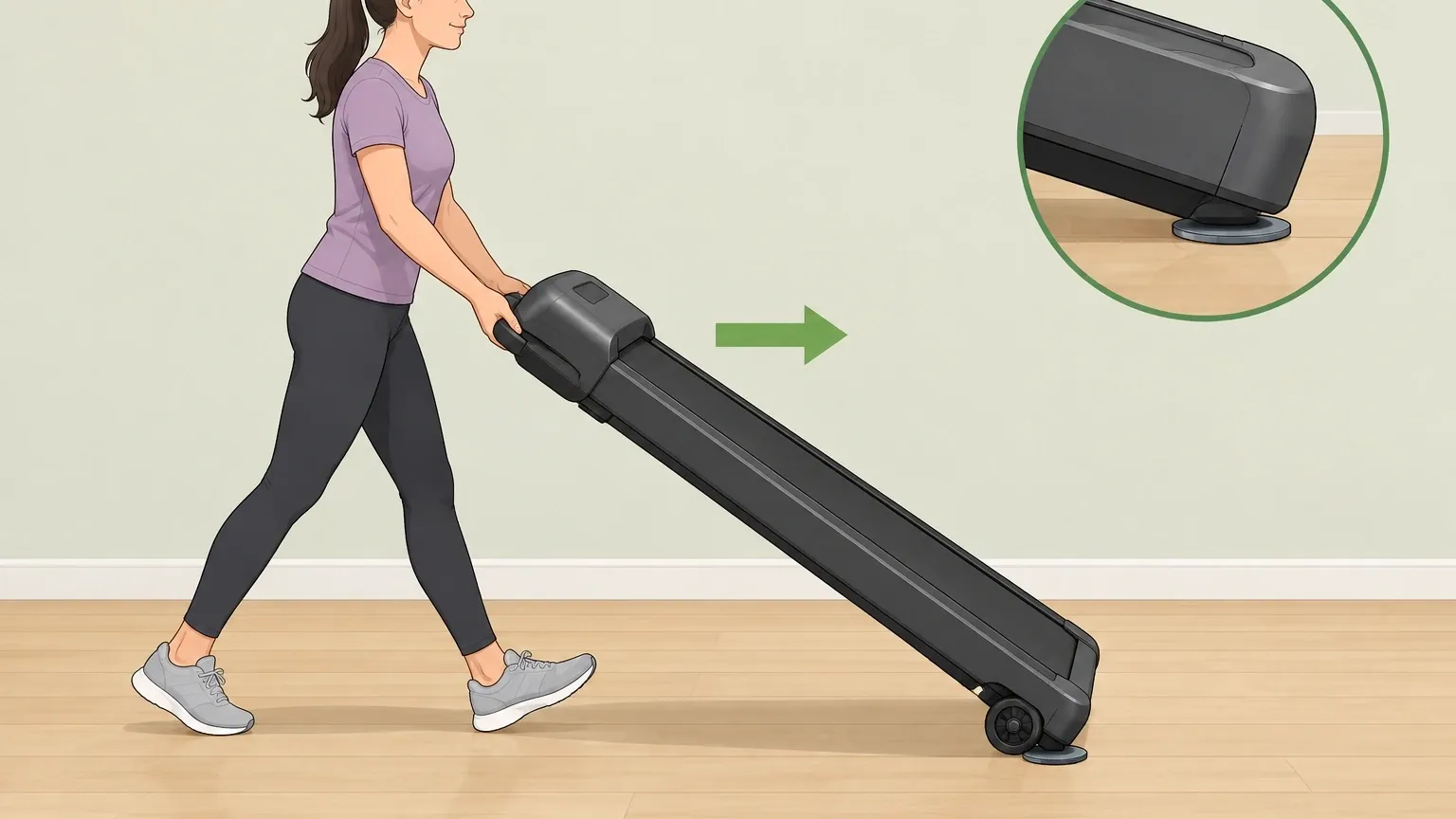
You cannot change the design of the pad you already own, but you can change how you move it. Tilt and roll instead of lifting. Most pads have a wheel at the back.
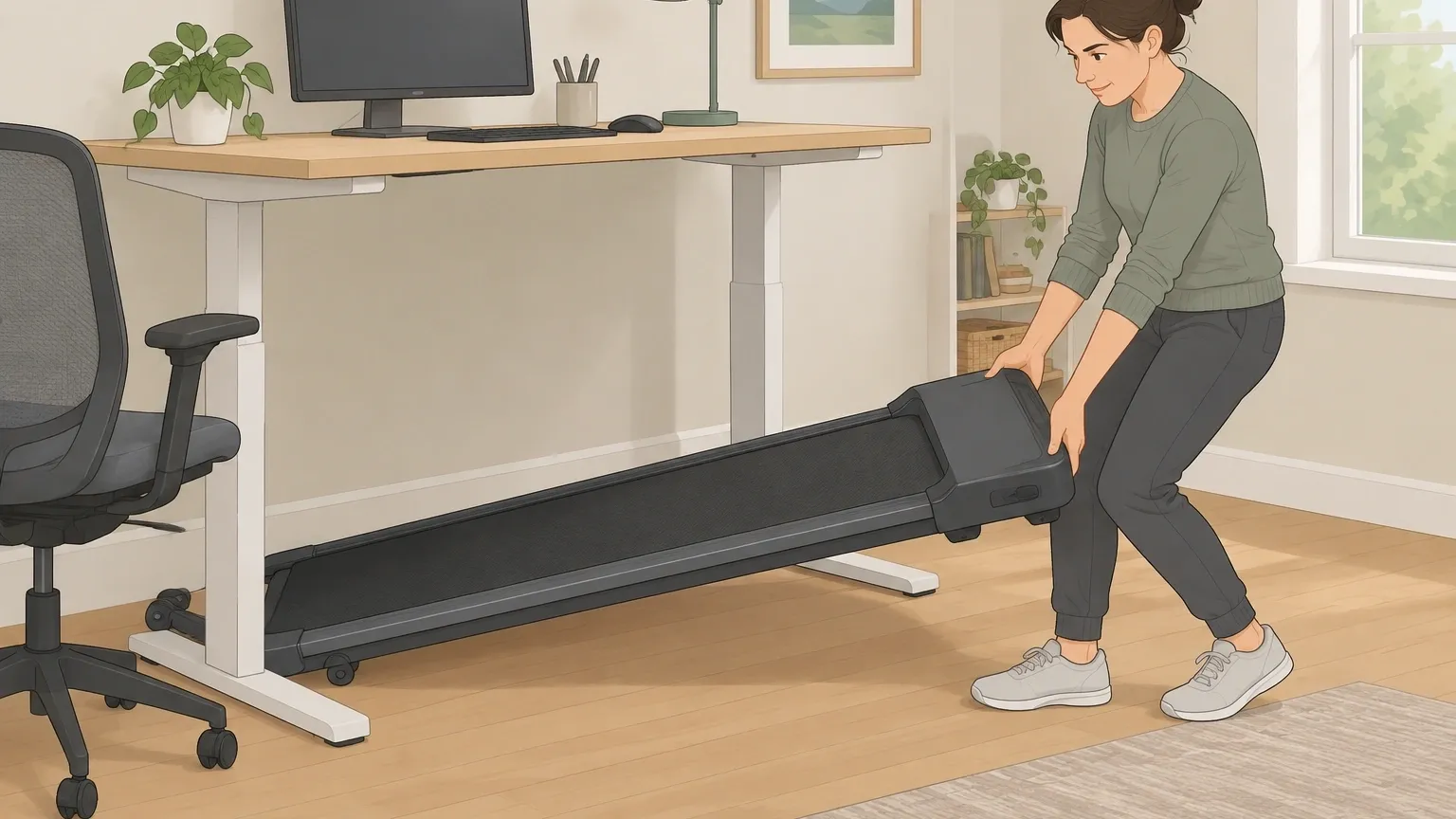
Tilt the pad toward you until only the rear wheels touch the ground, then roll it like a hand truck. This takes most of the weight off your arms. You only need to balance it.
Use furniture sliders. Place sliders under the front and back. The pad will slide across carpet or hardwood without scratching. This works best if the pad has a flat bottom.
Some pads have rubber feet that grip the floor — sliders fix that.
Get a furniture dolly. If you move the pad between rooms, a small dolly with swivel wheels eliminates the turning problem. Lift the pad onto the dolly and roll it anywhere.
Two‑person lift. This is the safest method for heavier pads. One person lifts the front, the other lifts the rear. Agree on a path before lifting.
Watch out for pinch points near the belt. Mind the floor. Place a thin mat or felt pads under the wheels if you have hardwood. Repeated rolling in the same spot can leave scuff marks.
What to Look For in a Truly Movable Walking Pad
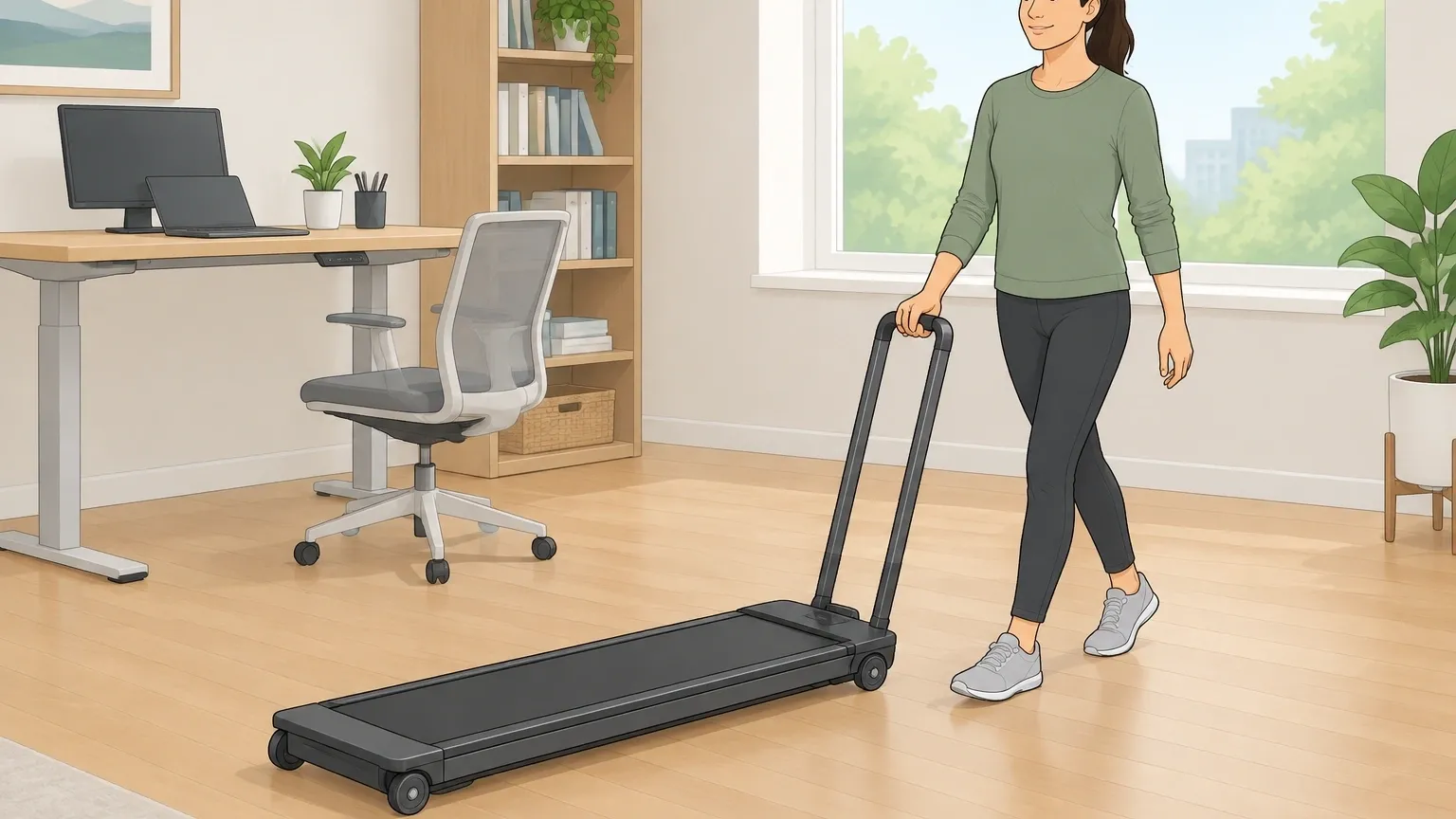
If you have not bought yet, you can avoid the portability headache by choosing the right design. Look for these features:
- Bidirectional wheels. Wheels on both ends let you roll the pad forward, backward, and sideways. That makes it much easier to slide under furniture.
- Locking carry handle. A handle that stays upright when folded gives you a solid grip. Avoid handles that flop.
- Weight under 18 kg (40 lb). Below this threshold, tilting and rolling becomes manageable for most adults. Under 15 kg is ideal.
- Flat underside. A smooth, flat base lets you use furniture sliders without removing rubber feet.
- Low profile. A pad that is 10 cm or thinner fits under most desks and sofas without lifting.
Are There Walking Pads Designed for Frequent Movers?
Yes, but they are not the cheapest models. Here is what separates them from the rest. Models in the 14–18 kg range often have a smaller motor and a narrower belt, but they trade power for portability.
If you plan to only walk at 2–4 km/h, that is fine. Some walking pads include a fold‑flat design where the deck splits in half.
These are lighter and easier to carry than one‑piece pads, but the hinge can add a weak point. Check the build quality before buying.
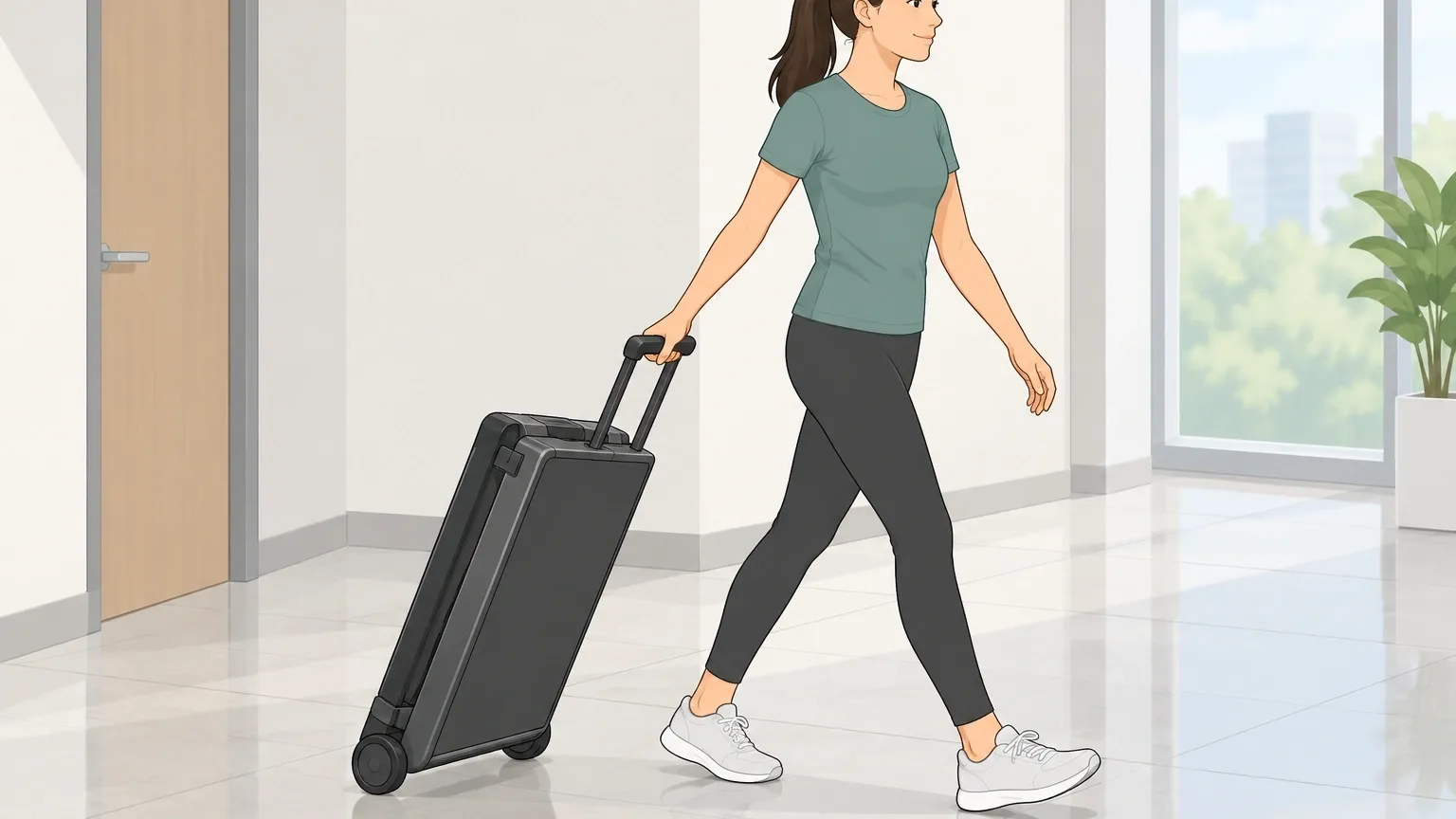
Another feature is a built‑in telescoping handle that locks into place. You pull it up like a suitcase handle and roll the pad on its wheels. This makes moving it feel like rolling a piece of luggage.
Only a handful of models offer this, but it is worth the extra cost if you move your pad every day. Avoid pads that claim to be “portable” but have no wheels on the front end.
Those are meant to stay put under a desk, not to be moved regularly.
Frequently Asked Questions
Can I move a walking pad alone if I am not strong?
Yes, but only if you use the tilt‑and‑roll technique and the pad weighs less than 18 kg. If you cannot tilt it without straining, ask for help.
Do not try to carry a heavy pad alone — you risk pulling a muscle or dropping it on your foot.
Do walking pads scratch hardwood floors?
Yes, the wheels can leave marks, especially if they are hard plastic. Place felt furniture pads under the wheels or use a thin rug under the pad when you store it.
Is it easier to move a folding walking pad?
It depends. Some folding pads are lighter because the frame is split, but the fold mechanism can add weight. More importantly, the folded shape is often bulkier and harder to grip.
Test the folded dimensions before you buy.
How often will I need to move my walking pad if I use a standing desk?
Twice each time you use it: once to pull it out of storage and position it under the desk, and once to put it back. If you sit for part of the day, you may move it again.
That can be four to six moves per day if you alternate sitting and standing.
What is the lightest walking pad available?
The lightest models weigh around 12–15 kg (26–33 lb). They usually have a smaller motor and a narrower belt, which works for slow walking but not for jogging.
Check the weight limit as well — lighter pads often max out at 90–100 kg.
Can I store a walking pad upright without it falling?
Only if the model has a locking strap or a dedicated stand that holds it in place. Otherwise, do not lean it upright against a wall. A falling pad can injure children or pets and damage the belt.
Final Verdict
Are walking pads easy to move? For the typical buyer who expects one‑handed lift‑and‑slide portability, the answer is no.
The weight, wheel design, and lack of a good handle make daily repositioning a chore. But that does not mean you should avoid them entirely.
If you pick a model under 18 kg with bidirectional wheels and a locking handle, and you use the right technique — tilt and roll, furniture sliders, or a dolly — the friction drops to a manageable level.
Know your own strength and your room layout before you buy. The walking pad itself is a great tool for getting steps, but only if moving it does not become the reason you stop using it.