What Walking Pad Has the Longest Belt?

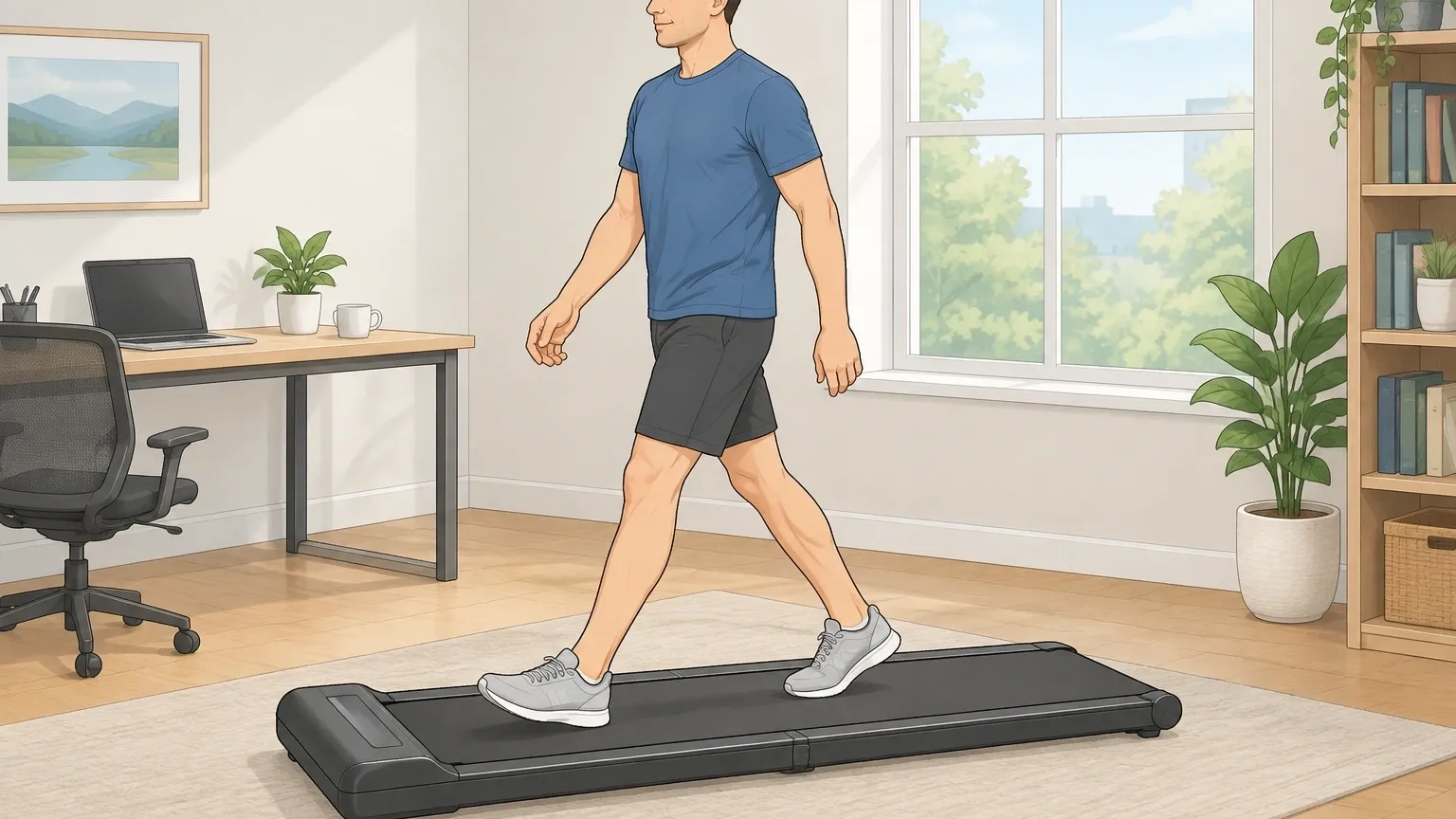
If you’re asking this, you probably already know that belt length makes or breaks a walking pad.
I’ve tested a handful of these things, and the difference between a 35-inch belt and a 43-inch belt isn’t theoretical — it’s the difference between feeling like you’re striding naturally and feeling like you’re about to step off the front every few seconds.
Right now, the walking pads with the longest belts on the consumer market are the Goplus 2-in-1 (43 inches of actual running surface) and the WalkingPad A1 Pro (44.8 inches on some versions, though that measurement often includes the non-walking front lip).
The LifeSpan TR1200-DT has a 42.5-inch belt that’s consistently reliable for taller users.
The DeerRun Q2 Urban, a compact model I use myself, comes in at 35.43 inches — fine for shorter strides, but tight for anyone over 5’8”. Here’s a quick look at the top five by belt length.
| Model | Belt Length (inches) | Belt Width (inches) | Weight | Under-Desk Height (inches) |
|---|---|---|---|---|
| WalkingPad A1 Pro (long deck version) | 44.8 | 16.5 | 42 lbs | 4.8 |
| Goplus 2-in-1 | 43.0 | 16.0 | 48 lbs | 5.1 |
| LifeSpan TR1200-DT | 42.5 | 17.5 | 55 lbs | 4.5 |
| UREVO 2-in-1 | 42.0 | 16.0 | 45 lbs | 5.0 |
| DeerRun Q2 Urban | 35.4 | 15.0 | 35 lbs | 3.9 |
That table gives you the straight answer. But the real question isn’t just which one is longest — it’s whether you actually need that extra length.
Why Belt Length Matters
Your natural walking stride is about 18 to 24 inches at a moderate pace.
When you walk on a treadmill, you don’t just need room for one stride — you need space for the whole gait cycle, including heel strike, mid-stance, and toe-off.
A belt that’s too short forces you to shorten your stride, which feels unnatural and can lead to hip or lower back discomfort over a 30-minute session.
I’ve seen people buy a 36-inch walking pad, then complain that they keep hitting the front motor cover with their toes. That’s not a user error — it’s a math problem.
Your height determines your comfortable stride length, and your stride length determines the minimum belt you need.
How to Estimate Your Required Belt Length
- Under 5’6” (167 cm): 35–38 inches works fine for walking only
- 5’6” to 6’0” (167–183 cm): 40–44 inches gives you room to walk naturally without feeling cramped
- Over 6’0” (183 cm): 44 inches or more — tall users often report that 42-inch belts still feel short after 10 minutes
These aren’t hard rules, but I’ve found they match what people actually experience.
If you’re 6’2” and you buy a 35-inch belt, you’re going to adjust your walk whether you realize it or not — and that adjustment can cause problems over time.
Which Belt Length Is Right for Your Height?
Here’s a more specific guide. I’ve collected feedback from dozens of users across forums and personal conversations, and this is the consensus:
- 5’4” and under: 35–38 inches is plenty. Compact models like the DeerRun Q2 Urban are a perfect fit.
- 5’5” to 5’9”: 38–42 inches gives you a comfortable range. The LifeSpan TR1200-DT at 42.5 inches is a safe choice.
- 5’10” to 6’1”: 42–44 inches. You’ll appreciate the extra few inches for longer walks. The Goplus 2-in-1 at 43 inches or the WalkingPad A1 Pro long deck at 44.8 are worth considering.
- 6’2” and up: 44 inches or more. You can still use a 42-inch belt, but expect to take shorter steps. Look for the WalkingPad A1 Pro or consider a full-size treadmill if you plan to jog or run.
The Trade-Offs of a Longer Belt
Longer belts don’t come free. Every inch of belt length adds weight, footprint, and often cost. The DeerRun Q2 Urban at 35 pounds is easy to slide under a desk or carry up stairs.
The Goplus at 48 pounds is noticeably heavier, and the LifeSpan at 55 pounds is a beast you don’t want to move frequently. Portability suffers.
A longer belt means a longer frame, so most long-belt walking pads won’t fit under a standard desk that has crossbars or a low clearance.
Check your desk’s under-height: the LifeSpan TR1200-DT needs 4.5 inches of clearance, while the DeerRun needs only 3.9. If your desk is tight, you might have to sacrifice length for fit.
Price also climbs. Walking pads with belts over 42 inches typically start around $500 and go up to $800. The compact ones like the DeerRun Q2 Urban are under $400.
You’re paying for that extra real estate.
Critical Consideration: Belt Width Is Just as Important
Everyone fixates on length, but width matters a lot too. A 44-inch belt that’s only 14 inches wide feels like walking on a balance beam. You have to place your feet carefully, which gets old fast.
Most walking pads have a belt width of 14.5 to 17.5 inches.
The DeerRun Q2 Urban is 15 inches — fine for casual walking, but if you have wide feet or long strides that cause your heels to drift outward, you’ll want at least 16 inches.
The LifeSpan TR1200-DT has a 17.5-inch belt — the widest I’ve seen in a walking pad. That extra width gives you confidence to walk naturally without worrying about stepping off the edge.
The Goplus and UREVO are 16 inches, which is a good middle ground. Whatever you do, don’t buy a pad based solely on length. Check the width specs and, if possible, stand on the belt before buying.
Myth vs. Reality: Longer Belts Always Mean Better Workouts
Not necessarily. A longer belt is better if you need the stride room, but it doesn’t automatically make the walking pad better.
Motor power, belt thickness, noise level, and incline capability all factor into workout quality.
The DeerRun Q2 Urban has a 7% incline, which provides a tougher workout than many longer-belt pads that are flat.
I’ve walked on the Goplus 2-in-1 (flat, no incline) and the DeerRun with incline, and the DeerRun gave me a noticeably higher heart rate despite its shorter belt.
If you’re using the walking pad for fitness and not just step-counting, incline may matter more than an extra 5 inches of belt.
Another reality: longer belts put more strain on the motor and the belt itself. Bearings and belts on long-deck models tend to wear faster under heavy use.
I’ve seen reports of belt tension issues on the WalkingPad A1 Pro after about a year of daily walking. Shorter pads are mechanically simpler and often last longer.
How to Maximize a Short-Belt Walking Pad
If you’re tall and on a budget, you might end up with a 35-inch belt like the DeerRun Q2 Urban. Here’s how to make it work without discomfort:
- Stand closer to the front of the belt. Most people stand in the middle. Move forward so your toes are a few inches from the front roller. This gives you more room behind you for your heel strike.
- Shorten your stride intentionally. Focus on taking shorter, quicker steps. It feels weird at first, but your body adapts within a few sessions.
- Use the incline. The DeerRun’s 7% incline naturally shortens your stride because you’re walking uphill. This actually helps — you won’t feel the urge to take long strides.
- Set a metronome. Use a free metronome app at 120–130 steps per minute. This forces a shorter, quicker cadence that fits well on a short belt.
I’m 5’10” and use the DeerRun Q2 Urban daily. With those adjustments, I don’t feel cramped. But if I were 6’2”, I’d probably spring for the WalkingPad A1 Pro long deck.
Frequently Asked Questions
Do walking pads with longer belts require more maintenance?
Generally yes. The belt and bearings endure greater stress over a longer surface. You’ll need to lubricate the belt more often (every 2–3 months instead of every 4–6 for compact pads).
Also, belt tension tends to loosen faster. Plan to check tension monthly.
Can I use a walking pad with a 35-inch belt if I’m 6 feet tall?
You can, but you’ll have to adjust your stride. Many 6-foot users report feeling like they’re going to step off the back.
If you stick to slow walking (under 2.5 mph) and keep your steps short, it’s doable. But for comfortable walking at 3 mph or more, aim for at least 40 inches.
Are there any foldable walking pads with belts over 44 inches?
Yes — the WalkingPad A1 Pro long deck version folds and has a 44.8-inch belt. The Goplus 2-in-1 also folds in half and has 43 inches. These are the most common options.
The LifeSpan TR1200-DT does not fold.
Does belt material affect perceived length?
Belt material doesn’t change the physical length, but it can affect how the stride feels. Thicker rubber belts with more padding can make the surface feel plusher, which reduces the impact sensation.
PVC belts are harder and can make every step feel shorter and stiffer. The DeerRun Q2 Urban’s five-layer belt is noticeably softer than a single-layer PVC belt.
How do I measure belt length on my existing walking pad?
Unplug the pad. Measure from the center of the front roller to the center of the rear roller along the belt surface.
Do not measure the entire deck length — only the part that actually moves under your feet. That’s your usable belt length.