What Length Walking Pad Do I Need?

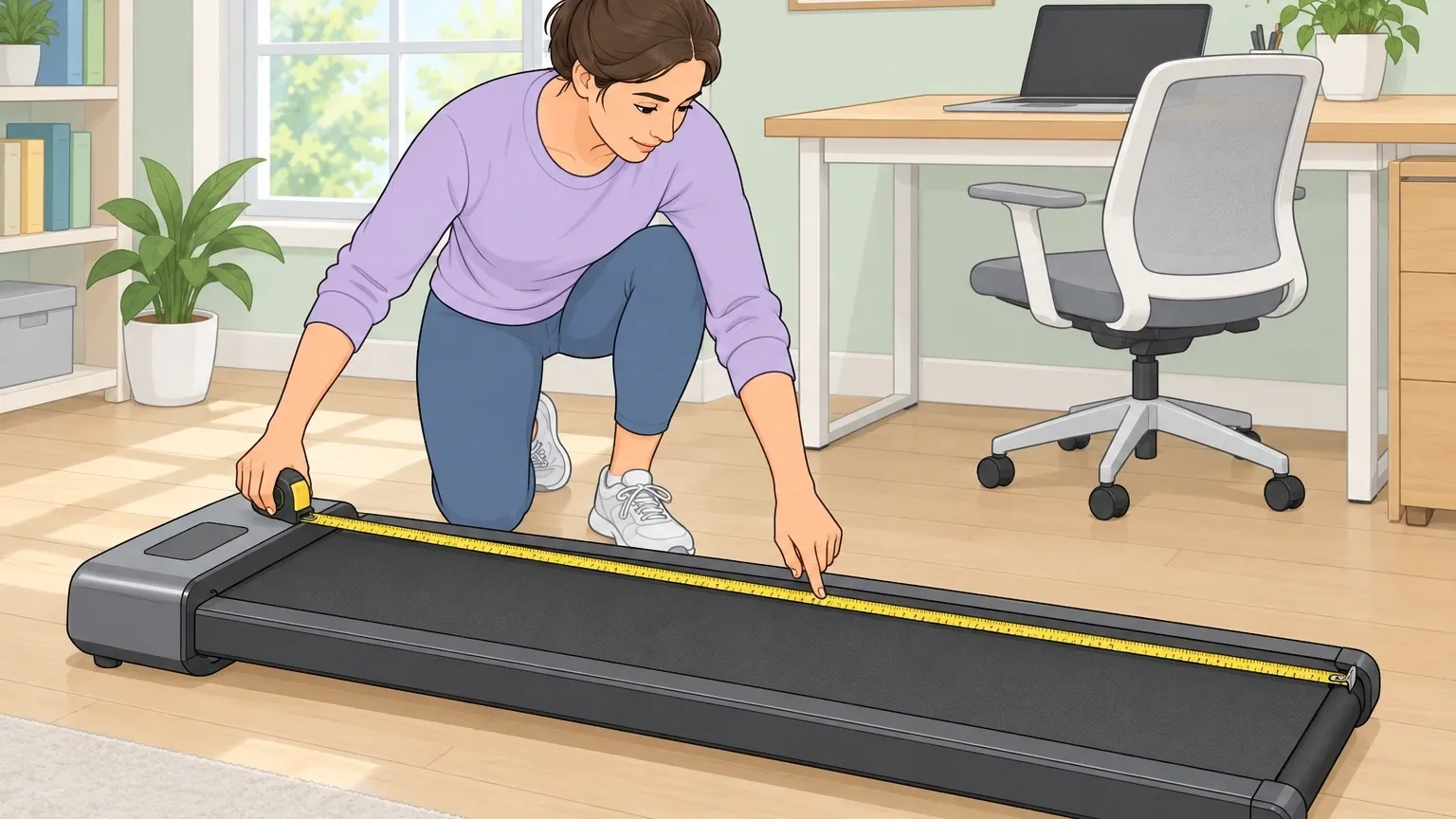
You are standing in front of your desk, measuring tape in hand, staring at a spec sheet that lists something called "belt length." You are not sure if you can trust it.
You have read reviews from people who bought a pad that looked fine on paper but felt like they were walking on a tightrope. I have been there.
I bought a walking pad that felt too short from the first step. The front roller was so close to my toes that I subconsciously shortened my stride. I returned it.
The next one was a little longer, and it worked. Here is the simple truth most retailers will not tell you: the number on the spec sheet is not the space you actually walk on.
And your height alone does not tell you the whole story.
A Quick Rule of Thumb for Walking Pad Length
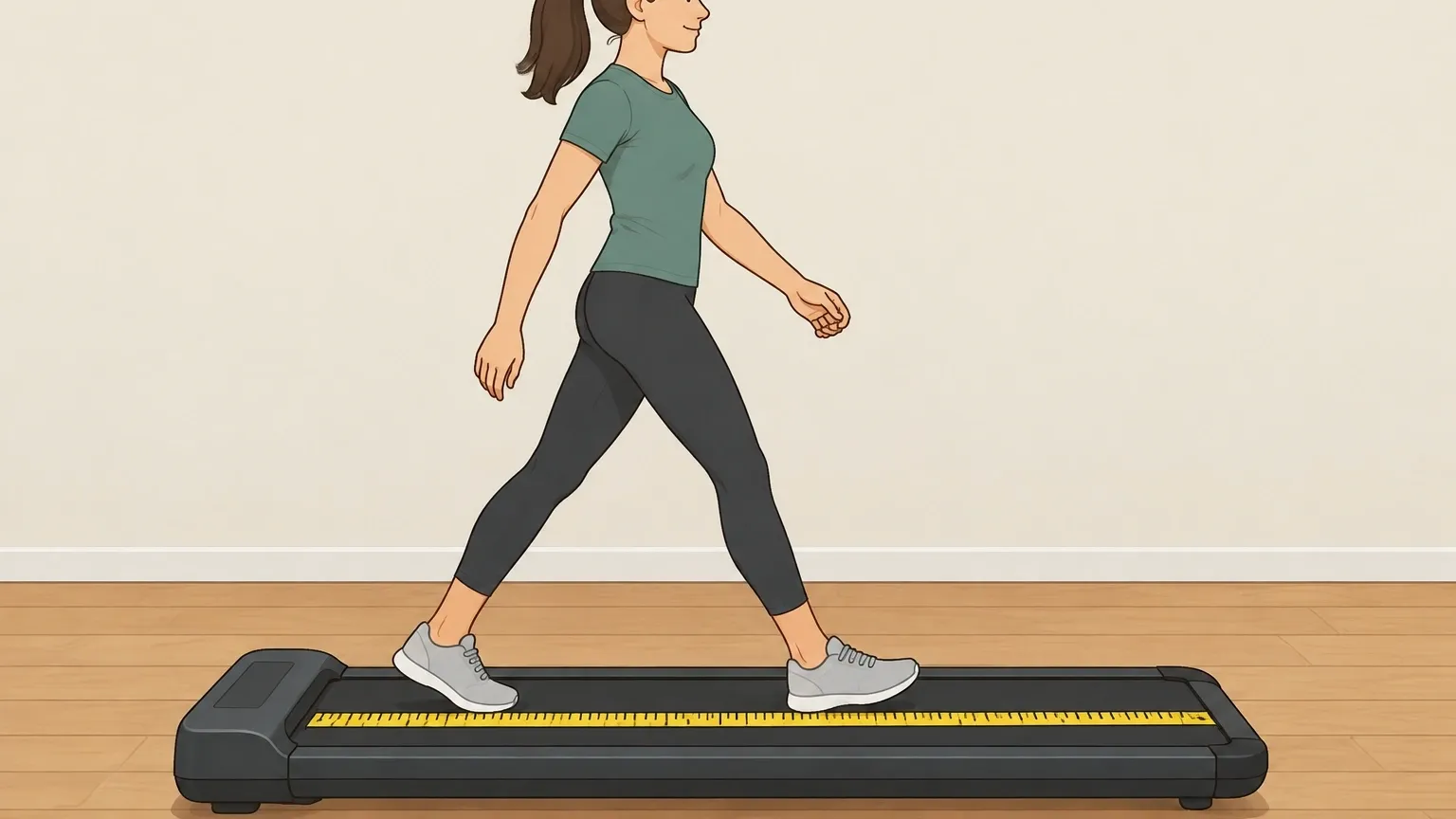
If you are under 5'8" and walk at a casual pace under 3 miles per hour, a belt length of 40 inches is fine. If you are between 5'8" and 6'2", look for at least 45 inches.
If you are over 6'2" or plan to walk faster than 3 miles per hour, you need 48 inches or more. But those numbers only work if you understand what they actually mean. Let me explain why.
Advertised Length vs. Usable Length
This is the part that got me the first time. Walking pads list their belt length from the center of the front roller to the center of the rear roller.
That measurement includes space that your feet cannot safely touch. The motor housing sits at the front of the deck, eating up a few inches. The rear roller clearance takes another inch or two.
A pad that says 48 inches might give you only 42 or 43 inches of actual walkable space. That is a big difference.
If you are 6 feet tall with a natural stride of about 30 inches, the 48-inch number suggests you have plenty of room. The reality is you do not. Always check the fine print.
Look for a dimension labeled "walking surface" or "usable belt area" rather than just "belt length." If you cannot find it, ask the seller or look at a photo of the pad from the side.
You can often see how much space the motor cover takes up.
How Your Stride Determines the Length You Need
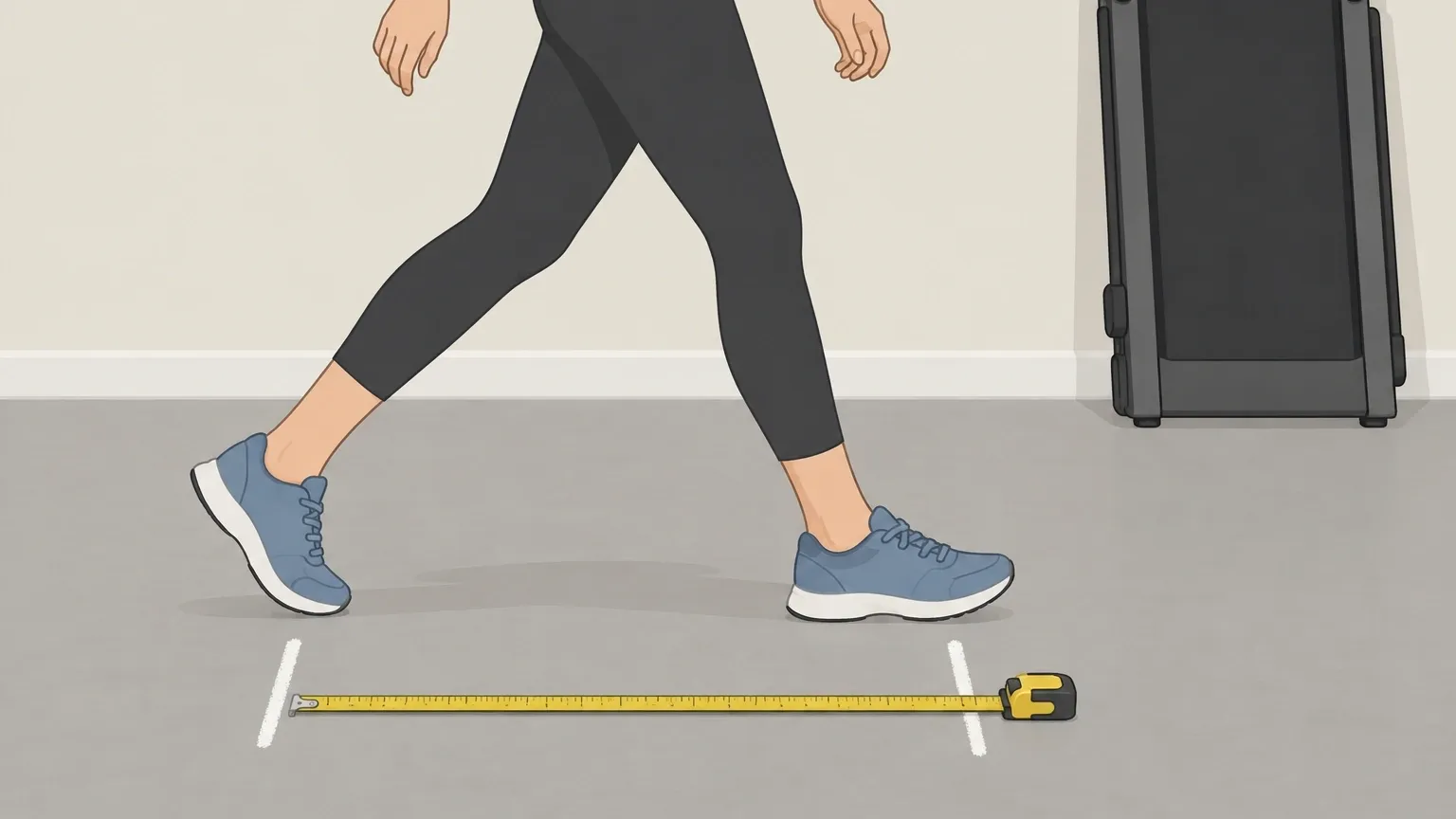
Height is a rough guide, but stride length is the real measurement. Your stride length changes with speed. At a slow 1.5 miles per hour, your stride is shorter. At 3.5 miles per hour, it gets longer.
The belt needs to be at least 1.5 times your natural stride length so you never feel like you are about to step off the back. Here is a simple test you can do right now. Find a hallway or open floor.
Walk at your normal pace for a few steps. Have someone mark where your heel lands on two consecutive steps of the same foot. Measure the distance between those two marks. That is your stride length.
Multiply that number by 1.5. That is the minimum usable belt length you should look for. For most people, that number falls between 42 and 50 inches.
Length by Usage Scenario
Not everyone uses a walking pad the same way. The length you need changes depending on what you plan to do.
Under-Desk Walking While Typing
If you want to walk slowly while working, you are not taking long strides. Your pace will be around 1 to 2 miles per hour. You can get away with a shorter belt of 40 to 44 inches.
The trade-off is that you must keep your speed low. If you speed up even a little, you will feel cramped. The bigger problem here is not length but fit. Many tall desks have limited clearance.
You need to check the total length of the pad, not just the belt. A 44-inch belt pad might be 50 inches long overall. If your desk only has 48 inches of space underneath, it will not fit.
Dedicated Walking Sessions at 2 to 3 Miles Per Hour
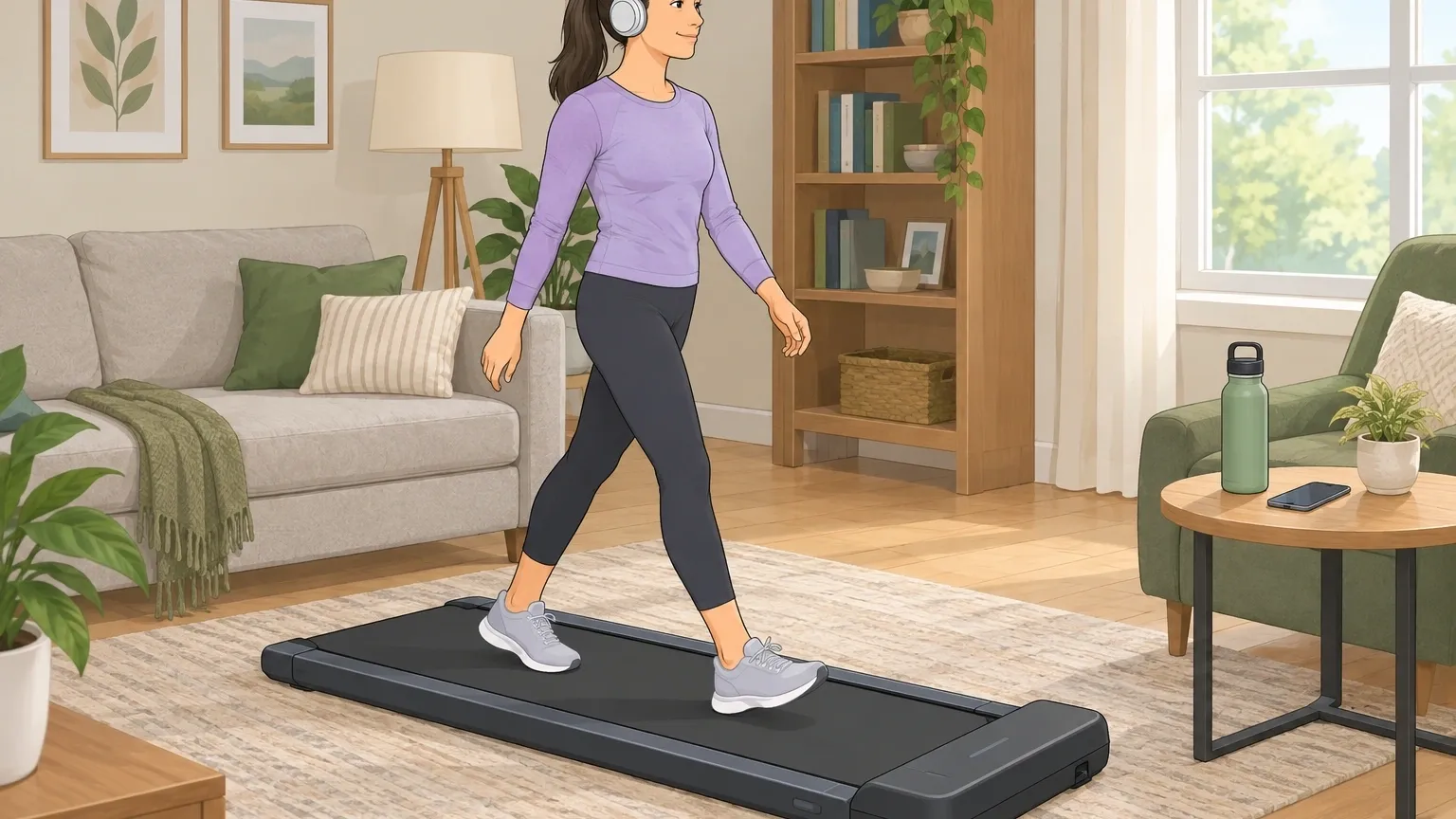
This is the most common use case. You stand on the pad, put on headphones, and walk at a moderate pace. You are not trying to read or type. You just want to move.
For this, a belt of 45 to 48 inches is the sweet spot. It gives you enough room to take a normal stride without feeling like you are confined. I have used a 45-inch pad for this purpose, and it works.
But I have also used a 48-inch pad, and the difference in comfort is noticeable. Your brain stops worrying about where your feet are. You just walk.
Interval Walking or Light Jogging
This is where most walking pads fail. If you plan to speed up beyond 4 miles per hour, even briefly, you need a longer belt.
Your stride opens up, and your risk of stepping off the back increases significantly. You need at least 48 inches of usable belt. Ideally 50 inches or more.
If you cannot find a walking pad with a 50-inch belt that fits your budget and space, you should consider a compact treadmill instead.
Treadmills in this size range often have belts of 50 to 55 inches and are built for higher speeds.
Tall Users or People with Wide Gaits
If you are over 6'2", the standard walking pad is not designed for you. Even at slow speeds, your stride is longer than average.
A 48-inch belt is the minimum, and you should look for models that advertise 50 inches or more.
Some tall users tell me they feel fine on a 45-inch pad because they walk with very short, shuffling steps. That is possible, but it is not comfortable.
You should not have to change your natural gait to fit the machine. The machine should fit you.
The Hidden Variable: Motor Placement and Belt Tension
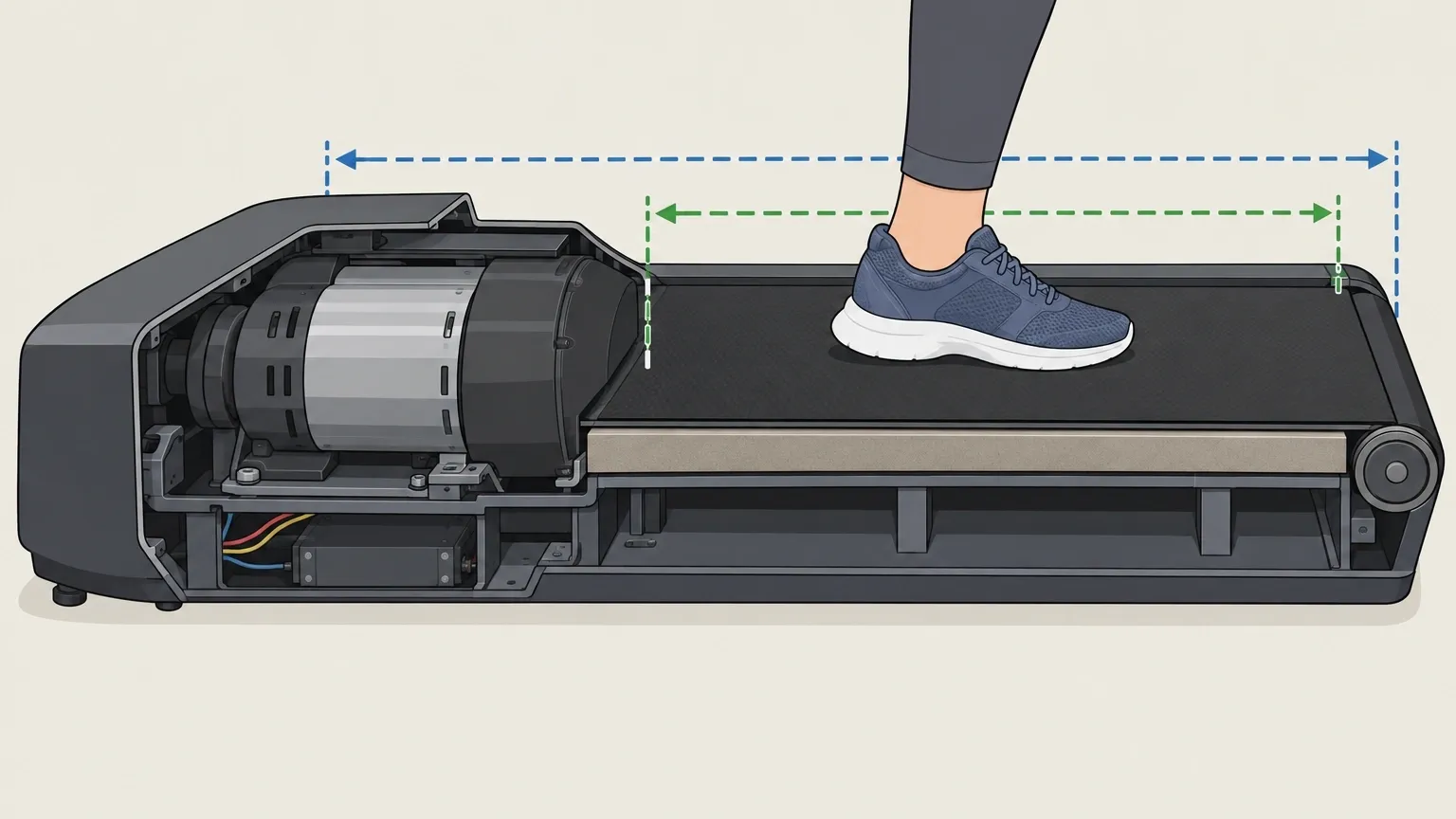
I did not expect this to matter, but it does. Most walking pads have the motor mounted at the front of the deck.
This means the motor housing protrudes into the belt area, making the usable space shorter. Some pads have the motor mounted under the deck or at the rear.
These give you more usable length for the same advertised number. Cheaper pads also tend to have looser belt tension.
Over time, the belt can sag slightly, which effectively shortens the walking surface. This is not a problem you can test in a store, but it is a reason to check reviews carefully.
Look for comments about the belt feeling short or needing frequent adjustment.
When Length Is Not the Real Problem
Sometimes you feel cramped on a walking pad because of width, not length. The standard walking pad belt is 40 centimeters wide. That is narrow.
If you have wide hips or take a wide stance, your feet might hit the sides of the frame before your toes hit the back.
A wider belt, even one that is slightly shorter, can feel more comfortable because you can angle your feet outward a little.
If you find a pad with a 43- or 44-centimeter-wide belt, it might feel more spacious than a longer but narrower model. Do not ignore width. It matters more than people think.
Frequently Asked Questions
Can I use a walking pad if I am 6'3" but only plan to walk slowly while reading?
Yes, but even at slow speeds your stride is still long. You need a belt of at least 45 inches of usable space. Look for pads that advertise 48 inches or more to guarantee that.
Do not rely on speed to compensate for a short belt.
Do walking pads with longer belts need more desk clearance?
Not always. A longer belt sometimes means a longer overall frame, but some models pack the extra length into the walking surface without increasing the footprint much.
You still need to measure your desk. A pad with a 50-inch belt might be 56 inches long overall. Measure the floor space under your desk before you buy.
Is there a difference between a walking pad and a treadmill for tall people?
Yes. Treadmills typically have belt lengths of 50 to 60 inches because they are designed for running. Walking pads are shorter on purpose to save space.
If you are over 6'4", a treadmill is safer for anything beyond a slow walk. Do not force yourself into a walking pad if it is too small.
Do folding walking pads sacrifice belt length for portability?
Some do, but not all. Folding pads that bend in half can actually have a longer belt because the hinge is in the middle, not at the motor housing. Check the belt length spec separately.
Do not assume that foldable means short.
Does walking pad length affect noise or motor performance?
Indirectly. A longer belt is heavier. It takes more torque to move, especially at higher speeds. Cheaper motors on longer-belt pads can struggle, which leads to noise or early failure.
If you need a longer belt, pay extra for a pad with a brushless motor. It will run quieter and last longer.