Is Walking Pad Good for Pregnancy?

If you are pregnant and looking for ways to stay active without leaving the house, you have probably seen walking pads and wondered if they are a safe option.
The short answer is yes: for most low-risk pregnancies, a walking pad can be a safe and convenient way to get gentle exercise.
But like any activity during pregnancy, it comes with specific guidelines you need to follow.
This guide walks you through what you need to know before you step on, how to adjust as your body changes, and when to skip it altogether.
The Short Verdict on Walking Pads During Pregnancy
Walking pads are generally safe for pregnant women who have received medical clearance from their healthcare provider.
The controlled indoor environment reduces many risks you would face walking outside, such as uneven pavement, traffic, or sudden bad weather.
However, not all walking pads are created equal, and your own physical changes during pregnancy require extra caution.
The key rule: always check with your doctor or midwife before starting any new exercise during pregnancy. If you have a high-risk condition, the answer may be different.
For most healthy pregnancies, though, walking on a pad is considered low-impact and safe when you follow basic safety guidelines.
How Walking on a Pad Differs From Outdoor Walking While Pregnant
You might wonder whether a walking pad offers any real advantage over stepping out the front door. Here is a breakdown of the differences. Pros of a walking pad during pregnancy:
- No weather obstacles – you can walk anytime, even in rain or extreme heat.
- Even, predictable surface – no cracks, rocks, or curbs to trip on.
- Easy to pause – you can stop instantly if you feel dizzy or need a bathroom break.
- No need to travel – you walk right at home, which becomes more valuable as your energy drops in the third trimester.
Cons of a walking pad during pregnancy:
- Repetitive stride on a short belt may feel confining, especially if you are used to longer steps outdoors.
- No fresh air or vitamin D from sunlight unless you open a window.
- Potential for overheating in a closed room, which is a concern during pregnancy.
For many women, the biggest safety advantage is the lack of fall hazards.
Your balance starts to shift as your belly grows, and a walking pad removes the risk of tripping on a sidewalk crack or suddenly needing to dodge a cyclist.
Trimester-by-Trimester Considerations for Walking Pad Use
Each stage of pregnancy brings different physical changes. Here is how to adjust your walking pad routine accordingly.
First Trimester
It is safe to start at a slow pace, between 2 and 3 miles per hour. Focus on establishing a routine without pushing yourself.
Many women experience nausea and dizziness during the first few months, so keep sessions short – 10 to 15 minutes – and stop immediately if you feel unwell.
Second Trimester
This is often the sweet spot for walking on a pad. Your energy typically returns, and your bump is still small enough that balance is not a major issue. You can increase duration to 20 or 30 minutes.
Watch for round ligament pain – a sharp pulling sensation on the sides of your belly. If it occurs, slow down or stop.
Third Trimester
Balance becomes a real concern as your center of gravity shifts forward. The baby also puts more pressure on your pelvis and lower back.
Keep your speed under 2.5 mph, avoid any incline, and keep sessions shorter – 10 to 15 minutes is plenty. Always walk near a stable surface or use a walking pad with handrails.
Stop if you feel pelvic pressure, back pain, or any pulling sensation.
Red flags for any trimester – stop immediately and call your doctor if you experience:
- Vaginal bleeding
- Contractions
- Shortness of breath before exertion
- Chest pain
- Muscle weakness or calf pain/swelling
- Severe headache or dizziness
Essential Safety Modifications for Pregnant Users
Even if you have used a walking pad before pregnancy, your body is different now. Make these adjustments to stay safe.
Speed
Stay below 3 mph. If you feel even slightly unstable, reduce speed further. A comfortable, conversational pace is best.
Incline
Avoid it. Walking on an incline increases strain on your lower back and raises the risk of falling. A flat surface is the safest choice during pregnancy.
Handrail Use
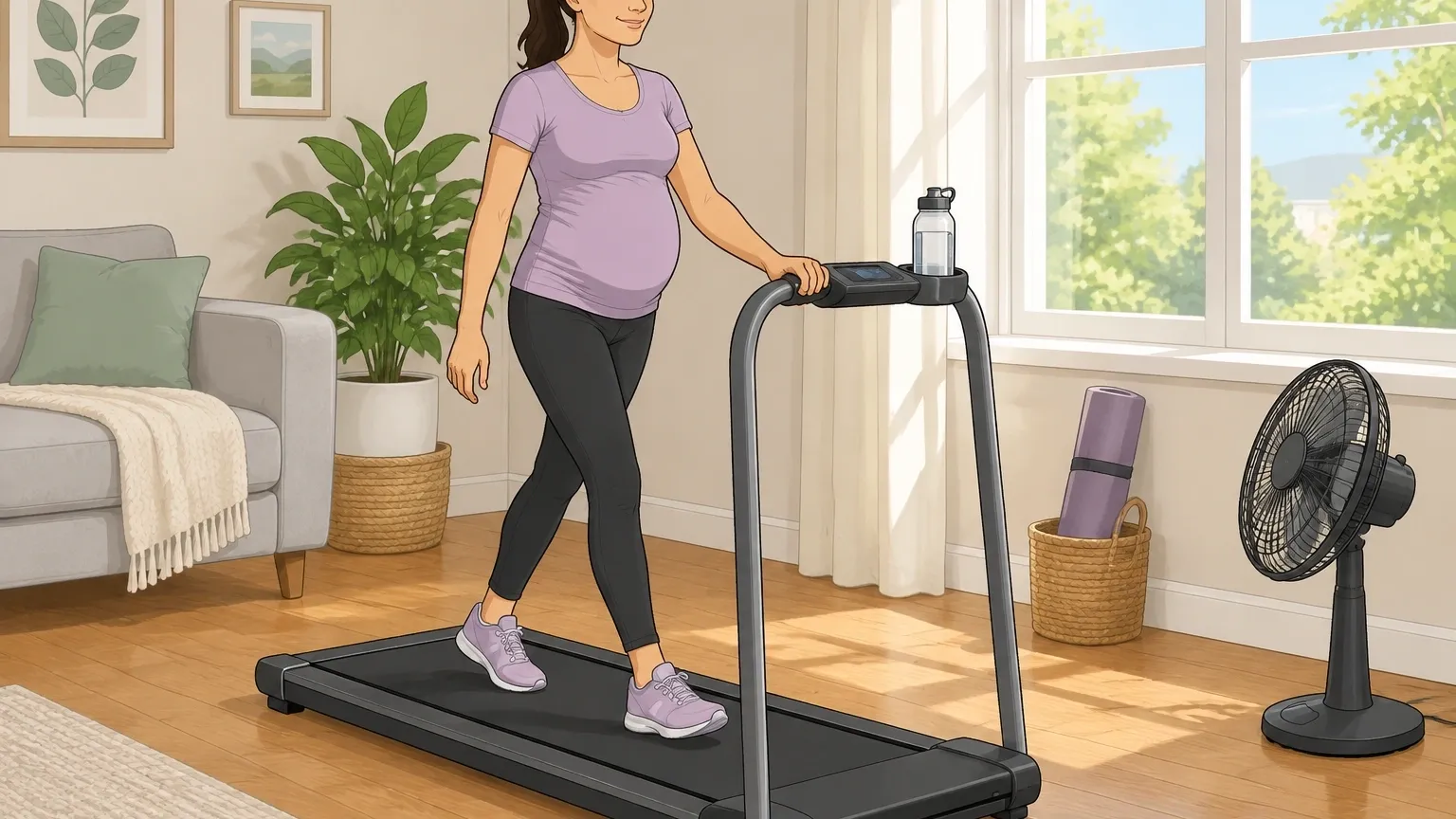
Prefer walking pads that come with handrails, or position the pad next to a wall or sturdy table you can grip if needed. In the third trimester, handrails become almost essential.
Hydration and Cooling
Place a fan nearby and keep a water bottle within easy reach. Overheating – especially in the first trimester – can affect the baby. Stop if you feel hot, flushed, or start sweating heavily.
Footwear
Wear supportive walking shoes even at home. Bare feet, socks, or slippers on a moving belt increase the chance of slipping.
When a Walking Pad Is Not Recommended During Pregnancy
While a walking pad is safe for many pregnant women, some conditions make it unwise. Do not use a walking pad without explicit doctor approval if you have any of the following:
- Placenta previa or other placental abnormalities
- Preeclampsia or pregnancy-induced hypertension
- Incompetent cervix or cervical cerclage
- Carrying multiples (twins, triplets)
- Any high-risk pregnancy condition your doctor has identified
Also, if you have never used a walking pad before becoming pregnant, pregnancy is not the ideal time to learn. The unfamiliar movement and balance changes can be risky.
Stick to stationary walking or outdoor paths until after delivery.
How to Choose a Pregnancy-Friendly Walking Pad
If you decide to buy or borrow a walking pad during pregnancy, look for these features: Stability over portability. A heavy, wide base is much safer than an ultra-light model.
Narrow or flimsy pads can wobble if your stride is off. Handrails or an emergency stop. A physical bar you can hold is ideal.
At minimum, the pad must have a safety key or stop button within easy reach. Some models come with a remote on a wrist strap – that can help you stop quickly.
Low minimum speed. Look for a pad that starts as slow as 0.5 mph. This allows you to step on and off gently.
Quiet motor. A loud, grinding machine can be stressful and might startle you. Quiet operation makes it easier to focus on balance.
Good return policy. Pregnancy needs can change quickly. If you stop using the pad in the third trimester, you want the option to return it without hassle.
Walking Pad vs. Traditional Treadmill for Pregnancy
If you already own a full-size treadmill, you may not need a walking pad. Here is how they compare for pregnancy use.
| Feature | Walking Pad | Traditional Treadmill |
|---|---|---|
| Stability at low speeds | Good | Excellent |
| Handrails | Often limited or optional | Built-in and sturdy |
| Space needed | Small, easy to store | Large, dedicated space |
| Incline control | Rare (and not needed for pregnancy) | Available but not recommended |
| Belt length | Shorter (may feel cramped) | Longer, more natural stride |
| Best for | Gentle walking during first and second trimester | All stages if handrails are used, but larger |
If you already have a treadmill, use it – the handrails and longer belt offer more support.
If you are buying new and want something that takes up little space, a walking pad is fine as long as you prioritize safety features like handrails and a stable base.
Frequently Asked Questions
Can I use a walking pad in the first trimester if I am nauseous?
Yes, but start slowly and keep sessions very short – 10 minutes or less. Stop if you feel dizzy or sick. It is fine to skip days when nausea is bad.
Is it safe to walk on a walking pad with no handrail while pregnant?
During the first and second trimester, if your balance is good and you keep speed low, it can be okay. But in the third trimester, handrails or a nearby support surface are strongly advised.
How long should a pregnant woman walk on a walking pad per day?
Aim for 10 to 20 minutes of continuous walking, up to 150 minutes total per week as tolerated. Listen to your body – shorter sessions are fine.
Does walking on a pad help with pregnancy swelling?
Yes. Gentle movement encourages blood flow and can reduce fluid retention in your legs and feet. Just make sure you stay hydrated and avoid standing still.
What are the signs to stop immediately while using a walking pad during pregnancy?
Stop if you feel dizziness, vaginal bleeding, contractions, chest pain, calf pain or swelling, severe headache, or if you leak fluid. Seek medical attention if symptoms persist.