
Are Walking Pads Good for Seniors?

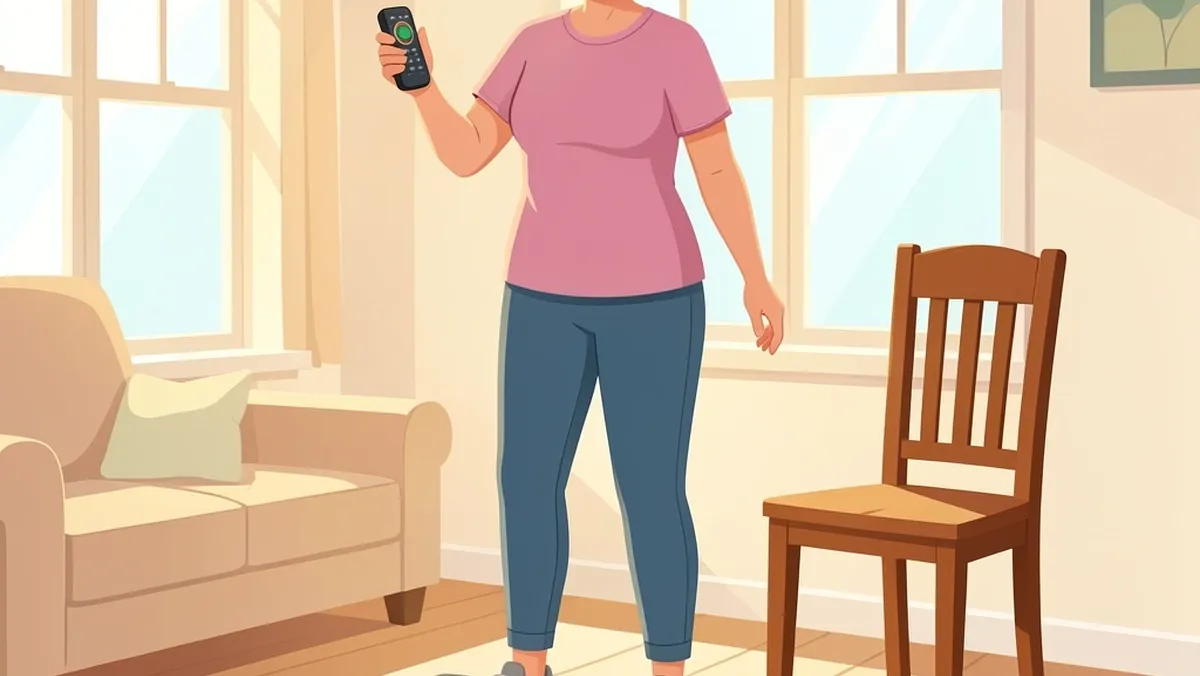
I get this question a lot from older adults and their families. The short answer is yes, but only when you pick the right machine and use it the right way.
A walking pad can help you move more without leaving home. It’s low impact, fits under a desk, and lets you walk while watching TV or talking on the phone. But it’s not for every senior.
Balance issues, weak joints, and certain health problems change the equation. Let me walk you through what I’ve learned from working with seniors and testing walking pads myself.
Are Walking Pads Safe for Seniors?
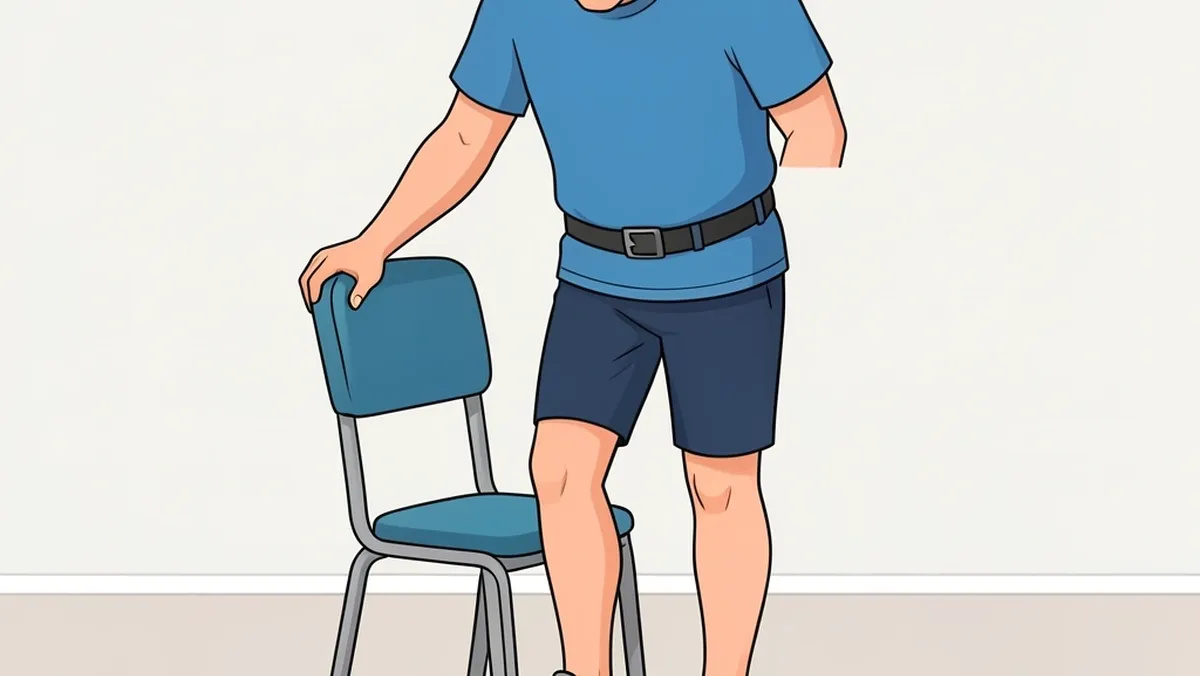
Safety is the first thing to think about. Most walking pads do not have handrails. That’s fine for a younger person, but for a senior, the risk of falling is real.
Most falls happen when you step on or off the pad, or when you try to stop quickly. If you already use a walker or cane, a walking pad is probably not safe without someone nearby.
If you have good balance and can stand on one foot for a few seconds without wobbling, a walking pad can work — but you still need to be careful.
I advise every senior to do this before buying: stand on the floor with your feet together and close your eyes for 10 seconds. If you sway or need to open your eyes, your balance needs work.
That doesn’t mean you can’t use a walking pad, but you must start with a chair or wall within arm’s reach.
Walking Pad vs Treadmill for Seniors
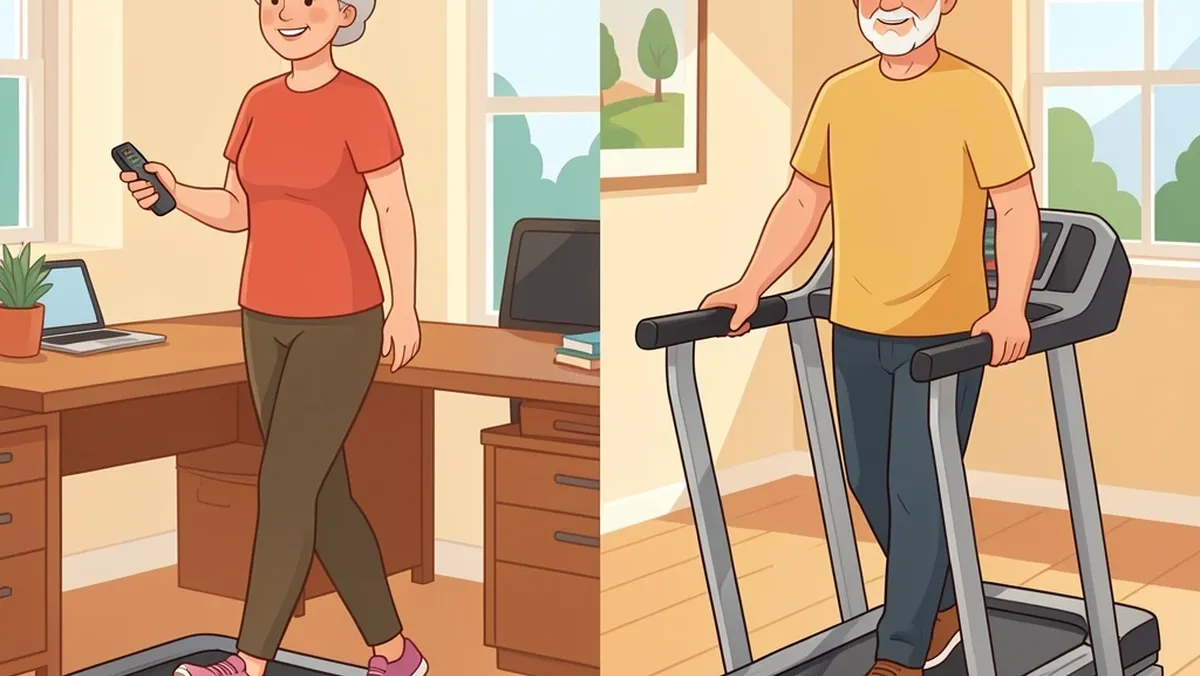
People often ask me if a regular treadmill is better. Here’s the honest difference:
- Handrails: Treadmills almost always have them. Walking pads rarely do. For a senior, handrails are a big plus. Some walking pads now come with optional handrails, but they are not as sturdy as a treadmill’s.
- Speed range: Walking pads max out around 4 mph. Treadmills can go faster. For seniors, 0.5 to 2 mph is the sweet spot. Walking pads usually have a low starting speed (0.5 mph), which is safer.
- Size and weight: Walking pads are lighter and fit under a desk. Treadmills are bulky and hard to move. If you have limited space, a walking pad wins.
- Stability: Treadmills are heavier and don’t shift when you step. A cheap walking pad can wobble. Spend at least $400 for a stable model.
- Incline: Most walking pads are flat. Some have a small incline. For seniors, flat is safest. Incline changes your stride and can stress knees.
| Feature | Walking Pad | Traditional Treadmill |
|---|---|---|
| Handrails | Rare (or optional) | Standard |
| Lowest speed | 0.5 mph | 0.5–1 mph |
| Weight capacity | 220–300 lbs | 300–400 lbs |
| Portability | Easy to move | Stationary |
| Fall risk | Higher (no rails) | Lower (rails) |
| Price | $100–$800 | $500–$3000 |
Health Considerations for Seniors Using a Walking Pad
Before you buy, think about your own health. Here’s what I’ve seen matter most.
Arthritis and Joint Pain
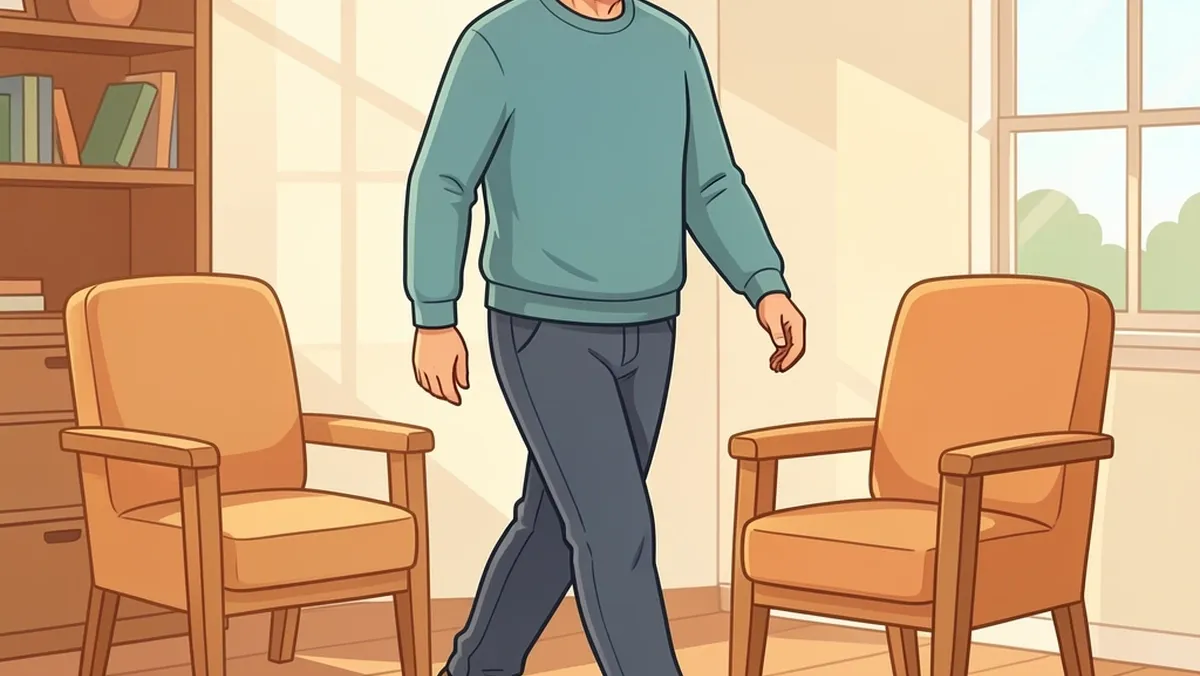
Walking on a flat surface at a slow speed is gentle on knees and hips. Many seniors with arthritis feel better after a short walk — it loosens the joints.
But if your arthritis is in your ankles or feet, the repetitive motion can hurt. Start with 5 minutes at 0.5 mph and see how you feel the next day.
Osteoporosis and Fracture Risk
A fall can break a bone. If you have osteoporosis, I recommend you only use a walking pad when someone else is home. Also, put a non-slip mat under the pad.
Never walk without shoes — bare feet or slippers increase the chance of slipping.
Balance Disorders and Neuropathy
If you have diabetic neuropathy or inner ear problems, your balance may be off. A moving surface makes that worse. I suggest you try standing on the pad while it’s off first.
Then turn it on at the slowest speed and hold a chair. If you feel unsteady, stop. Walking pads are not for everyone.
Heart Conditions and Blood Pressure
Light walking is good for the heart. But if you take beta-blockers or blood pressure medicine, you might not feel your heart rate rise as much. Don’t rely on how you “feel” — use a timer.
Start with 5 minutes. If you get dizzy, sit down right away. Keep a chair next to the pad.
Cognitive Impairment
For seniors with dementia or memory issues, a walking pad can be confusing. They may forget to stop or step off while it’s still moving.
I only recommend it if a caregiver is present and the pad has an automatic shutoff after a set time.
How to Choose the Best Walking Pad for Seniors
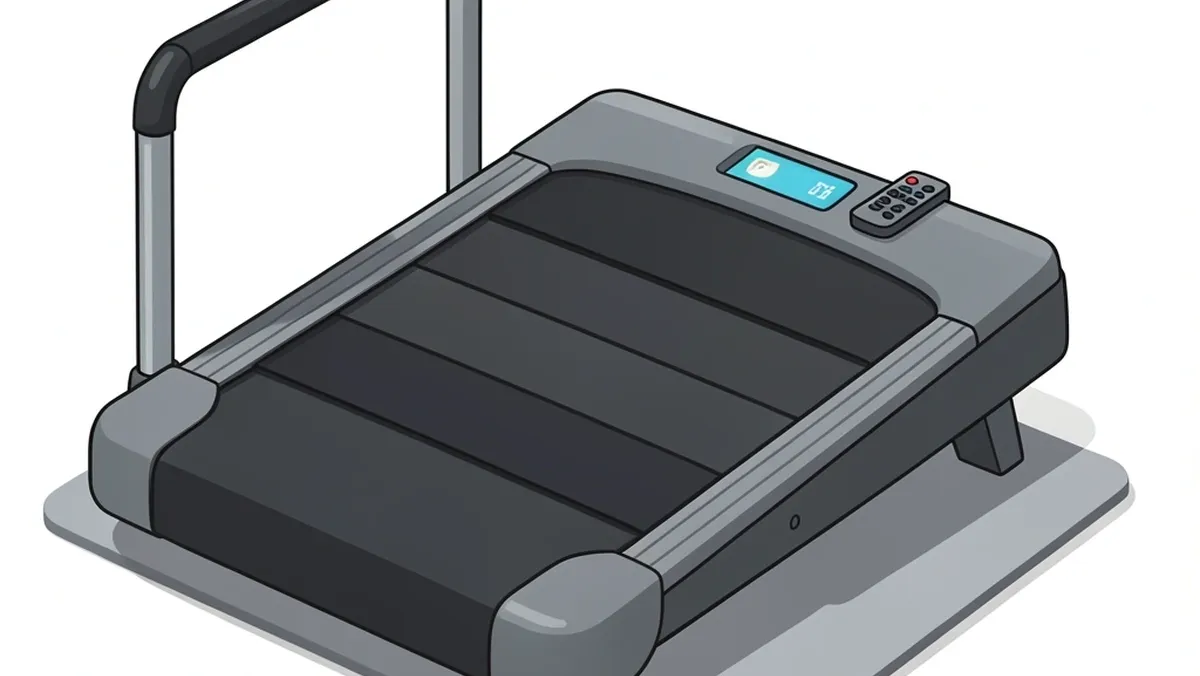
Not every walking pad is safe for an older person. Here’s what to look for:
- Low starting speed. Look for a model that starts at 0.5 mph or slower. Some cheap pads start at 1 mph, which is too fast for a beginner.
- Wide belt. A belt at least 18 inches wide gives you room to adjust your stride without stepping off the edge.
- Weight capacity. Check the max user weight. Most pads hold 220 pounds. If you weigh more, find one rated for 300+ pounds.
- Remote control or pause button. You want to be able to stop the belt without reaching down. A magnetic safety key that stops the belt if pulled is even better.
- Noise level. Seniors with hearing loss might not notice a noisy motor. Quieter is safer because you can hear your own footsteps and surroundings.
- Optional handrails. Some models (like the WalkingPad P1 or X21) have a detachable handlebar. That’s worth the extra money.
- Warranty and return policy. A good warranty means the company stands behind the product. Avoid no-name brands with no customer service.
Getting Started with a Walking Pad as a Senior
You have the pad. Now what? Follow these steps to stay safe.
- Check with your doctor. Especially if you have heart disease, osteoporosis, or take blood thinners. Ask: “Can I safely walk on a flat motorized surface at 1 mph?”
- Clear the area. No rugs, cords, or furniture within 3 feet of the pad. You need space to step off quickly.
- Place a chair or walker nearby. Use it for support the first few times. Touch it if you feel off balance.
- Start with the pad off. Stand on the belt and get used to the surface. Shift your weight side to side.
- Set the speed to 0.5 mph. Walk for 5 minutes. Keep your head up, shoulders back. Don’t look down at your feet.
- Increase slowly. Add 1 minute per day. After one week, you can go up to 1 mph if you feel steady. Never jump to 2 mph without handrails.
- Wear supportive shoes. Walking shoes with a heel counter. Not sandals, not slippers.
- Stop if you feel dizzy or short of breath. Sit down for a few minutes before trying again.
Myths About Walking Pads and Seniors
I hear these myths all the time. Let me clear them up.
Myth: Walking on a pad is the same as walking outside.
No. Outside you have wind resistance, uneven ground, and changes in terrain. A walking pad is smoother.
That means less effort from your core and ankles. You might feel more stable on a pad than on a sidewalk, but that can give you false confidence. Don’t assume you can walk outside the same speed.
Myth: Any cheap pad is fine for a senior.
Not true. Cheap pads have narrow belts, weak motors, and poor stability. They can slip or stop suddenly.
Spend at least $300 for a safe model. A $100 pad is a fall waiting to happen.
Myth: Walking pads are only for weight loss.
Seniors benefit most from improved joint mobility, better circulation, and a brighter mood. Weight loss is a bonus, not the main goal.
Critical Safety Checklist for Seniors
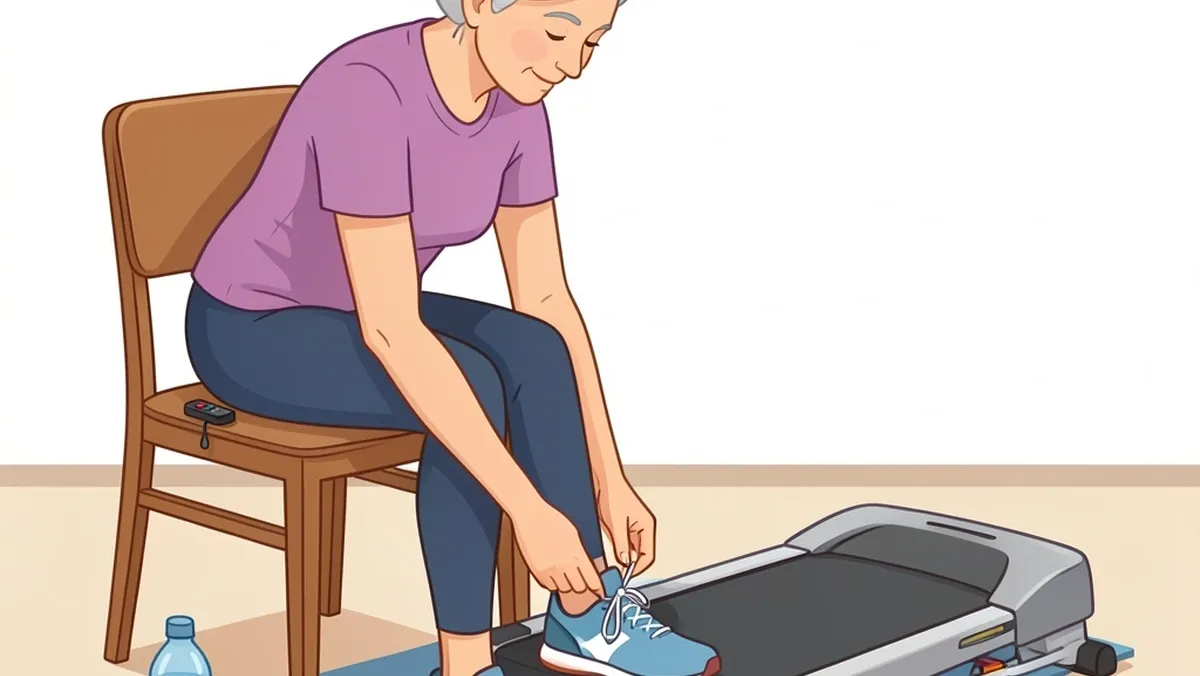
Before every use, run through this list:
- Doctor cleared you? Check.
- Pad is on a flat, non-slip surface? Check.
- No tripping hazards within 3 feet? Check.
- Chair or grab bar within arm’s reach? Check.
- You are wearing athletic shoes? Not sandals, not slippers.
- Timer is set for 10–15 minutes max (first month).
- Someone else is home (first two weeks).
- Remote stop button is in your hand or pocket.
Frequently Asked Questions
Can a 70-year-old use a walking pad every day?
Yes, but start with 10 minutes at a slow speed. Increase by 2 minutes each week. Watch for joint pain. If your knees or hips hurt the next day, back off.
Is a walking pad better than a stationary bike for seniors?
It depends. A walking pad puts weight on your bones, which helps prevent osteoporosis. A bike is easier on joints. If you have bad knees, a recumbent bike might be better.
If you want to improve your walking endurance, choose the pad.
Do walking pads help with balance in elderly?
Light walking can improve balance, but only if you use support. For real balance training, combine walking pad with exercises like standing on one foot (holding a chair).
Tai chi is better than a walking pad for balance.
What is the safest speed for a senior on a walking pad?
0.5 to 1.5 mph. Never go above 2 mph unless you have handrails and are very steady. At 1 mph, you get about 2,000 steps per hour.
Can a walking pad worsen knee pain?
Yes, if you set it to an incline or walk too fast. Flat walking at slow speed usually helps knee stiffness. If your knee hurts during or after, stop and check with a physical therapist.
Should seniors use walking pads if they have Parkinson’s disease?
Only with medical approval and a caregiver present. Freezing of gait (suddenly unable to move) can make the moving belt dangerous. Some therapy clinics use walking pads under supervision.
What are the best walking pads for seniors with arthritis?
Look for a wide belt (18+ inches), shock absorption, a low starting speed of 0.5 mph, and a remote stop button. Brands like WalkingPad, Urevo, and Goplus make models that fit these needs.
I also recommend a model with an optional handrail.