
How to Reduce Walking Pad Noise Without Buying New Gear

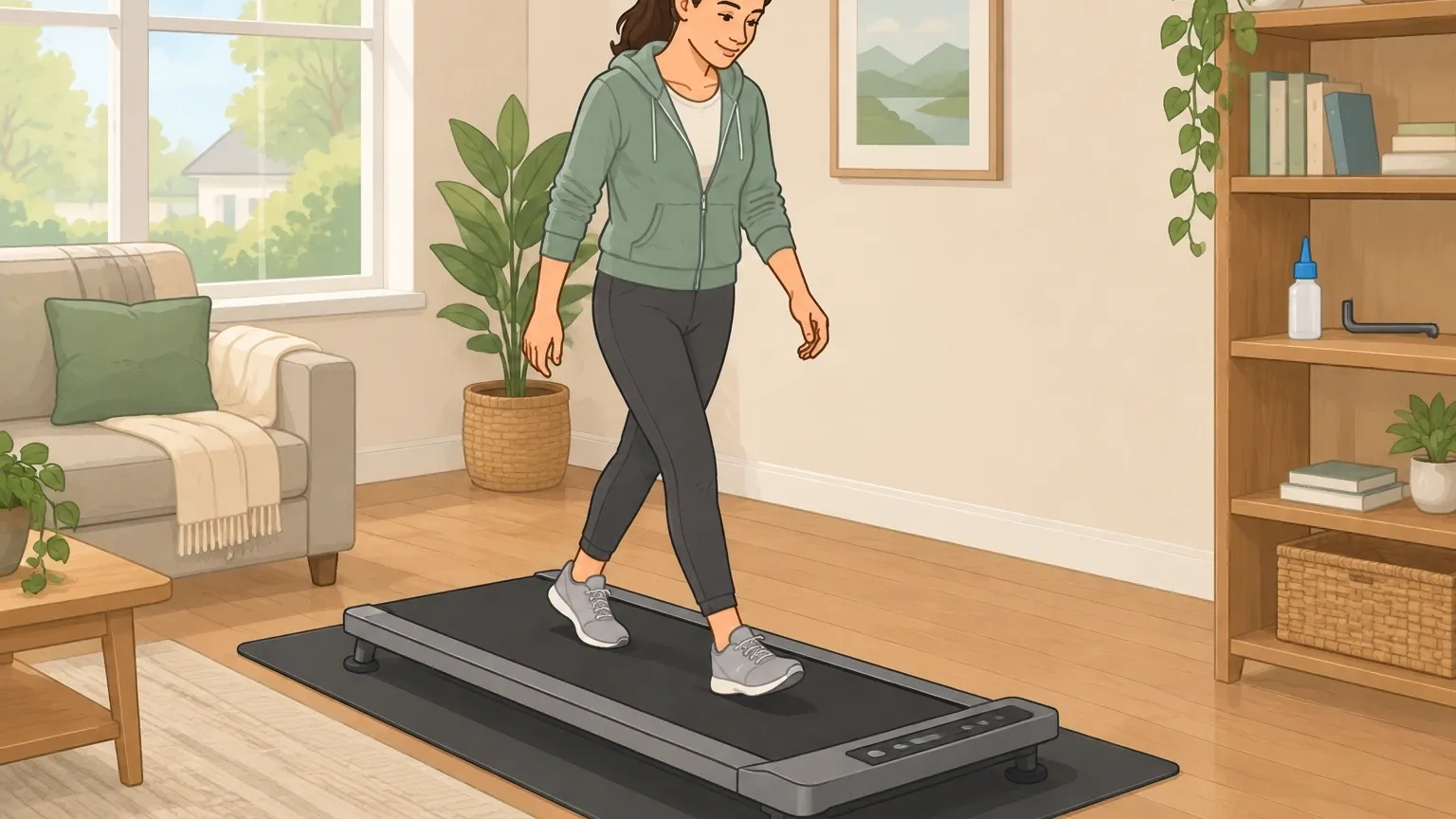
Walking pads are quieter than treadmills, but their lighter build means they make their own set of sounds.
A squeak with every step, a rubbing noise when the belt moves, or a whine from the motor can turn a peaceful walk into an annoying experience.
The good news is that most of these noises are fixable with a few simple checks and some basic maintenance. You do not need a new mat, a new machine, or special tools.
You just need to know what you are listening for.
Identify the Type of Noise on Your Walking Pad
Before you try any fix, you need to know what kind of noise you are dealing with. Walking pads produce four main types of sound, and each one points to a different problem.
Squeak – A high-pitched sound that happens with each step. This usually means the belt is rubbing against the deck or a joint in the folding mechanism is dry.
Rub or Squeal – A continuous sound that happens while the belt is moving, even when you are not stepping on it. This points to a dry deck or a belt that is out of alignment.
Thud or Clunk – An impact sound that you feel as much as you hear. This is often a floor issue, like the pad not sitting flat or the feet being uneven.
Whine or Hum – A motor sound. A low hum is normal for a brushed motor. A high whine on a brushless motor may mean a bearing or controller issue.
Diagnose the Noise Source
You can isolate the problem with a simple test. Run the walking pad at a low speed without stepping on it. Listen for any rubbing or squealing.
If you hear something, the issue is mechanical – belt, deck, or motor. If the pad is silent when empty but makes noise when you step on it, the problem is load-related.
That could be a loose belt, a dry deck, or a folding joint that only creaks under weight. While the pad is running empty, place your hand on each corner. Feel for vibration.
A strong vibration in one spot often means a loose foot or an uneven floor. Also, listen for clicking sounds near the folding hinge. That is a sign that the hinge pins need lubrication.
Quick Fixes for Common Walking Pad Squeaks
Most squeaks come from the belt rubbing against the deck. The fix is lubrication, but you have to use the right product and apply it correctly.
Lubricate the Belt
Use only 100% silicone lubricant. Do not use WD-40, spray oil, or grease. WD-40 is a solvent that will dry out the belt and make the noise worse. Grease is too thick and will attract dust.
To apply, lift the belt slightly with a flat object like a butter knife or a plastic scraper. Put a dime-sized drop of silicone lubricant on the centre of the deck, not on the edges.
Then run the belt at low speed for two minutes to spread the lubricant evenly. Wipe away any excess that seeps out from the sides.
Tighten the Belt
A loose belt can slip and create a rubbing sound. Most walking pads have a hex-key adjustment on the rear roller. Turn the adjustment bolts a quarter turn at a time on both sides.
Run the pad and listen. The belt should be tight enough that it does not slip when you push down on it, but not so tight that it strains the motor.
Tighten All Bolts
Walking pad frames can loosen during shipping or after months of use. Check the four corner bolts and the screws on the folding hinge. Use a hex key or screwdriver to tighten them.
A loose bolt can cause a rattle that sounds like a bigger problem.
Eliminate Structural Noise Transfer
Sometimes the noise is not coming from the machine itself. It is the vibration travelling through the floor and making the whole room hum. You can stop that with a few changes.
Use a High-Density Rubber Mat
A yoga mat or a thin carpet will not help. You need a dense rubber mat that is at least 6mm thick. This type of mat absorbs the shock of your steps before it reaches the floor.
It also stops the walking pad from sliding. Place the mat under the entire pad, not just under the feet.
Check the Feet Level
Most walking pads have adjustable rubber feet. If the pad rocks even slightly, it will create a thud with every step. Twist each foot until the pad sits flat on the floor.
You can also use a spirit level to make sure the deck is even.
Place the Pad in a Corner
Floors are stiffer near load-bearing walls and corners. The middle of a room acts like a trampoline and amplifies vibration. Move your walking pad to a corner or against a wall.
You will notice a big difference in how much sound travels through the floor.
Address Motor and Folding Mechanism Noise
Motor noise and hinge creaks need different treatments than belt noise.
Brushless vs Brushed Motor Hum
A brushless motor is naturally quieter than a brushed motor. If your brushless walking pad makes a high-pitched whine, it could be a failing bearing or a controller issue.
This is not something you can fix with lubrication. Contact the manufacturer for support. If your brushed motor makes a low hum, that is normal.
You can reduce the sound by placing the pad on a rubber mat.
Folding Joint Squeaks
The folding hinge is a common source of squeaks that only happen when you fold or unfold the pad. Use a PTFE dry-lube spray on the hinge pins.
Do not use silicone lubricant here because it will attract dust and make the joint sticky over time. Spray a small amount on each pin, then fold and unfold the pad a few times to work it in.
Walking Pad Myths That Cause Extra Noise
There are a few common beliefs about walking pad noise that are simply wrong. Avoiding these mistakes will save you time and frustration.
"Carpet alone will quiet it." Carpet absorbs airborne sound, but it compresses under the weight of the pad. This makes the pad unstable and increases structural noise.
You still need a hard rubber mat on top of the carpet. "All silicone lubricants are the same." Aerosol sprays can over-lubricate and attract dirt.
Use a liquid silicone with a precision nozzle so you can control the amount. "A heavier pad is always quieter." Weight is not the main factor.
A lighter walking pad with a brushless motor can be quieter than a heavy one with a brushed motor. Focus on the motor type and the belt quality.
Is the Noise Coming From the Floor or the Machine?
Here is a quick way to tell. Lift the walking pad slightly off the floor while it is running. If the noise continues, it is coming from the machine – belt, motor, or deck.
If the noise stops when you lift it, the problem is floor vibration transfer. In that case, add a rubber mat or check the feet level.
Build a Maintenance Schedule
A little regular care will keep your walking pad quiet for years.
- Lubricate the belt every three months or after 50 hours of use.
- Check belt tension once a month.
- Wipe the belt and deck with a dry cloth to remove dust.
- Inspect the folding mechanism screws every three months.
Frequently Asked Questions
Why does my walking pad squeak only when I step on the left side?
This usually means the belt is drifting to one side or the deck is slightly warped. Check the belt alignment first. If the belt is centred, the deck may need lubrication on that side.
Can I use WD-40 to stop my walking pad from squeaking?
No. WD-40 is a solvent and degreaser. It will dry out the belt and cause permanent noise. Use 100% silicone lubricant only.
How do I lubricate a walking pad belt without making a mess?
Lift the belt with a flat object, apply a few drops of silicone to the centre of the deck, then run the belt at low speed for two minutes. Wipe away any excess that seeps out.
My walking pad makes a grinding noise when I fold it – what to do?
Apply a PTFE dry-lube to the hinge pins. If the noise persists, the hinge bolt may be bent. Contact the manufacturer for a replacement.
Does a walking pad need a mat on hardwood floors?
Yes. A mat protects the floor from scratches and prevents the pad from sliding. It also reduces vibration transfer, which keeps the noise down.