
Do Walking Pads Make a Lot of Noise? A Measured Answer

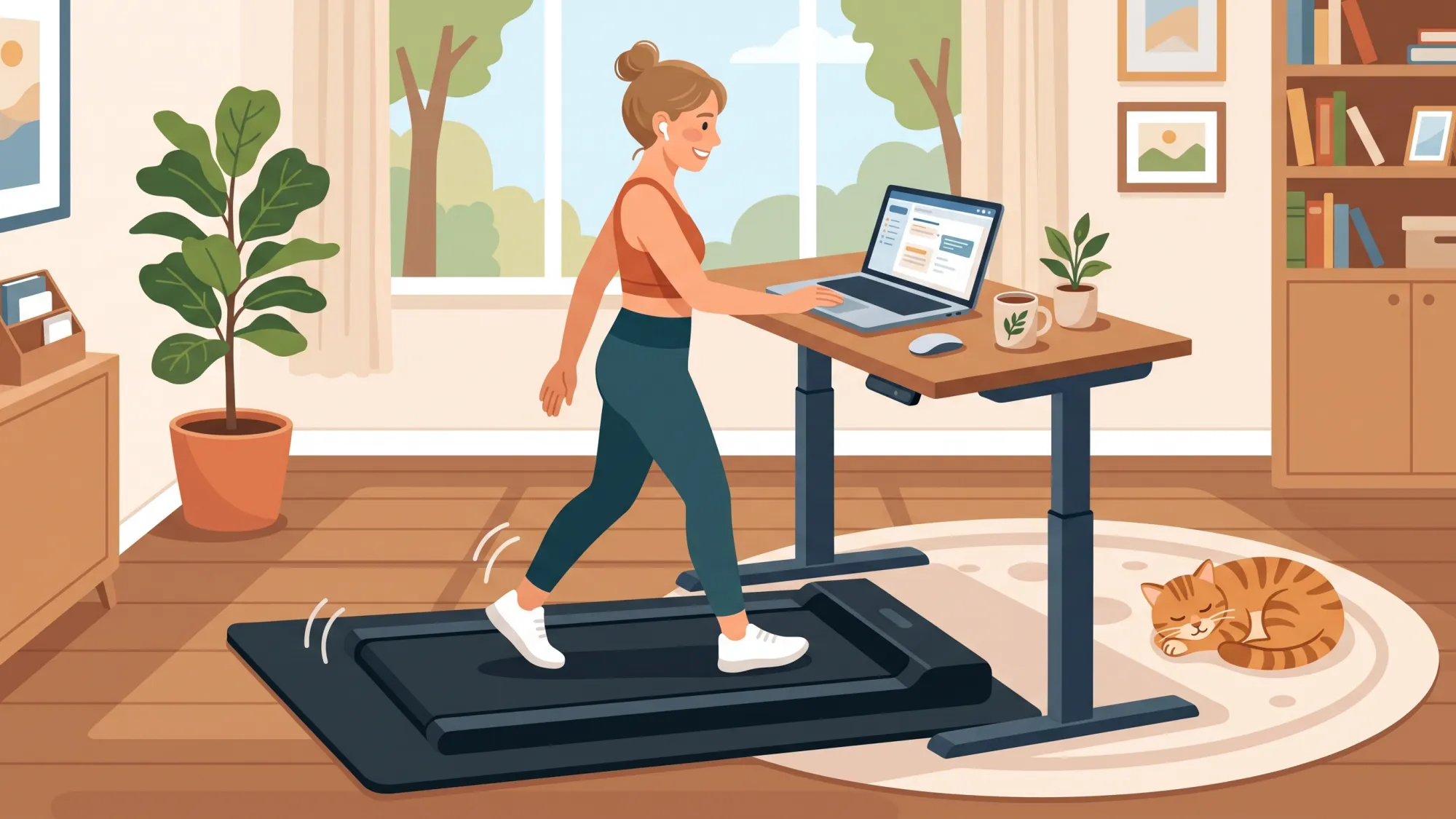
Walking pads are quieter than treadmills but noise depends on model, speed, and floor type. We explain decibel levels and how to reduce sound.
If you are thinking about buying a walking pad, you probably worry about the noise. Maybe you live in an apartment and do not want to disturb the people downstairs.
Or maybe you plan to use it while someone else sleeps in the same room. I had the same concerns when I bought my first walking pad.
Here is the honest answer: No, walking pads do not make a lot of noise compared to a full-size treadmill. Most walking pads produce sound between 40 and 55 decibels.
That is about the level of a quiet office or a running refrigerator. A gym treadmill, by comparison, hits 60 to 80 decibels.
But the real answer depends on three things: the specific walking pad, how fast you walk, and what kind of floor you put it on.
Let me walk you through what I learned after using different walking pads at home, and how you can control the noise in your own space.
What Actually Makes Noise on a Walking Pad
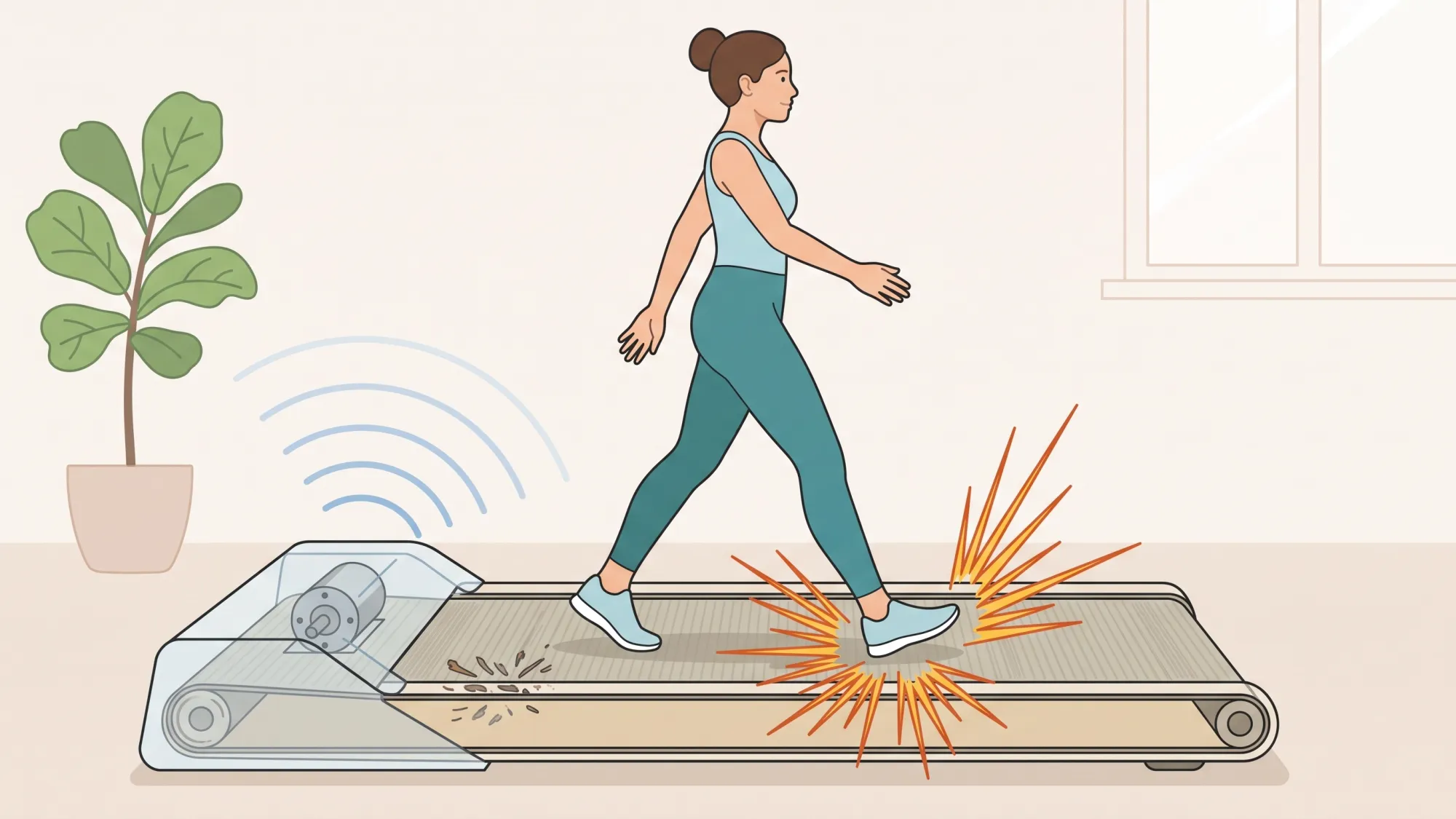
Understanding where the sound comes from helps you know what to listen for. There are three main sources: Motor hum. Most walking pads use a low-power DC motor.
These motors are quieter than the AC motors in big treadmills. The hum is steady and low-pitched. On a good walking pad, you barely notice it.
Belt friction. The belt sliding over the deck makes a light scuffing sound. This gets louder if the belt is too tight or too loose.
Cheap walking pads may have worse bearings that make this sound more noticeable over time. Footfall impact. This is the sound of your feet hitting the deck.
It is usually the loudest part. Heavy footsteps or faster walking speeds make more impact noise. A thick rubber pad under the walking pad absorbs most of this.
In my experience, the footfall noise is what travels to rooms below. The motor and belt sounds usually stay in the same room.
How Walking Pad Noise Compares to Everyday Sounds
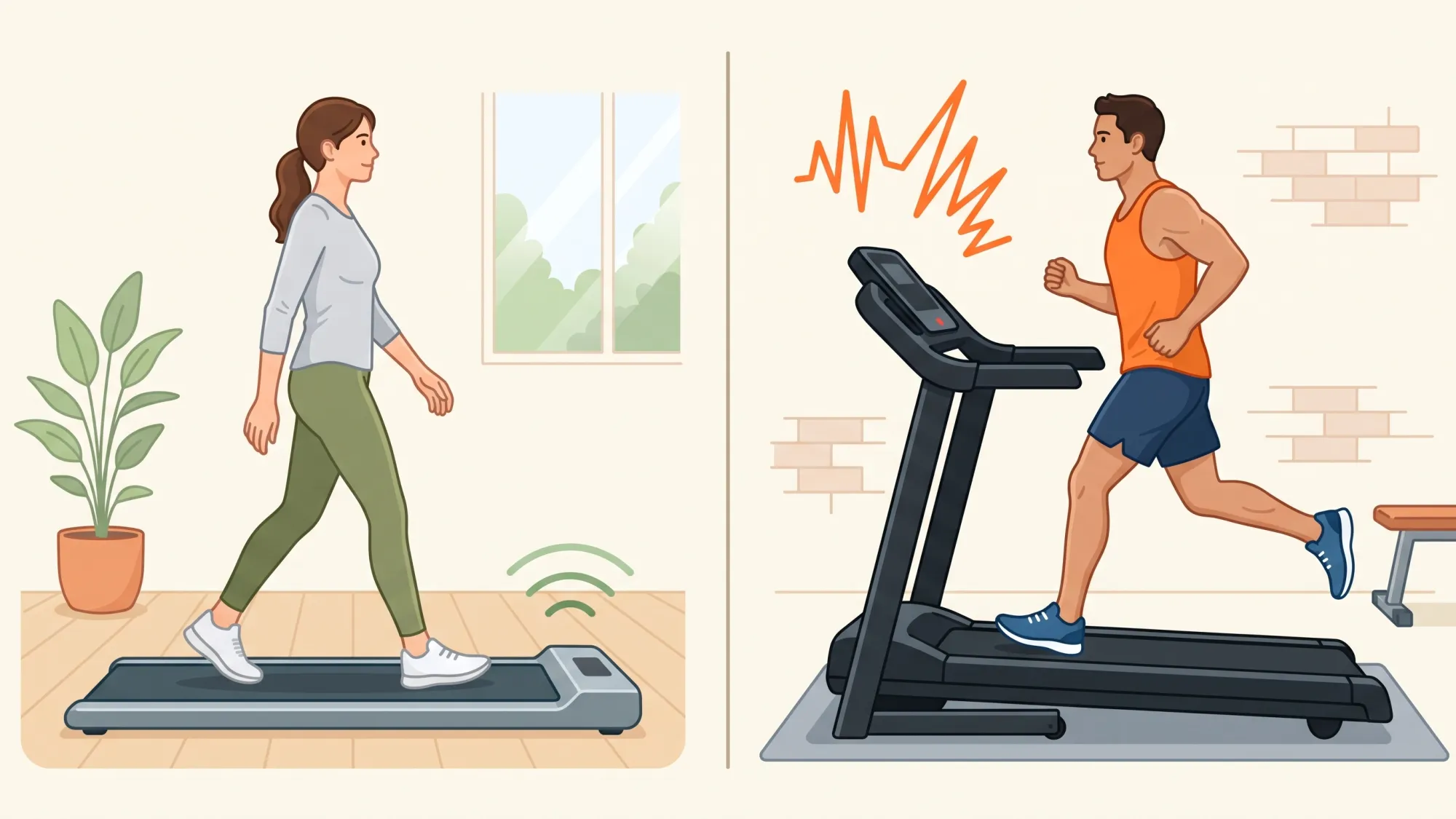
To give you a real sense of the noise level, here are some common sounds and their approximate decibel ratings:
- Quiet room: 30 dB
- Refrigerator hum: 35–45 dB
- Quiet office: 45–50 dB
- Walking pad at 1.5 mph: 40–45 dB
- Walking pad at 3 mph: 50–55 dB
- Normal conversation: 60 dB
- Gym treadmill: 65–80 dB
At normal walking speed, your walking pad is about as loud as a quiet conversation held across the room. At low speed, it is barely louder than background noise.
Do Walking Pads Make Noise Downstairs?
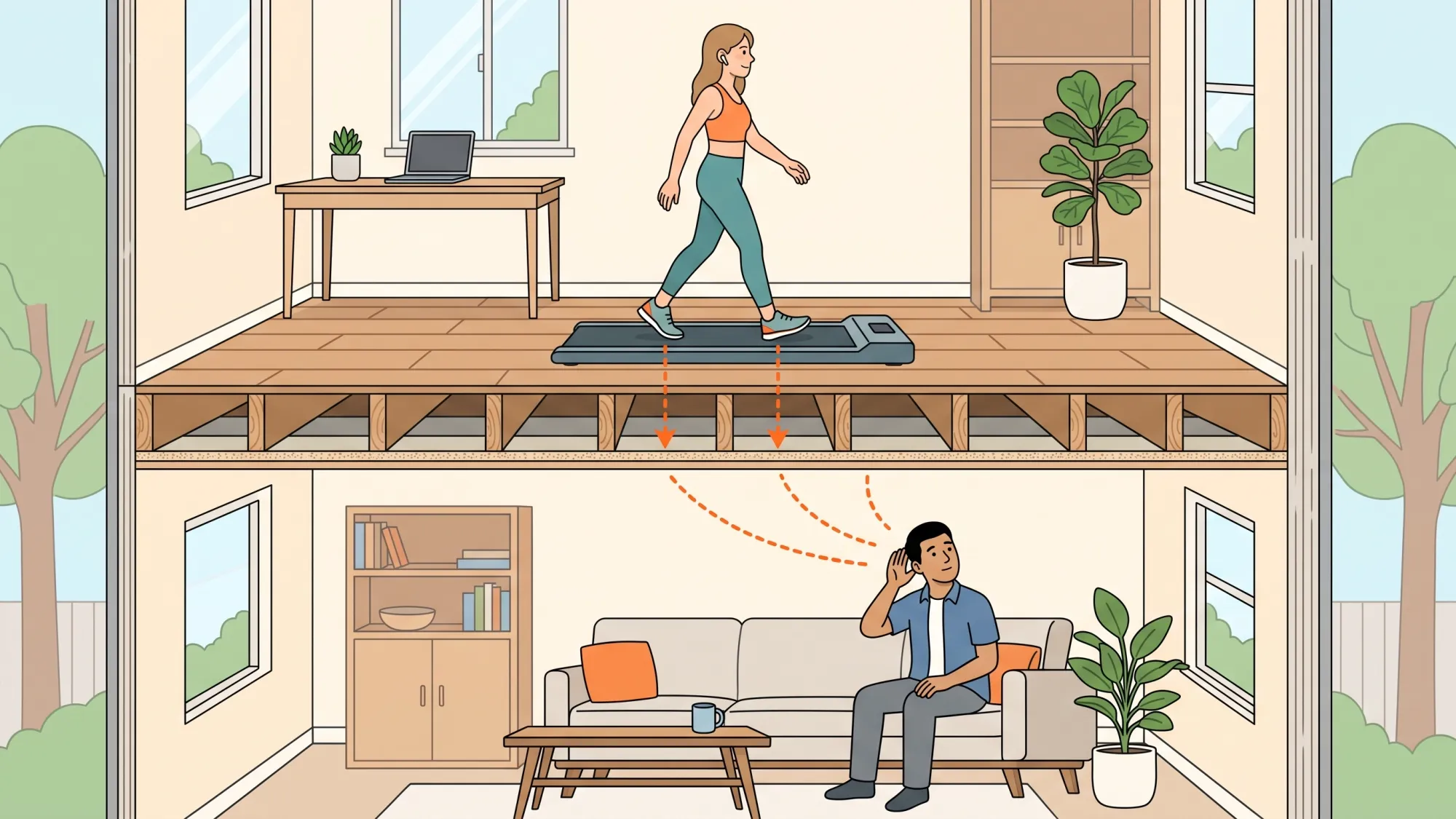
This is the question that most reviews skip, and it is the one that matters most for apartment dwellers.
The short answer: Yes, a walking pad can make noise downstairs, but it is usually from impact vibration, not from the motor.
The sound of your foot hitting the deck vibrates through the floor structure. How much noise travels depends on your floor type.
Concrete floors. If you live on a concrete slab, impact noise is minimal. The concrete absorbs most vibration. A walking pad on concrete is nearly silent for the person below.
Wooden floors. If you live on a second floor with wooden joists, each step can transmit as a low thud to the room below. The sound is not loud, but it is rhythmic and can be annoying.
What you can do about it. I tested a walking pad on a second-floor wooden floor. Without a mat, my neighbor said it sounded like someone pacing.
After I added a high-density anti-vibration mat, the noise dropped to a dull shuffle. A yoga mat is too thin for this purpose. You need a mat made for treadmills or heavy exercise equipment.
Are All Walking Pads the Same Volume?
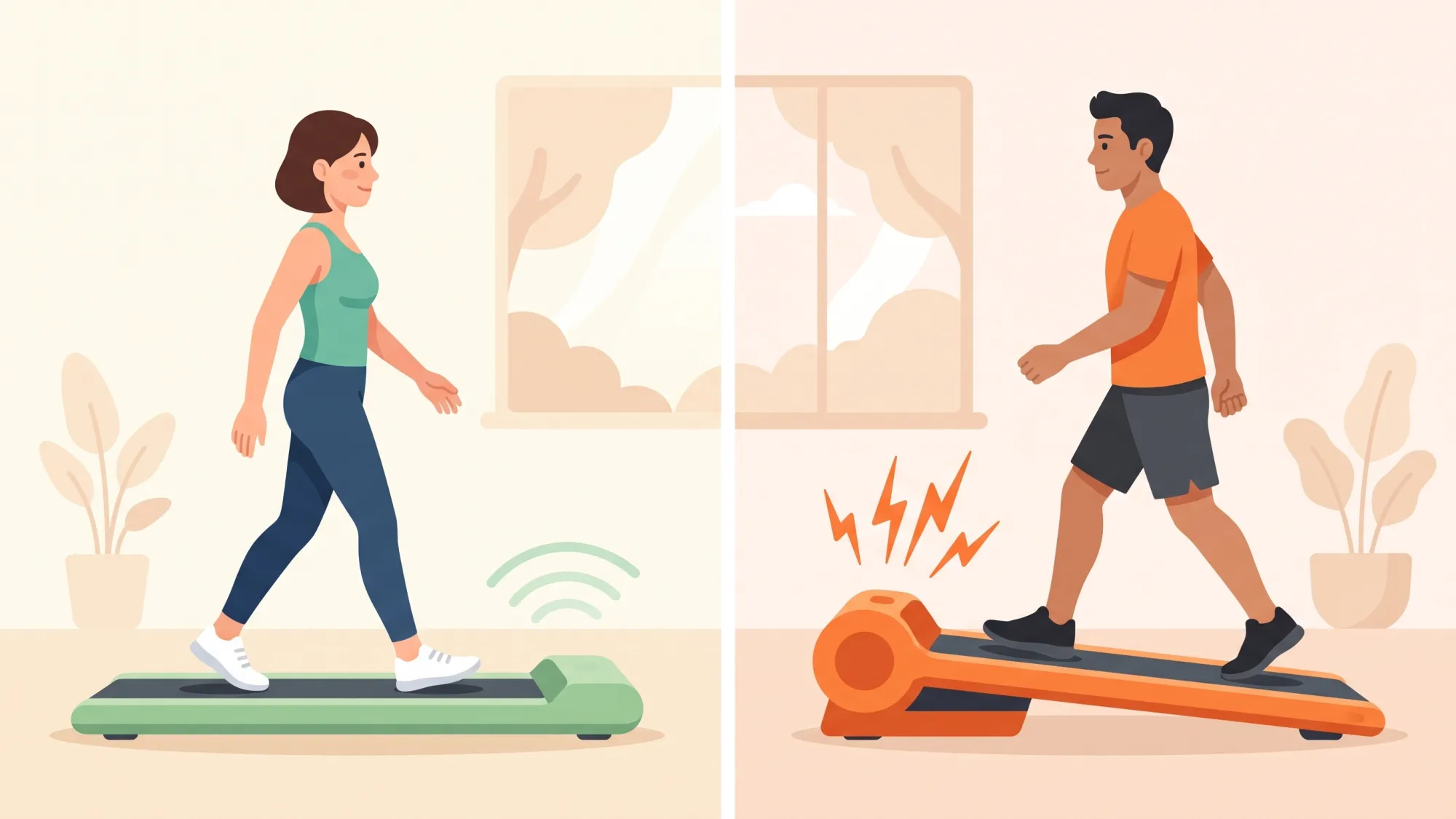
No, and this is where product choice matters. I have used two different walking pads, and they were noticeably different in sound. Flat walking pads without incline are usually the quietest.
They have smaller motors and a simpler belt system. The Ecogou model I reviewed is a good example. It is quiet, with only a low hum and no squeaks or rattles.
Incline-capable walking pads have larger motors. The motor itself is louder, and you can sometimes hear a pitch change when the incline engages.
These are still quieter than a treadmill, but not as quiet as a flat pad. The price can also tell you something. Cheap walking pads under $200 often use poor quality bearings.
They start off quiet but get louder after a few months. A pad in the $300–$500 range usually holds its sound level for years.
How to Make Your Walking Pad Quieter
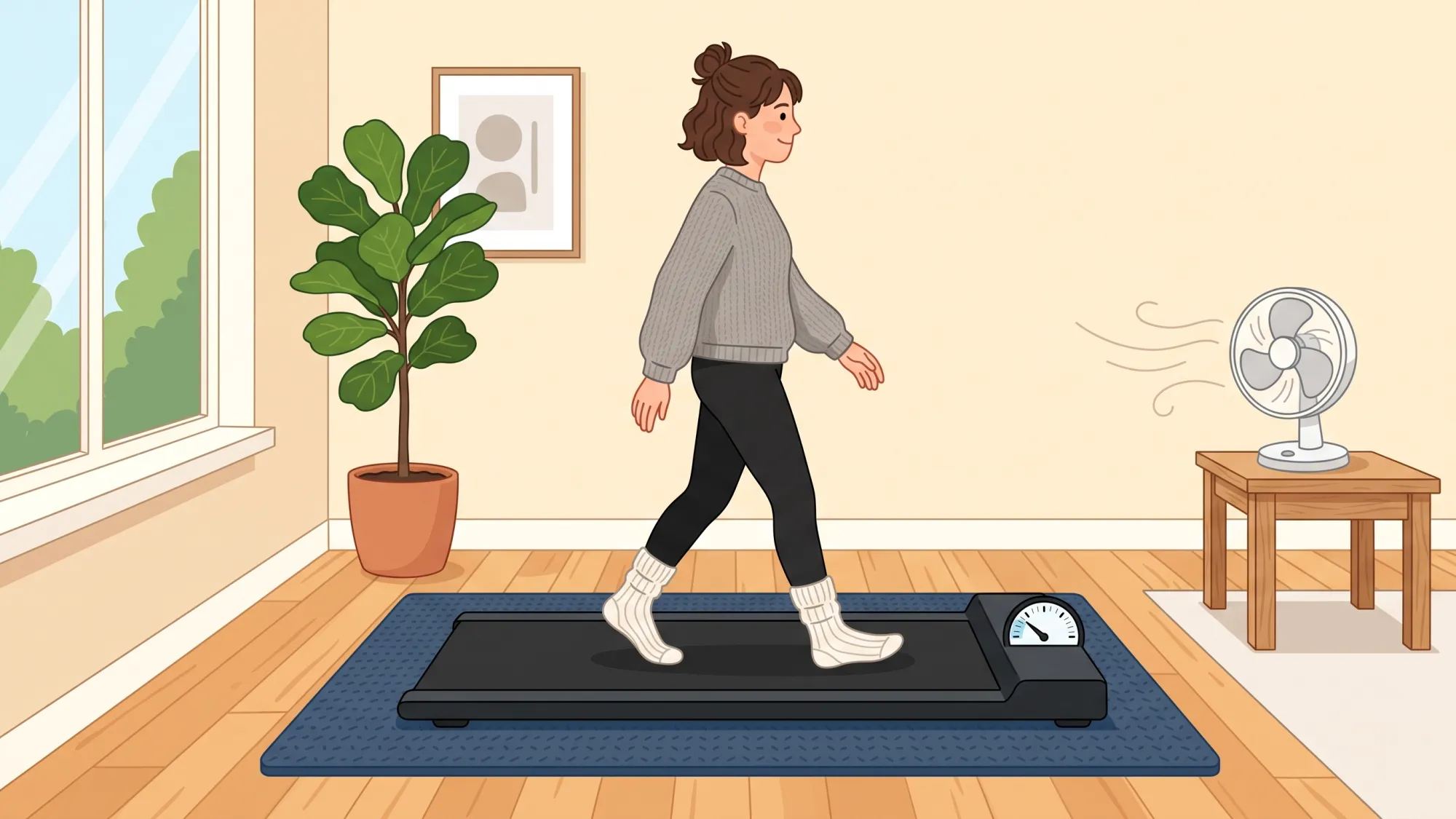
If you already own a walking pad or are about to set one up, these steps work:
- Use a proper anti-vibration mat. Do not skip this. A thick rubber mat absorbs both footfall impact and motor vibration. It also protects your floor.
- Place the pad against a load-bearing wall. An exterior wall or a wall directly over a support beam transfers less vibration than an interior wall on a hollow floor.
- Keep the belt tension right. A belt that is too tight makes a scraping sound. A belt that is too loose slaps the deck. Follow the manual to adjust it.
- Walk in socks or soft shoes. Bare feet hit harder. Walking shoes with thick soles also work. Avoid hard-soled shoes.
- Stay at lower speeds. The faster you walk, the louder the footfall. A speed of 1.5 to 2.5 mph is much quieter than 4 mph.
One tip I do regularly: put a decibel meter app on your phone while the pad runs. Place the phone on the floor in the room below or next to the pad.
This gives you a real number to measure changes when you add a mat or adjust the belt.
Will a Walking Pad Disturb Someone Sleeping in the Same Room?
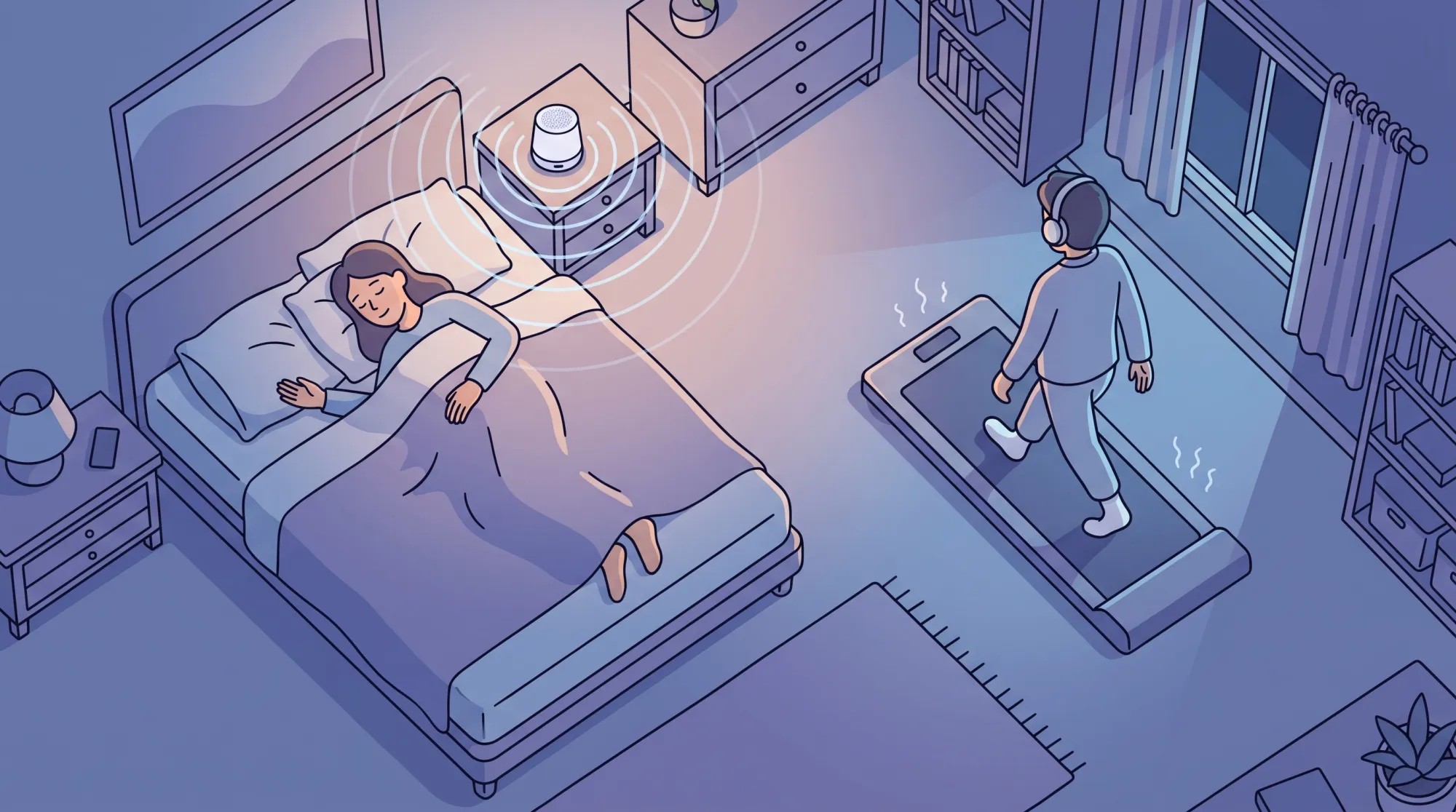
This depends on how close the bed is and how light the person sleeps. At 2 mph with a mat underneath, the sound is a low hum and a soft shuffle.
Most people can sleep through it if they are used to background noise. Some people are sensitive to repetitive sounds, especially the footfall rhythm.
If you plan to walk while your partner sleeps, keep these things in mind:
- Place the pad as far from the bed as possible.
- Use a white noise machine or fan in the room to mask the sound.
- Keep speed under 2.5 mph.
- Do not use the incline if your model has one.
In my case, I used my walking pad in the living room while my wife slept in the bedroom. She said she could not hear it at all.
Is the Motor Noise of a Walking Pad Annoying Over Time?
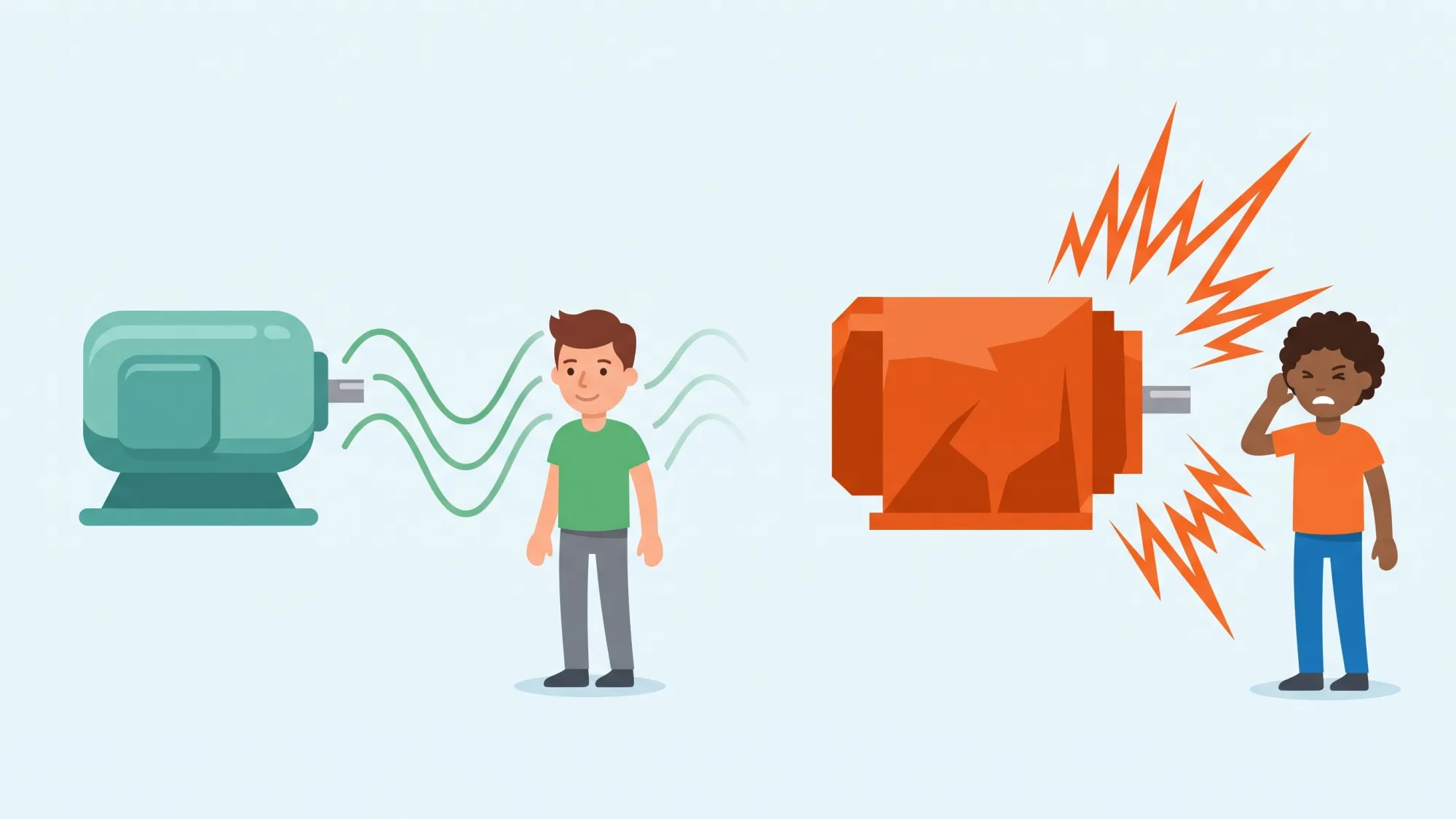
For most people, the hum of a DC motor fades into the background. But not all motor noises are the same. A cheap motor can produce a high-pitched whine or a clicking sound.
This type of noise is more tiring to listen to for long periods. The tonal quality matters. A low hum is easy to ignore. A high-pitched whine is not.
Listen to a short video or user review that shows the motor sound before you buy. It is not just about decibel level.
Do Walking Pads Take a Lot of Electricity?
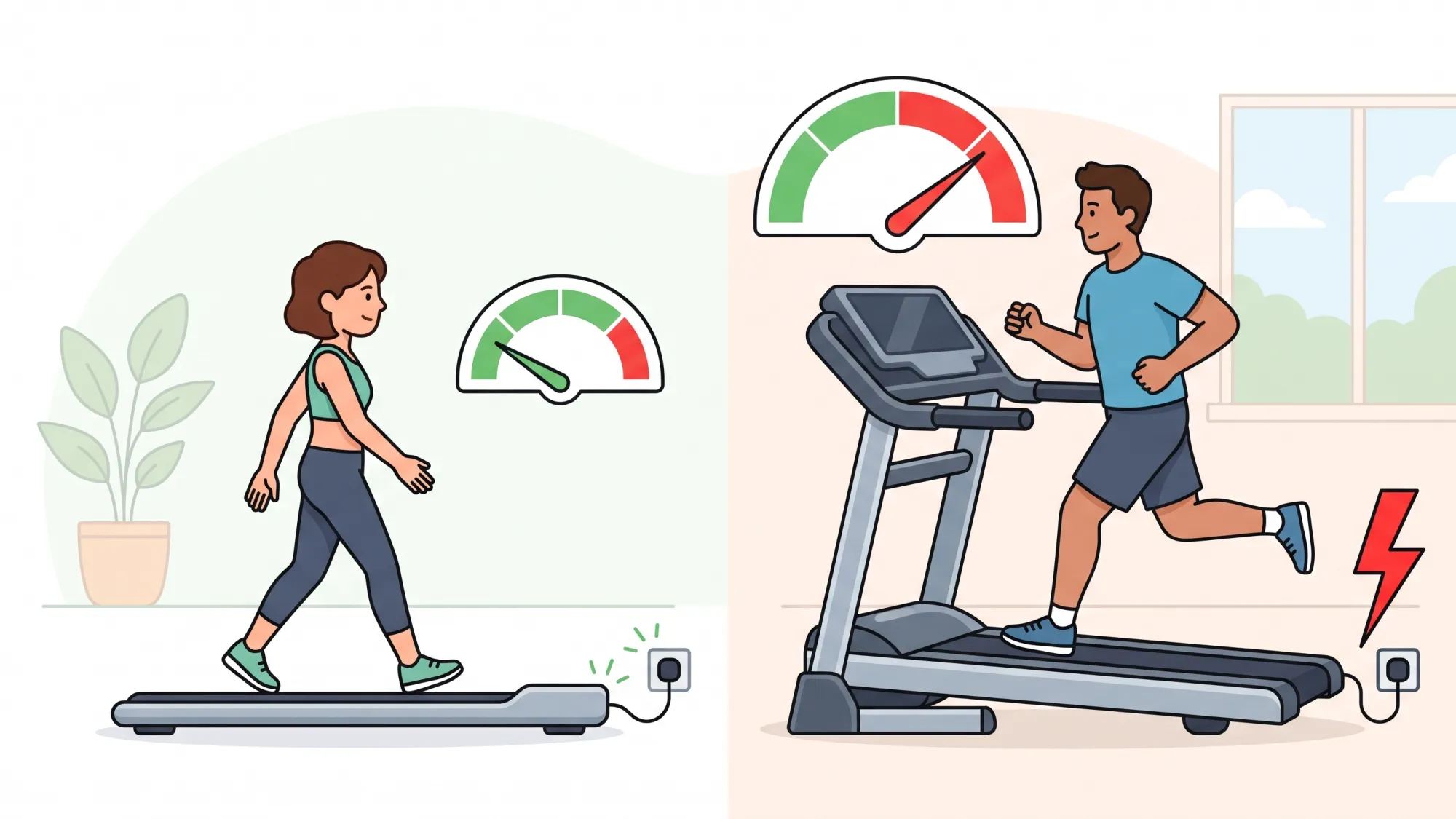
Some people wonder if the motor noise has a high electricity cost to match. The answer is no. A typical walking pad uses between 200 and 400 watts while in use.
A full-size treadmill uses 2 to 3 kilowatts. At average electricity rates, running a walking pad for one hour costs about 3 to 5 cents. Running a treadmill costs about 30 to 50 cents.
How to Stop Pants from Making Noise When Walking
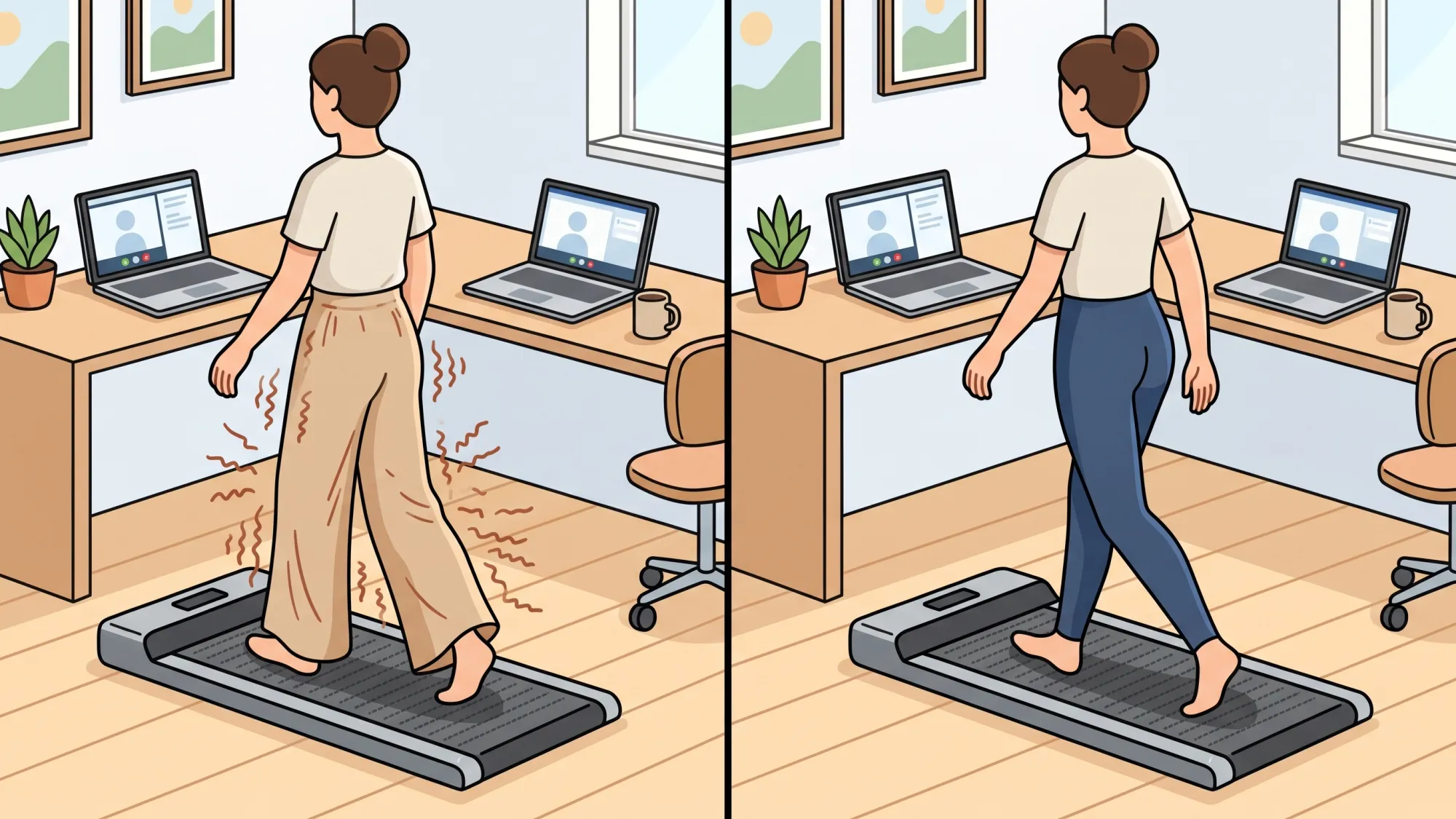
Sometimes the noise is not the machine at all. Loose-fitting pants can rustle with each step. This sound can be mistaken for pad noise, especially on video calls.
If you walk in a quiet room, wear tighter joggers or leggings. This reduces the fabric rustle close to the microphone.
Frequently Asked Questions
How loud is a walking pad in decibels?
Most walking pads produce 40 to 55 decibels at normal walking speeds. This is similar to the sound of a quiet office or a running refrigerator.
Can my downstairs neighbor hear my walking pad?
On concrete floors, the sound is minimal. On wooden floors, footfall vibrations can travel. A thick anti-vibration mat reduces this significantly.
Do you need a mat under a walking pad?
Yes. A high-density mat absorbs impact vibration and protects the floor. It also reduces noise for people below you.
Are walking pads quieter than treadmills?
Yes. Walking pads are significantly quieter than treadmills because they use smaller motors and operate at lower speeds.
Is a walking pad loud enough to disturb a meeting?
No. A walking pad at slow speed is quiet enough to use during a phone call or video meeting without being noticed, especially if you use a headset. No two home setups are the same.
The floor type, the pad model, and how you use it all change the sound. But with the right choices, a walking pad can be a quiet part of your daily routine.