Do Walking Pads Have a Weight Limit
Yes, every walking pad has a weight limit. Learn why it matters, what happens when you exceed it, and how to choose a model that truly supports your body weight and walking style.

The definitive answer is yes: every walking pad comes with a specific weight limit, usually between 220 and 400 pounds. This number is not just a random spec.
It reflects how much load the frame, motor, belt, and deck can handle safely over time. If you are shopping for a walking pad, your body weight is the first thing to match against that number.
But the real question goes deeper. You need to know if the limit is honest, how it was determined, and what happens when you walk anywhere near it.
Why this matters immediately: A walking pad that cannot support your weight will feel unstable, wear out fast, and likely break within months.
The motor may overheat, the deck may compress, and the frame may wobble. Worse, most manufacturers void the warranty if the unit shows signs of overload.
Knowing the weight limit is only half the battle. Understanding what that limit actually means for your daily use is what keeps you safe and your machine running.
How Weight Limits Are Determined
Manufacturers calculate weight capacity by testing three main parts of the walking pad together. The weakest part sets the limit.
Frame Construction and Materials The frame is usually made of steel tubing. Budget models use thin steel, around 1.0 to 1.5 millimeters thick.
Heavy-duty models use 2.0 millimeters or more. A thin frame can twist slightly under heavier loads, causing a feeling of instability. Over time, twisting leads to cracks at the welded joints.
A thicker frame resists this torsion much better.
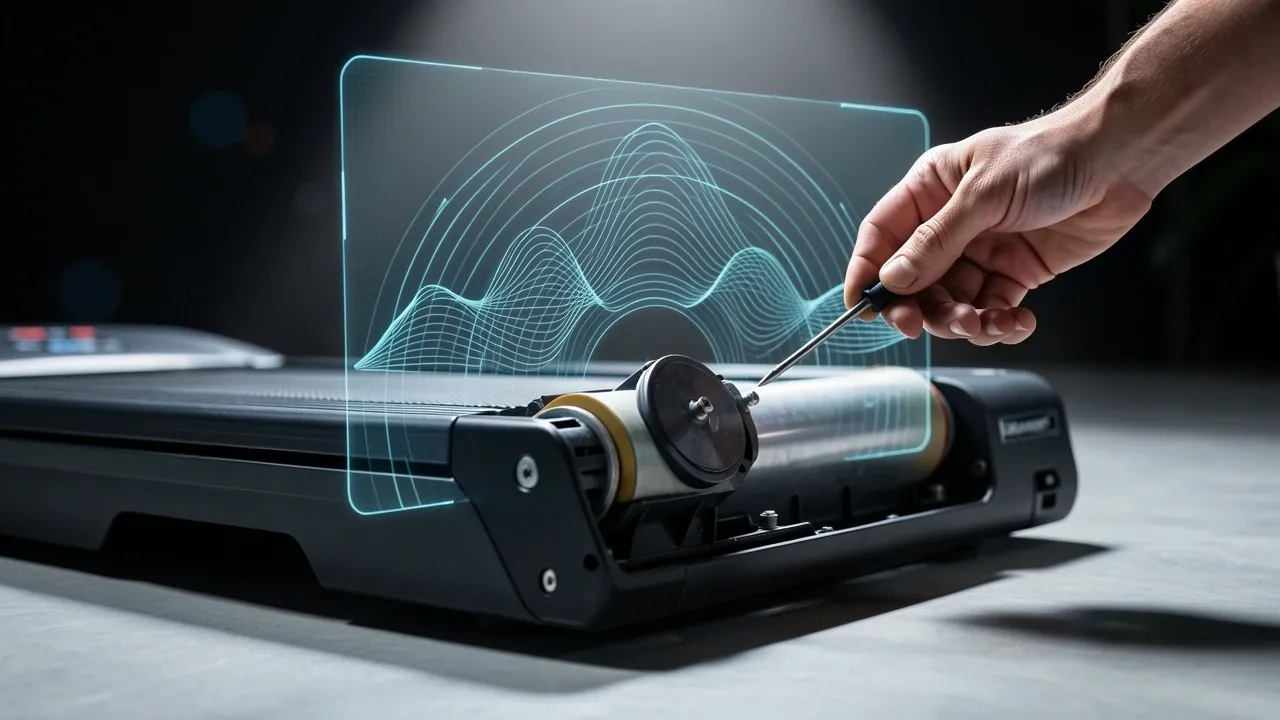
Motor Specifications Walking pad motors are rated for continuous duty, meaning they can run at a certain power level without overheating.
A 1.0 horsepower motor can handle a lighter person walking slowly. A heavier person needs at least 2.0 horsepower to keep the belt moving smoothly.
If the motor is too small, it runs hot, and the controller board is the first part to fail. That failure can be dramatic, with smoke or a sudden stop.
Belt and Deck Assembly The walking belt slides over a deck that absorbs impact. Thinner decks, around 12 to 15 millimeters, compress more under weight.
This compression increases friction between the belt and the deck, making the motor work harder.
Premium decks are 18 to 20 millimeters thick and use laminated wood or composite materials that keep their shape under pressure. A worn deck makes the belt hesitate or stick, especially at startup.
Two walking pads might both claim 300 pounds, but one achieves it with a strong frame and a weak motor, while the other uses a strong motor on a flimsy frame.
Always check which component is the real bottleneck.
What Happens When You Exceed the Weight Limit
Going over the limit does not cause an instant crash. But it speeds up failure in every major part.
Motor and Controller Stress The motor has to work harder to overcome the extra friction from a compressed deck. This generates heat that damages the controller board.
Most controller failures happen within the first 100 hours of use when overloaded by just 15 percent. You might hear the motor straining or notice the belt slowing down during a walk.
Deck and Belt Degradation The deck material compresses permanently over time. Within weeks, the belt may start to stick or hesitate, particularly when you first step on.
The belt itself stretches faster under higher tension, requiring more frequent tightening or replacement. Frame Fatigue Repeated load cycles create tiny cracks in the welded joints.
These cracks grow slowly. The first sign is a creaking sound or a wobble that was not there when the unit was new.
Quality machines rarely collapse suddenly, but the unstable feel makes walking unpleasant.
Voided Warranty Manufacturers specifically state that using a walking pad beyond its weight limit voids all warranty coverage.
If the motor fails or the deck cracks, you pay full price for repairs. Some brands detect overload through motor current sensors and refuse service even without visible damage.
Real-World Lifespan Industry experience shows that exceeding the limit by 10 to 15 percent cuts the machine's life roughly in half.
A walking pad rated for 250 pounds used at 280 pounds may last 6 to 12 months of daily use instead of 2 to 3 years.
Why Dynamic Weight Matters More Than Your Body Weight
Your body weight on the scale is not the whole story. Every step you take creates a force higher than your weight.
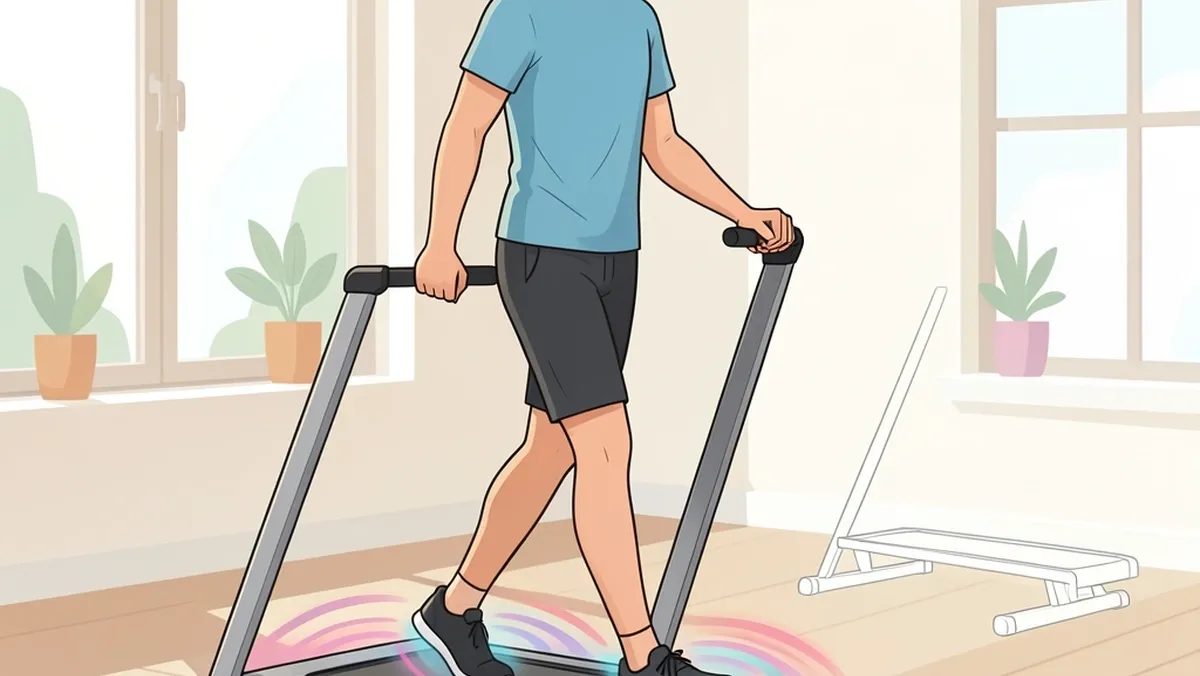
Ground Reaction Forces When you walk at 2 to 3 miles per hour, each foot strike hits the deck with about 1.2 to 1.5 times your body weight.
At a faster pace, 3 to 4 miles per hour, that force jumps to 1.8 to 2.0 times. A 200-pound person walking at 3 mph creates roughly 260 to 300 pounds of force with every step.
That is the true load the walking pad must handle. Your Gait Pattern Heel strikers produce sharp, high-peak forces concentrated on a small area of the deck.
Forefoot walkers spread the load more evenly but create twisting stress on the frame. Your natural walking style can mean the difference between a machine lasting three years versus one year.
Stride Length and Deck Edge Stress Taller users with longer strides place their full weight near the front or back of the deck. Those areas often have less reinforcement.
A 6-foot-4 user walking on a 40-inch deck hits unsupported edges with each stride, effectively stress-testing the frame beyond what engineers assumed.
How to Estimate True Load Multiply your body weight by: - 1.2 if you walk slower than 2 mph - 1.4 if you walk 2 to 3 mph - 1.7 if you walk 3 to 4 mph If that dynamic load exceeds the walking pad's weight limit, you are operating in the failure zone.
Even if your body weight is under the limit, the dynamic force may push you over.
Weight Limits Across Walking Pad Categories
Different price and quality tiers have distinct weight capacity profiles. Here is a quick comparison to help you narrow your options.
| Category | Price Range | Weight Limit | Frame | Motor | Best For |
|---|---|---|---|---|---|
| Budget | Under $300 | 220–265 lbs | Thin steel, minimal bracing | 0.75–1.25 HP | Users under 200 lbs, occasional use |
| Mid-Range | $300–$600 | 265–300 lbs | Thicker steel, reinforced joints | 1.5–2.0 HP | Regular daily users up to 250 lbs |
| Premium Heavy-Duty | $600+ | 350–400 lbs | Commercial-grade steel, welded gussets | 2.5–3.5 HP | Users up to 350 lbs for daily use |
| Ultra-Portable | Varies | 200–220 lbs | Deliberately thin for light weight | Small motor | Light users who prioritize storage |
Budget models are fine for lighter people who walk occasionally. Mid-range units give a safe margin for regular use.
Premium heavy-duty models are the only real choice if you weigh over 300 pounds or plan to walk daily near your limit.
Ultra-portable models fail fastest under heavier loads because they sacrifice frame strength for weight.
How to Verify If a Walking Pad Can Handle Your Weight
Manufacturer specs are a starting point, not the final word. Use these steps to confirm a machine is truly suitable.
Step 1: Read Reviews from Users Close to Your Weight Search for phrases like "I weigh X pounds and it feels solid" or "creaking after three months." User experiences from people who share your body type are the most honest test.
Avoid reviews from very light users, because their feedback does not apply to you. Step 2: Check the Motor's Duty Cycle Walking pad motors have two ratings: peak and continuous.
A peak rating of 2.0 HP might drop to 0.8 HP when running for more than a few minutes. Look for motors that advertise a continuous duty rating.
That number tells you how much power the motor can sustain for a full walking session. For heavier users, continuous 1.5 HP is the minimum.
Step 3: Examine Deck Thickness and Material The deck spec is often hidden in the manual or a Q&A.
A 15 millimeter particle board deck with a thin laminate is the minimum for light use. An 18 to 20 millimeter plywood deck with a thick laminate indicates proper design for higher loads.
Replacing a deck costs about half the price of a new walking pad, so you want one that lasts.
Step 4: Look for Extended Warranty A manufacturer that offers a 3-year warranty on the frame and motor is confident in its build.
A 1-year warranty on a machine rated for 400 pounds raises questions. Extended warranties signal that the company expects the machine to survive real-world use.
Step 5: Contact Customer Support Ask them: "What is the continuous duty weight limit, and how does that compare to the maximum limit on the product page?" If the representative hesitates or gives a vague answer, consider it a red flag.
Quality brands train their support staff on these numbers.
Walking Pads with the Highest Weight Limits
If you need maximum capacity, these specific models have proven reliable for heavier users.
Merach W50 Walking Pad – 400 lbs This unit uses a 2.5 horsepower brushless motor and a 20 millimeter laminated deck. The frame is reinforced with welded gussets at stress points.
Long-term reviews from users between 350 and 400 pounds report stable operation after 6 months of daily use. The 12 percent incline function works without noticeable motor strain even at maximum load.
This is the model I recommend for anyone over 300 pounds who wants a machine that feels solid underfoot.
Urevo Strol 2E with Auto Incline – 400 lbs The 2.5 horsepower motor and commercial-grade controller board handle sustained loads well.
The steel frame is thicker than most competitors in the same price range. Users report that the motor maintains consistent speed during incline intervals even at the top of the weight capacity.
The 400-pound limit appears conservative based on actual user feedback.
WalkingPad X32 Series – 330 lbs While lower than the top contenders, this model offers a 32-inch wide belt instead of the standard 16 to 20 inches.
The wider surface distributes weight across a larger area, reducing pressure per square inch on the deck. This design extends component life.
It is ideal if you want stability and do not need the absolute highest weight limit.
DeerRun Heavy-Duty Models – 300 to 350 lbs DeerRun's higher-tier models feature reinforced frames and upgraded motors.
Their warranty support for weight-rated claims has been better than many budget competitors. The incline function operates reliably under higher loads, which is not true for every budget incline model.
Budget Alternative Under $300 – 265 lbs For users near 250 pounds, some budget models with 1.5 horsepower continuous motors and frames over 50 pounds can work.
Heavier frames generally correlate with better load tolerance. But expect a shorter lifespan compared to mid-range or premium units.
Frequently Asked Questions
Can I use a walking pad if I'm slightly over the weight limit?
Yes, but you will shorten the machine's life. A 10 to 15 percent overload typically cuts expected longevity by 40 to 50 percent. The motor and controller are at highest risk.
If you must operate over the limit, keep your speed under 2 mph, limit sessions to 30 minutes, and watch for unusual motor sounds or belt hesitation.
Do walking pads with incline have lower effective weight limits?
Not always, but the incline mechanism adds parts that can fail under load. Some manufacturers reduce the weight limit when the incline is engaged.
Check the specifications for both flat and incline operation separately.
Is a 265-pound weight limit safe for someone who weighs 250 pounds?
It is safe for static weight, but consider dynamic load. Walking at 3 mph, the effective force per step approaches 350 pounds, exceeding the rated limit.
For daily use, aim for a margin of at least 30 to 50 pounds between your body weight and the limit, or stick to very slow walking speeds.
How often should I replace the deck on a walking pad used near its limit?
Every 12 to 18 months for daily use near maximum capacity. Signs of wear include unusual belt friction, visible wear patterns on the deck surface, and decreased cushioning feel.
Some manufacturers sell replacement decks; others require sending the unit for service. Factor this cost into your purchase decision.
Does floor type affect weight limit performance?
Yes. Walking pads on hardwood or tile transfer more vibration to the frame compared to carpet, which absorbs some impact. Thick carpet can trap heat under the motor, increasing thermal stress.
Use a high-quality fitness mat regardless of floor type to reduce vibration and protect the unit.
Can two people use a walking pad if their combined weight is under the limit?
No. Walking pads are designed for single-user operation. Even if the combined weight stays under the limit, two people walking at different cadences create unpredictable stress and instability.
The motor speed control cannot maintain consistent belt speed with varying step forces.