Which Walking Pad Should I Get?

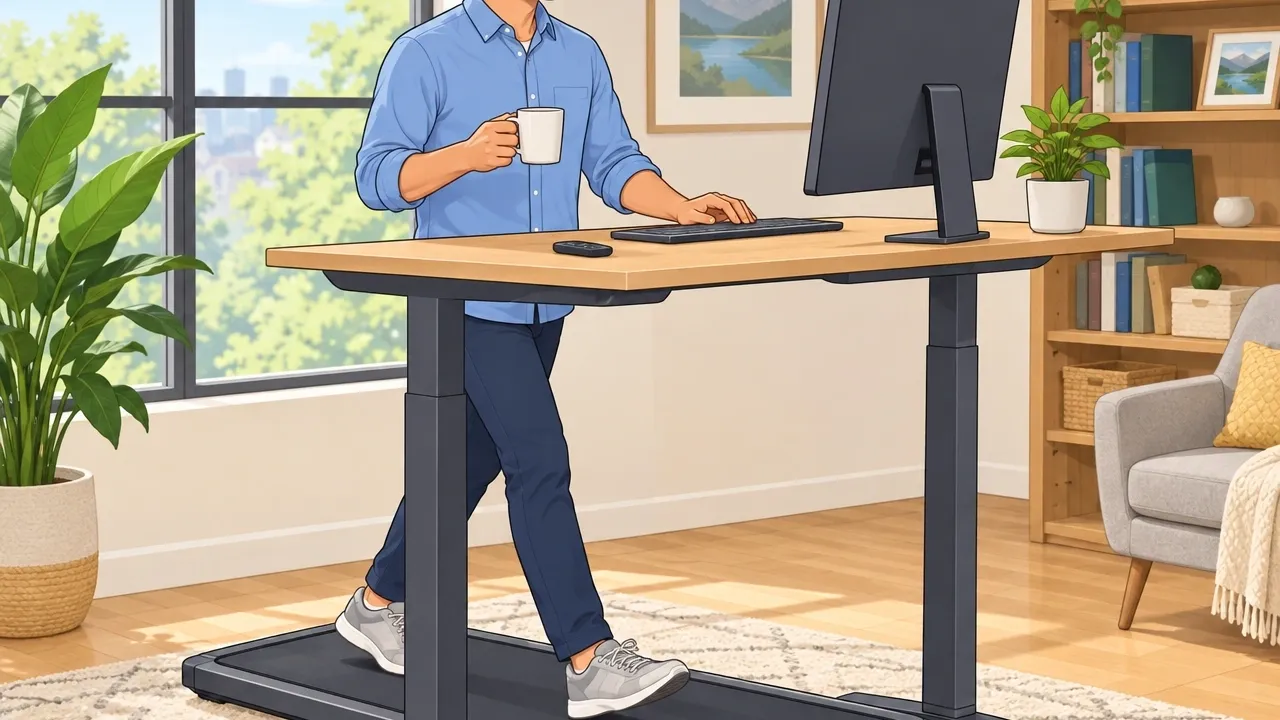
Before you even look at wattage or speed, you need to answer three non-negotiable questions about your body and your floor. Get these wrong, and your pad becomes a noisy, cramped paperweight.
This guide is not a list of random models. It is a diagnostic tool that walks you through the exact criteria that matter, so you walk away with the one pad that fits your life.
The Walking Pad Features That Actually Matter
Most people start with price or brand. That is a mistake. These five features will make or break your experience. Run through them in order.
Stride and Speed Compatibility
A pad that is too short forces you to shuffle. A pad that is too narrow makes you feel like you are walking on a tightrope.
Measure your natural stride length by taking a few steps on a hard floor and marking where your heel lands. If your stride is longer than the belt length, you will hit the front roller every few steps.
Here is a simple rule: if you are over 175 cm tall, avoid any pad with a belt length under 110 cm. Also check the width. Most pads are 40–45 cm wide.
That works for most people, but if you have wide hips or long legs, aim for 50+ cm.
The Motor’s Real Muscle
Do not trust the peak horsepower number. A motor marked 2.0 CHP might only deliver 1.2 continuous horsepower. That difference matters.
Continuous duty rating tells you how much power the motor can sustain for a full hour. If you weigh more than 85 kg and plan to walk at 5 km/h or faster, look for at least 1.5 continuous horsepower.
A weaker motor will overheat and slow down, or worse, stop mid-session.
| User Weight | Minimum Continuous Horsepower | Intended Speed |
|---|---|---|
| Under 70 kg | 1.0 CHP | Up to 6 km/h |
| 70–85 kg | 1.2 CHP | Up to 5 km/h |
| Above 85 kg | 1.5 CHP | Up to 6 km/h (or less incline) |
Incline – The Hidden Workout Multiplier
Flat walking burns around 200–300 calories per hour. Raising the incline to 10 % doubles that burn for the same time. But not all inclines are equal.
Many cheap pads advertise a maximum incline but cannot hold it steady under load.
If you plan to do the 12-3-30 workout (12 % incline, 3 mph, 30 minutes), you need a pad that can maintain 12 % incline for at least 30 minutes without the motor struggling.
Test this by reading reviews that mention incline durability, not just max incline number.
Noise – The Dealbreaker Nobody Warns About
A quiet pad on concrete can be deafening on a wooden floor. The key is the combination of motor type and frame construction. Brushless motors are much quieter than brushed ones.
Look for “brushless” in the specs. Also check if the pad has rubber feet or a built-in shock pad. Without those, every footstep vibrates through the floor.
If you live in an upstairs apartment, you need a pad with a thick mat (at least 6 mm) and rubber isolators.
Real-world decibel ratings under 50 dB are considered quiet for the user, but the neighbor hears the vibration, not the motor. So the floor material matters more than the dB number.
The Desk Owner’s Dilemma – Height and Clearance
If you plan to walk while working, the pad must fit under your standing desk. Measure the clearance between the desk frame and the floor. Most pads are 10–15 cm tall.
If your desk has a crossbar, the pad may hit it. Also consider the remote control location. Some pads require you to bend down to press a button – that kills your workflow.
Look for a remote that clips to your belt or sits on the desk.
How to Match a Walking Pad to Your Life
Now that you know what features matter, apply them to your personal situation. This section is about you – your body, your floor, and your habits.
Body Type and Injury Considerations
- Bad knees or hips: Prioritize shock absorption. Look for a pad with a thick running belt and a cushioned deck. Avoid pads that feel hard when you step on them.
- Tall people (above 180 cm): Belt length must be at least 120 cm. Also check the motor power – longer strides require more sustained speed, which needs a motor that does not bog down.
- Heavy users (above 90 kg): A motor with 1.5 continuous horsepower minimum. Also check the weight capacity – many pads claim 120 kg but the motor cannot drive that weight at full speed.
Your Floor Situation
What floor is your pad going on?
- Carpet: Rubber feet dig in and stabilize the pad. You may not need a mat, but a thin mat under the pad helps keep the carpet clean and reduces lint buildup in the motor.
- Hardwood or laminate: Vibration travels fast. You need a mat (at least 6 mm thick) and pads with adjustable leg levelers to stop the pad from rocking. Brushless motors are almost mandatory here because brushed motors tend to whine on hard surfaces.
- Concrete or tile: Less vibration transfer, but the pad itself will feel noisy if it lacks rubber feet. A mat is optional if the pad has built-in shock absorbers.
Usage Profile – Casual Steps or Focused Workout
How you intend to use the pad will decide which features you should emphasize.
- Casual stroller (TV watching, phone calls): Speed range of 1–4 km/h is enough. Noise is critical – get a brushless motor and a remote control. Incline is unnecessary.
- Dedicated home worker (walking while typing): You need a pad that runs smoothly at 3–5 km/h, has a remote, and a very quiet motor. Frame stability matters – a wobbly pad makes typing harder.
- Fitness enthusiast (12-3-30 or interval walking): Incline must be 12 % minimum, motor must be continuous-duty at 1.5 CHP, belt length at least 120 cm. Noise is less important because you will usually wear headphones.
- Space-saver (needs to fold away): Look for a pad that folds in half and weighs under 20 kg. Check the folded dimensions – some fold but still take up significant floor space.
Best Walking Pads for Each Use Case
Here is the shortlist without brand names. Use these criteria to choose a specific model.
The Walk and Work Pad
- Brushless motor
- Remote control included
- Speed range 1–5 km/h
- Thickness under 12 cm to slide under desk
- No incline (or very shallow, like 2–3 %)
The 12-3-30 Pad
- Motor continuous rating 1.5 CHP or higher
- Belt length at least 120 cm
- Max incline 12 % (and holds it for 30+ minutes)
- Speed up to 6 km/h
- Good weight capacity (at least 110 kg)
The Space-Saver / Under-Desk Pad
- Heavy-duty folding mechanism
- Weight under 18 kg
- No protrusions that catch on desk legs
- Manual incline (if any) to keep height low
The Budget Starter Pad
- Price under £200
- Belt length at least 100 cm (even if you are short, 100 cm feels cramped – try for 110)
- Brush motor but with rubber feet to dampen noise
- Speed up to 6 km/h
- Lower weight capacity (around 90 kg) – check your weight before buying
Frequently Asked Questions
Will a walking pad help me lose weight if I use it while working?
Yes, but only if you walk at a steady pace (3–4 mph) for at least 30 minutes a day. The calorie burn is modest – about 200–300 calories per hour at flat. Incline adds more. But the key is consistency.
A pad helps you stay moving when you would otherwise sit, and those extra steps add up over weeks.
Do I need a pad with incline if I am just walking flat?
No, a flat pad is fine if you already walk outside and just want indoor backup. But if you never walk outside and want the most calorie burn per minute, incline is worth it.
For casual use (watching TV), flat is fine.
Can I use a walking pad on a carpeted floor?
Yes, but use a thin mat underneath. Carpet fibers can get sucked into the motor and cause overheating. A mat also helps with stability – the pad can sink into thick carpet otherwise.
What speed is moderate for walking?
3–4 km/h is a normal stroll. 5 km/h is brisk – you need to swing your arms. Most pads max out at 6 km/h, which is almost a jog for shorter people.
If you are tall and walk fast, check that the pad can maintain 5.5 km/h without the motor straining.
Do walking pads require maintenance?
Yes. You need to lubricate the belt every few months (silicone spray) and keep the deck clean. Sealed bearings last longer. Some pads come with a maintenance kit.
Check the warranty – most last 1–2 years. If the belt wears unevenly, it can cause resistance and motor strain.