
Are Walking Pads Good for Apartments?

Walking pads can be a great fit for apartments, but only if you choose wisely. The answer is a conditional yes.
They work well when you match the machine to your floor type, your tolerance for noise, and your storage space.
The three things that make or break the experience are noise, vibration, and how much room the pad takes up.
What Makes a Walking Pad Apartment Friendly?
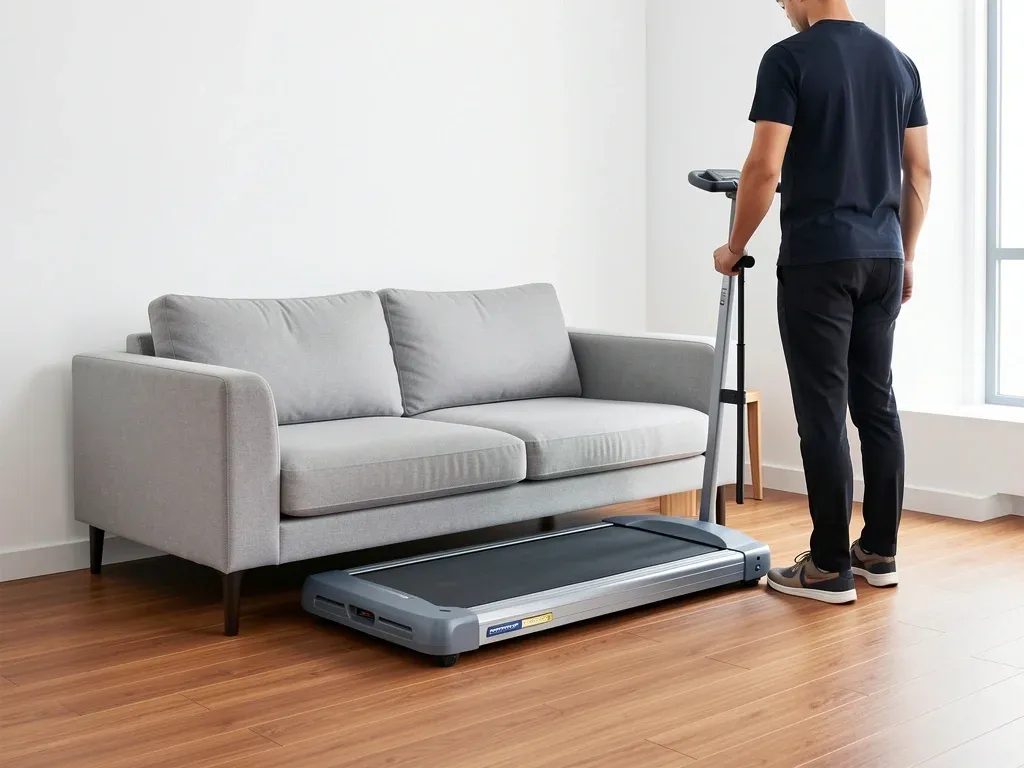
Not every walking pad is built for close quarters. Here are the key features that separate an apartment-friendly model from one that will cause problems.
Dimensions. Look for a pad that is under 60 inches long and under 30 inches wide. This lets you slide it under a couch, a bed, or stand it upright in a closet.
Weight. A pad that weighs between 50 and 70 pounds is manageable for one person to move. Heavier models are harder to reposition when you need the floor space back.
Motor type. Brushless DC motors are noticeably quieter than brushed motors. They also last longer and run cooler.
Max speed. Walking pads that top out at 4 mph are less disruptive than models that can go faster. The slower belt speed creates less friction noise and less vibration.
How Loud Is a Walking Pad in Real Decibels?
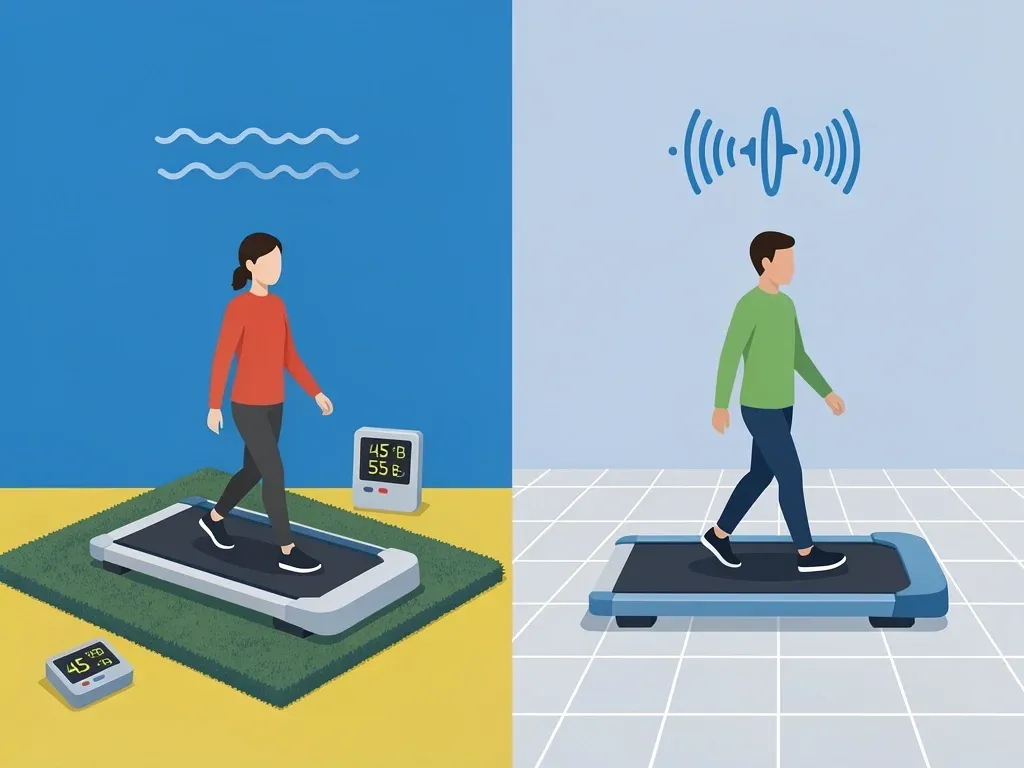
You need real numbers, not marketing claims. At a slow walking pace of 1 to 2 mph, most quality walking pads produce between 40 and 55 decibels. To put that in perspective:
- A refrigerator hum is about 40 dB.
- A normal conversation is about 60 dB.
- A vacuum cleaner is about 70 dB.
At 3 mph, the noise climbs to around 55 to 60 dB. That is still quieter than a traditional treadmill, which often hits 70 dB or more.
The sound comes from two places: the motor and the belt sliding over the deck. A well-lubricated belt and a rubber mat underneath will cut the noise by several decibels.
The surface you place the pad on matters. On a thick carpet, the pad will be quieter because the carpet absorbs some sound.
On a hard floor like tile or hardwood, the noise reflects and can seem louder.
The Real Issue – Floor Vibration and Neighbor Impact
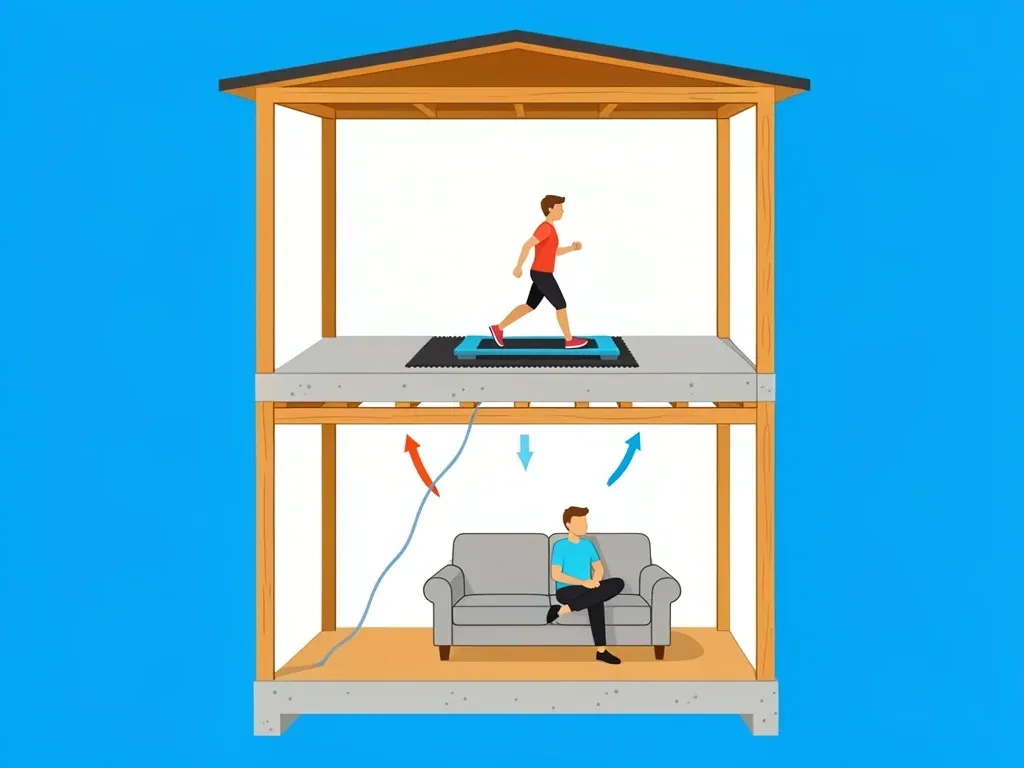
Noise is one thing. Vibration is another. Low-frequency thumping travels through building materials and can annoy the people below you more than the sound itself.
Concrete slab buildings. If you live on a concrete slab, vibration is rarely a problem. The concrete absorbs and disperses the energy.
Most modern high-rises and many newer apartment buildings use concrete floors. Wood frame buildings. This is where trouble starts. Wood joists flex and transmit vibration.
If you live on a second floor in a wood-frame building, your downstairs neighbor will hear and feel the walking pad unless you take steps to isolate it. The fix is a proper underlayment mat.
A half-inch thick rubber mat designed for exercise equipment is the best option. Foam puzzle mats are better than nothing, but they compress over time and lose their dampening ability.
A rubber mat stops the low-frequency thump from traveling through the floor. Here is a real example.
On a second-floor wood frame apartment, a walking pad without a mat produced audible thumping in the room below.
Adding a half-inch rubber mat reduced that thumping to a faint hum that was barely noticeable.
Can You Use a Walking Pad in a Small Apartment?
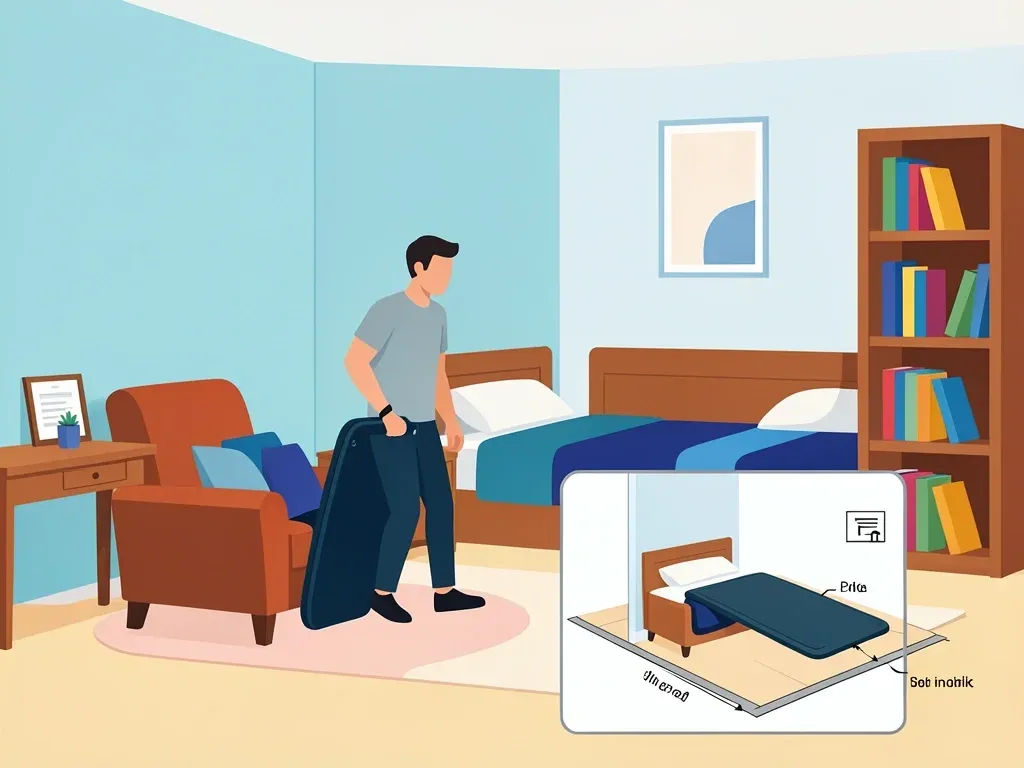
Yes, but you need a plan for storage. A walking pad takes up about the same floor space as a large armchair. You cannot leave it in the middle of the room all day.
Vertical stands. Some walking pads come with a vertical storage stand. This lets you tip the pad up on its end and lean it against a wall.
It takes up about two square feet of floor space. Under-couch sliding. Many pads are low enough to slide under a couch or a bed.
Measure the clearance under your furniture before you buy. Foldable models. A few walking pads fold in half.
These are the most space-efficient, but they tend to be more expensive and slightly heavier. One person in a 400-square-foot studio reported fitting their walking pad behind a chair.
They pull it out when they want to walk and slide it back when they are done. It takes about 30 seconds.
Apartment Pitfalls to Avoid
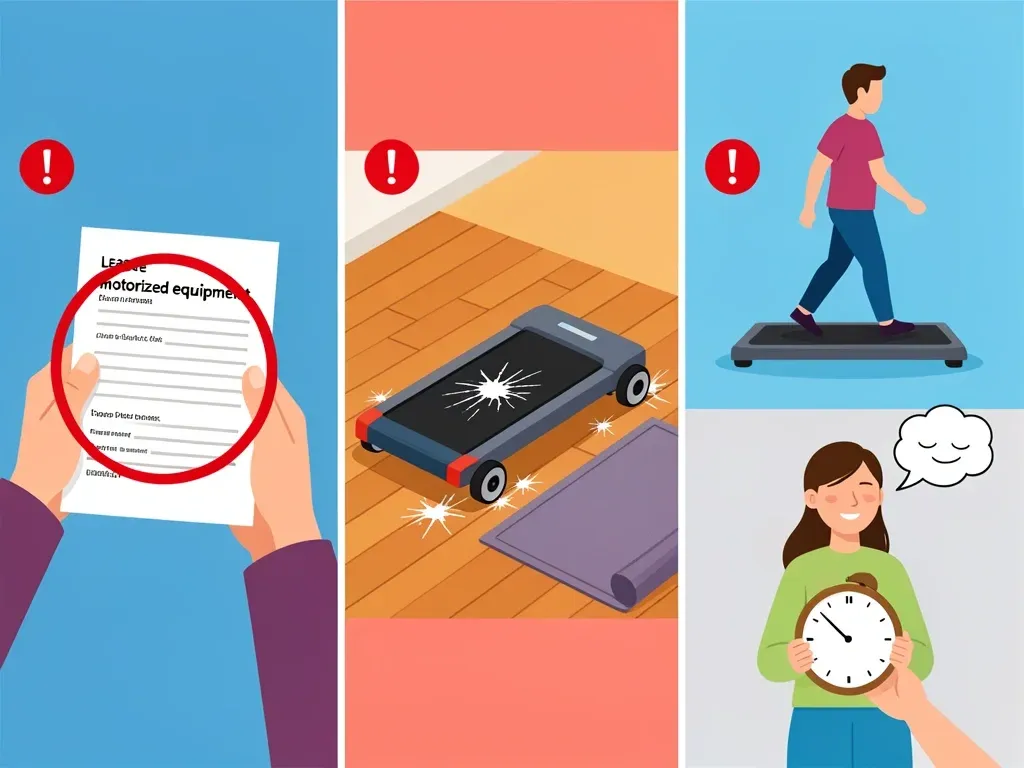
A walking pad can cause problems that go beyond noise. Here are three things to watch for. Lease violations. Some leases specifically prohibit motorized fitness equipment.
The reason is usually noise or liability. Read your lease before you buy. If it says no treadmills, a walking pad might fall under the same rule.
Floor damage. The wheels on a walking pad can scratch hardwood floors. The pad itself can also leave marks if you move it while it is on. Always use a mat underneath.
The mat protects the floor and reduces noise at the same time.
Neighbor complaints. The best time to walk is during the day when your neighbors are less likely to be home or trying to sleep.
If you are unsure, test the pad with a friend in the unit below. Walk at your normal pace and ask them to rate the noise and vibration. This one test can save you from a complaint later.
Apartment-Specific Buying Criteria
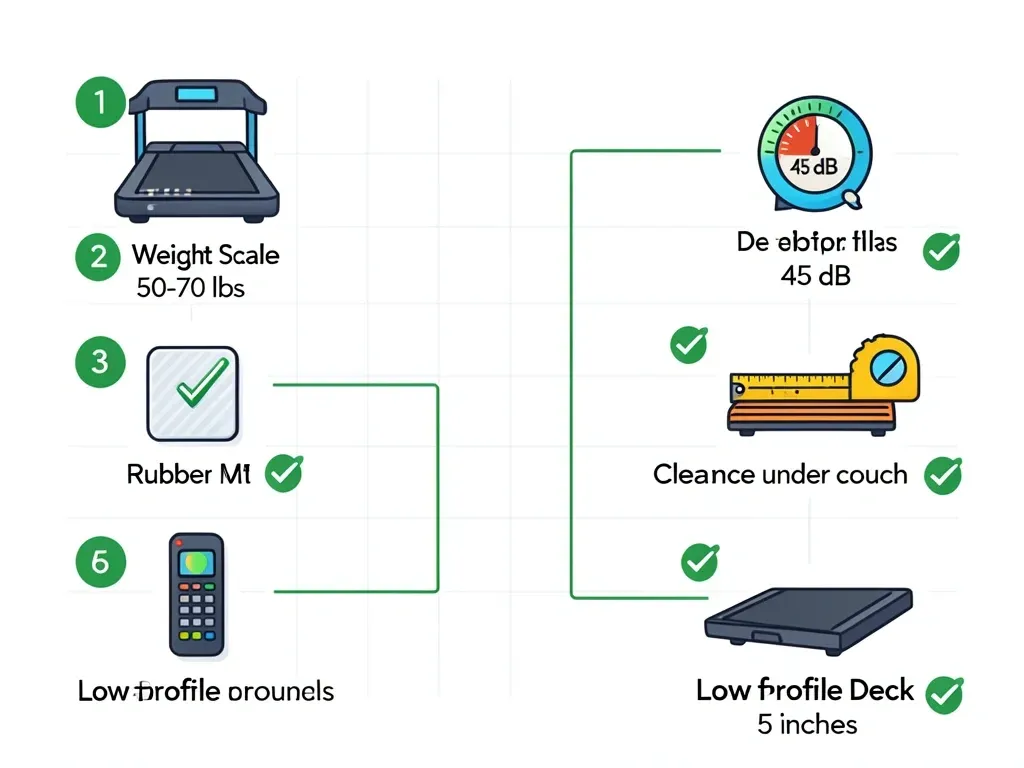
When you shop for a walking pad, use this checklist to make sure it will work in your apartment.
- Weight: Under 70 pounds so you can move it easily.
- Decibel rating: Look for models that advertise under 55 dB at walking speed.
- Mat requirement: Plan to buy a half-inch rubber mat regardless of what the manufacturer says.
- Storage height: Measure the clearance under your furniture or the space in your closet.
- Remote start/stop: A remote means you do not have to bend down to press loud buttons.
- Low profile: A deck that is less than 5 inches off the ground is easier to step onto and off of.
Myth vs. Reality – The Quiet Walking Pad
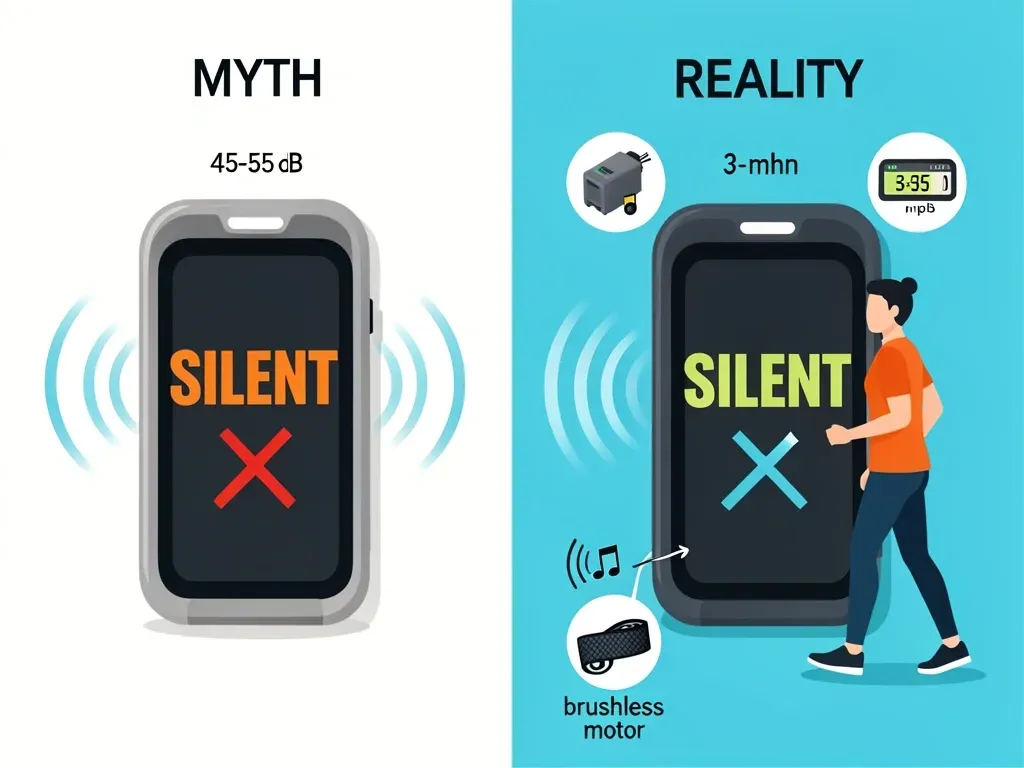
Myth: All walking pads are whisper-quiet. Reality: They are quiet at slow speeds, but they are not silent. The motor makes a consistent hum.
The belt makes a sliding sound. At 2 mph, the noise is low enough that you can watch TV or take a phone call. At 3 mph, you will notice it. The key is to check the motor type and the belt material.
A brushless motor and a textured belt are quieter than a brushed motor and a smooth belt.
Critical Consideration – Your Building’s Construction
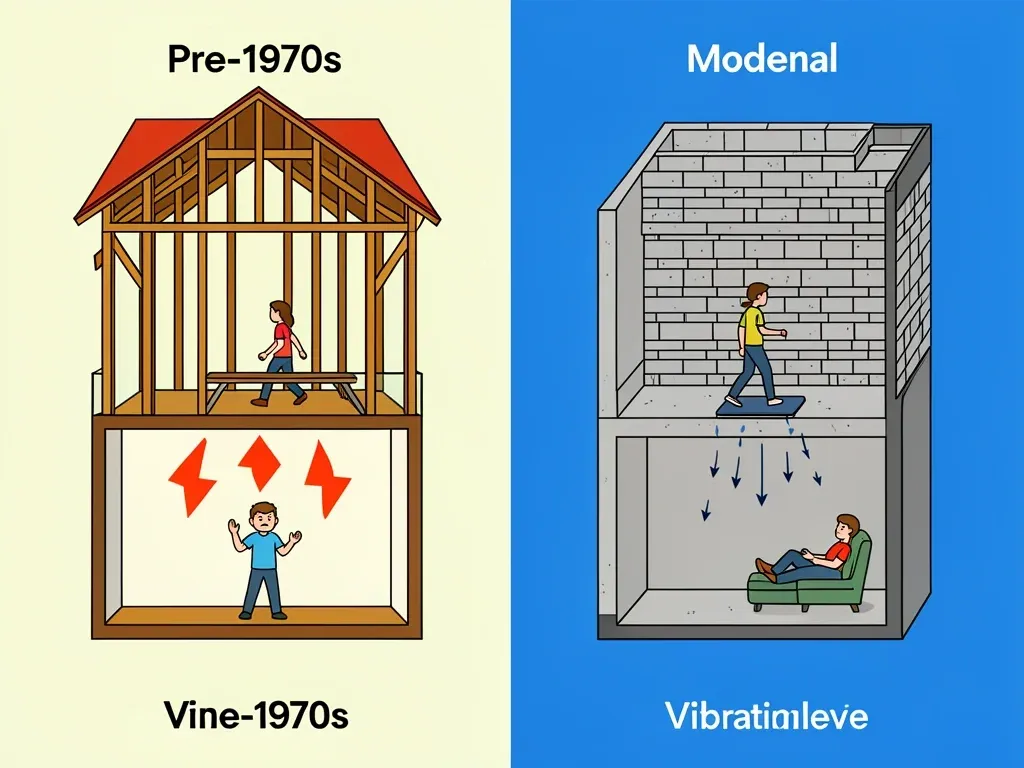
Your building's construction determines how much vibration you will feel and how much your neighbors will hear. Pre-1970s wood-frame buildings. These are the worst for vibration.
The wood joists are often spaced wider apart and the floors are less rigid. A walking pad on a wood frame without a mat will likely cause complaints.
Modern concrete high-rises. These are the best. Concrete slabs are dense and do not transmit vibration well.
You can use a walking pad on a concrete floor with just a thin mat for protection.
How to test your floor. If you have access to a standard treadmill, place it in your apartment and walk on it at a slow pace. Have someone stand in the unit below and listen.
If the treadmill causes noticeable noise or vibration, a walking pad will too, though at a lower level.
Frequently Asked Questions
Do walking pads require a special outlet or circuit breaker in apartments?
No. A walking pad plugs into a standard 120-volt wall outlet. It draws about the same power as a vacuum cleaner. You do not need a dedicated circuit.
How do I discreetly store a walking pad when my landlord inspects?
Slide it under a bed or a couch. If it is a foldable model, fold it and stand it in a closet behind coats or boxes. Most landlords will not notice it if it is out of sight.
Can I use a walking pad on a balcony or patio in an apartment?
You can, but it is not recommended. Weather exposure will damage the motor and the belt. Moisture can cause electrical problems. If you must use it outside, bring it inside immediately after use.
Is it possible to trip a neighbor's floor sensor in shared spaces?
No. Walking pads do not produce enough vibration to trigger floor sensors used in some shared living situations. Those sensors are designed for much heavier impacts.
What is the best walking pad for a carpeted apartment living room?
A model with a low-profile deck and a brushless motor works best on carpet. The carpet will absorb some noise, but the pad needs to sit flat.
Avoid models with small wheels that can sink into thick carpet. A thin, firm mat under the pad helps keep it stable.