
Are Walking Pads Bad for Your Knees?

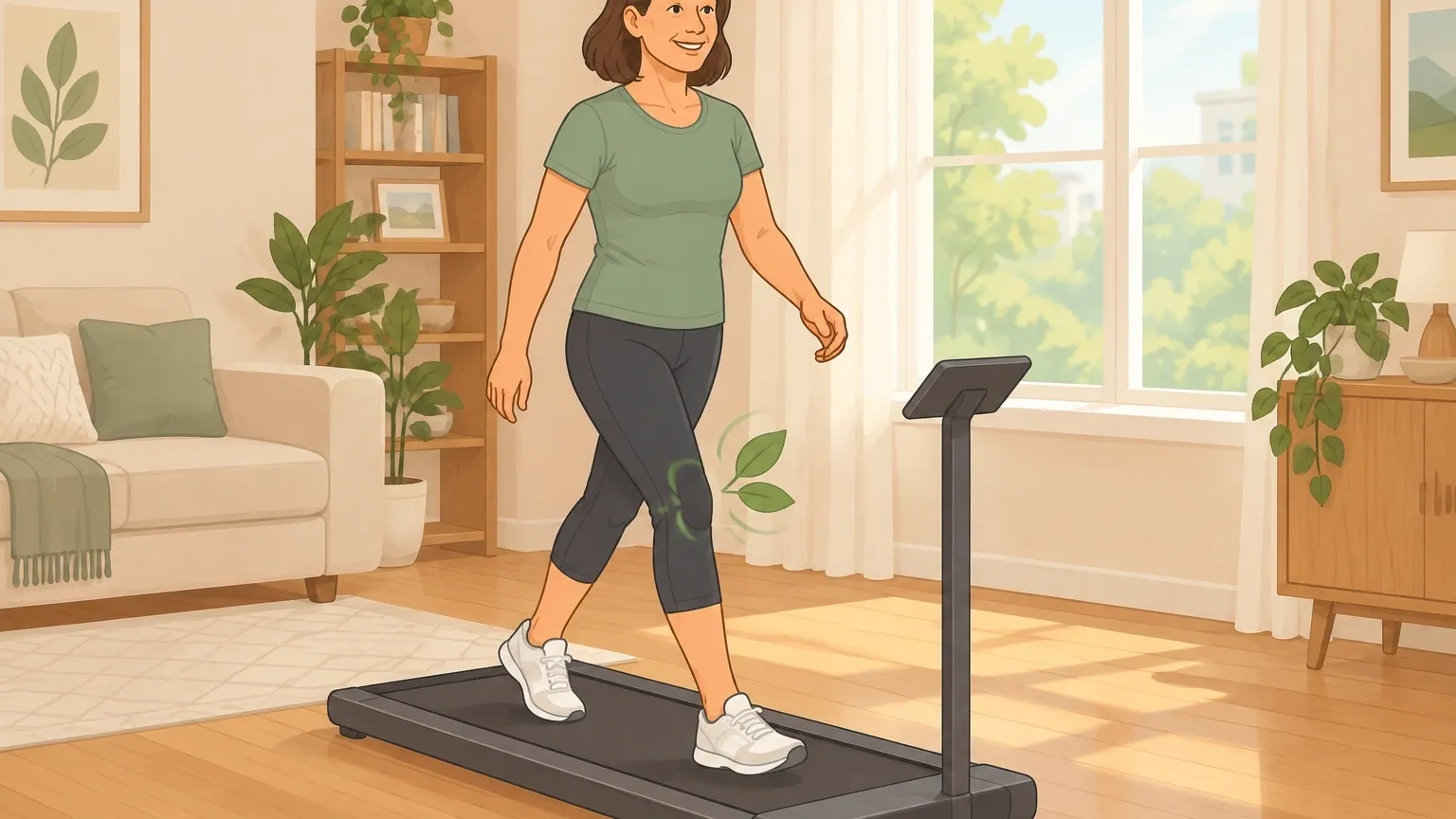
Walking pads are not inherently bad for your knees, but cheap models with hard decks can cause problems.
Here is what matters for knee health.
The short honest answer is: walking pads are not inherently bad for your knees.
But whether yours will hurt you or help you depends on three things — the build quality of the pad, the current health of your knees, and how you use the machine.
I have spent years testing different home fitness equipment, and I have seen people get great results from walking pads without any knee trouble.
I have also seen people buy cheap models with a rock‑hard belt and end up with sore knees within two weeks.
This article will give you the full picture so you can decide if a walking pad is right for your situation.
Why Walking Pads Can Be Good for Your Knees
Walking pads are designed for low‑impact movement. When you use a quality model, the cushioned belt absorbs some of the shock that would otherwise travel straight into your knee joint.
That is a big advantage over walking on concrete, pavement, or tile floors.
Other reasons walking pads can be gentle on knees:
- You control the speed completely. No need to rush or stop suddenly like you might on uneven ground.
- The surface is flat and predictable. No potholes, curbs, or roots to twist your knee.
- Walking is a weight‑bearing exercise that can actually strengthen the muscles around your knee, which helps support the joint over time.
For people with mild knee discomfort or early arthritis, a good walking pad often works better than outdoor walking because the constant surface removes the risk of stumbling.
When a Walking Pad Might Hurt Your Knees
The problem comes from three common situations that many buyers overlook.
Cheap, uncushioned walking pads
Budget walking pads (under £200 or so) usually have a very thin belt and a hard deck — basically a sheet of metal or MDF with a layer of rubber on top. That provides almost no shock absorption.
Using one of those for a daily 30‑minute walk is like walking on a factory floor. Your knees take the full impact with every step.
Overuse too fast
The number one mistake that makes bad knees worse is doing too much too soon. I have seen people buy a walking pad, get excited, and jump straight into two hours of walking at a fast pace.
Your joints need time to adapt. If you already have knee issues, rapid increases in volume can flare up patellofemoral pain (runner’s knee) or aggravate existing arthritis.
Running or jogging on a walking pad
Most walking pads are designed for walking only. Their motors are weaker, their cushions are thinner, and their frames are lighter.
If you try to jog or run on one, the repetitive impact is much higher than on a full‑sized treadmill. That can lead to knee pain fast. Always check the manufacturer’s speed limit.
How Walking Pad Quality Affects Your Knees (What to Look For)
The difference between a knee‑friendly walking pad and a knee‑killer usually comes down to three features. Here is how to evaluate any model before you buy.
| Feature | Good for knees | Bad for knees |
|---|---|---|
| Deck thickness | At least 15mm multi‑layer | Under 10mm single sheet |
| Shock absorption | Built‑in cushion flex or rubber shock mounts | No mention of cushioning |
| Motor power | 2.0 CHP or higher for walking | Under 1.5 CHP (weak motor causes jerky belt movement) |
| Weight capacity | At least 100 kg / 220 lbs | Low capacity means the deck flexes and the frame wobbles |
| Belt width | Over 40 cm | Narrow belts restrict natural stride |
If you already own a walking pad and worry about the deck, try a simple test: press your thumb into the belt at the centre of the walking surface.
If you feel almost no give — it is rock hard — then the cushioning is poor. Placing a thick exercise mat under the pad can help a little, but it will not fix a bad deck.
Walking Pad vs Treadmill vs Outdoor Walking: Which Is Gentler?
Many people compare walking pads only to outdoor walking and assume the pad is always better. But the real comparison is more detailed.
- Outdoor walking on concrete: Very hard surface. No cushioning. Knees take about 1.5 to 2 times body weight per step. Uneven ground adds risk of twisting.
- Quality walking pad: Cushioning can reduce impact by 30–40% compared to concrete. Flat surface eliminates tripping risk. Excellent for walking only.
- Full‑sized treadmill: Usually has thicker deck and stronger shock absorption (like multi‑zone cushioning). Can handle jogging and running safely. Better for anyone who wants to do intervals or has very sensitive knees.
- Cheap walking pad: Hardly any cushioning — impact may be similar to concrete or even worse because the thin belt can feel spring‑less.
The takeaway: for walking, a high‑end walking pad is about as gentle as a mid‑range treadmill. For jogging or running, a full treadmill is the safer choice.
5 Steps to Protect Your Knees on a Walking Pad
If you decide to use a walking pad, these steps will reduce your risk of knee pain significantly.
- Wear proper walking shoes with good cushioning. Do not use old worn‑out trainers or go barefoot. The shoe absorbs some of the impact that the pad’s deck misses.
- Start short and slow. Begin with 10–15 minutes at a comfortable pace. Increase by no more than 5 minutes per week. Let your knees tell you when to level up.
- Use a slight incline (if your walking pad has it). A 1–2% incline shifts work to your glutes and hamstrings, which takes pressure off the kneecap joint. If your model has no incline, you can place a small wedge under the front.
- Focus on your stride. Keep your steps short and land with your foot under your hips — do not overstride. Overstriding creates a braking force that hammers the knee.
- Put a thick exercise mat under the walking pad. This adds an extra layer of cushioning and also prevents vibrations from the machine. It helps, especially on hard floors.
Myths About Walking Pads and Knee Pain
Let me clear up a few wrong ideas that keep popping up online.
Myth: “Walking pads are always low impact.”
Reality: Only walking pads with good cushioning are low impact. A cheap, hard deck can produce impact forces close to concrete.
Myth: “A slow walk on any walking pad is safe for arthritic knees.”
Reality: Joint tolerance varies.
Some people with severe arthritis find even gentle walking on a hard surface painful. You must match the machine to your condition.
Myth: “You do not need proper shoes on a walking pad.”
Reality: Your shoes are the last line of defence between your knees and the deck.
Worn‑out shoes lose their shock absorption quickly, so replace them every 300–500 miles.
Myth: “Walking pads are only for people with healthy knees.”
Reality: Many people with chronic knee pain use walking pads successfully after choosing a well‑cushioned model and progressing slowly.
Frequently Asked Questions
Do walking pads cause knee problems if used daily?
Not necessarily. Daily use is fine as long as the pad has decent cushioning and you listen to your body. The bigger risk is overuse — walking for hours every day without rest.
Your joints need recovery days. If you walk daily, keep sessions moderate (20–30 minutes) and vary your activity.
Are walking pads good for arthritic knees?
They can be, but only if the model has good shock absorption and you do not have severe joint damage. Walking helps lubricate the joints and strengthen supporting muscles.
For people with mild to moderate arthritis, a quality walking pad is often recommended by physiotherapists over outdoor walking.
For severe arthritis, non‑weight‑bearing activities like cycling or swimming may be safer.
Can I run on a walking pad without hurting my knees?
I do not recommend it. Most walking pads are not built for running. The deck is too thin, the motor can overheat, and the frame can feel unstable.
Running on a walking pad puts high repetitive stress on knees without the shock absorption you get from a full treadmill. If you want to run, get a proper treadmill.
How do I know if my walking pad’s cushioning is enough?
Do the thumb press test I described earlier. Also, after a 10‑minute walk, if your knees feel achy or you feel vibrations in your heels and hips, the cushioning is likely insufficient.
You can add an extra mat, but if the deck itself is hard, consider upgrading.
What is the best walking pad for someone with bad knees?
Look for models that explicitly advertise multi‑layer shock absorption (cushion flex, air cells, or rubber dampeners), have a deck thickness of at least 15 mm, and a motor rated at 2.0 CHP or higher.
Avoid ultra‑cheap folding models. Reputable brands often list the cushioning technology. Do not just rely on brand name; check the specifications.
Walking pads can be a great tool for staying active without wrecking your knees — as long as you buy wisely and use them smartly.
If you already have knee issues, it might be worth testing a walking pad in a store or reading user reviews from people with similar conditions before committing.