Why Does My Walking Pad Smell Like Burning? (A Diagnostic Guide)

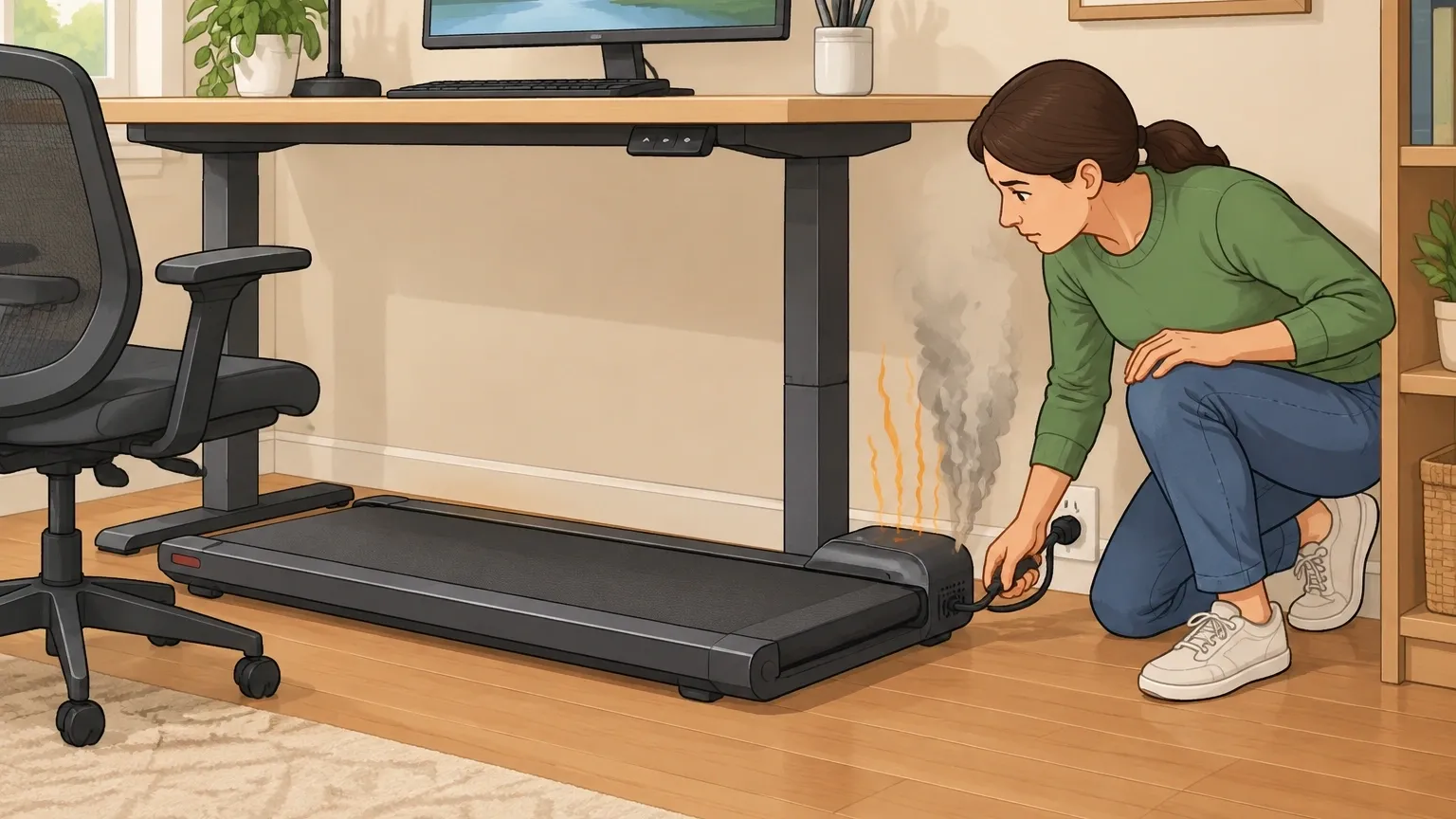
You are using your walking pad under your desk, and suddenly you catch that smell. Something is burning. Your first thought is panic. Is this normal? Is it going to catch fire?
The answer depends on what exactly is burning. A walking pad is not a commercial treadmill. It sits low to the ground, has a sealed motor, and a thin belt. That makes the problem different.
Let me walk you through the three types of smells, what they mean, and what you must do right now.
The Three Smells: How to Identify What Is Burning
Before you touch anything, use your nose. The type of smell tells you the cause. Do not guess.
Do not assume it is “just break-in.” Walk away from the machine, let the air clear, then come back and sniff carefully.
The Rubber Smell (Belt and Deck Friction)
This is the most common smell on a walking pad. It smells like hot rubber or a car tire. It happens when the belt rubs too hard against the deck.
On a new walking pad, this can be normal for the first few hours as the belt settles and factory lubricant warms up. But if the smell gets strong or stays after a week, something is wrong.
On a gym treadmill, you can lubricate the deck with silicone spray. On a walking pad, you usually cannot. Most walking pads have a sealed, pre-lubricated belt.
Adding lubricant can ruin the sensor or make the belt slip. If you smell rubber, first check that the belt is centered.
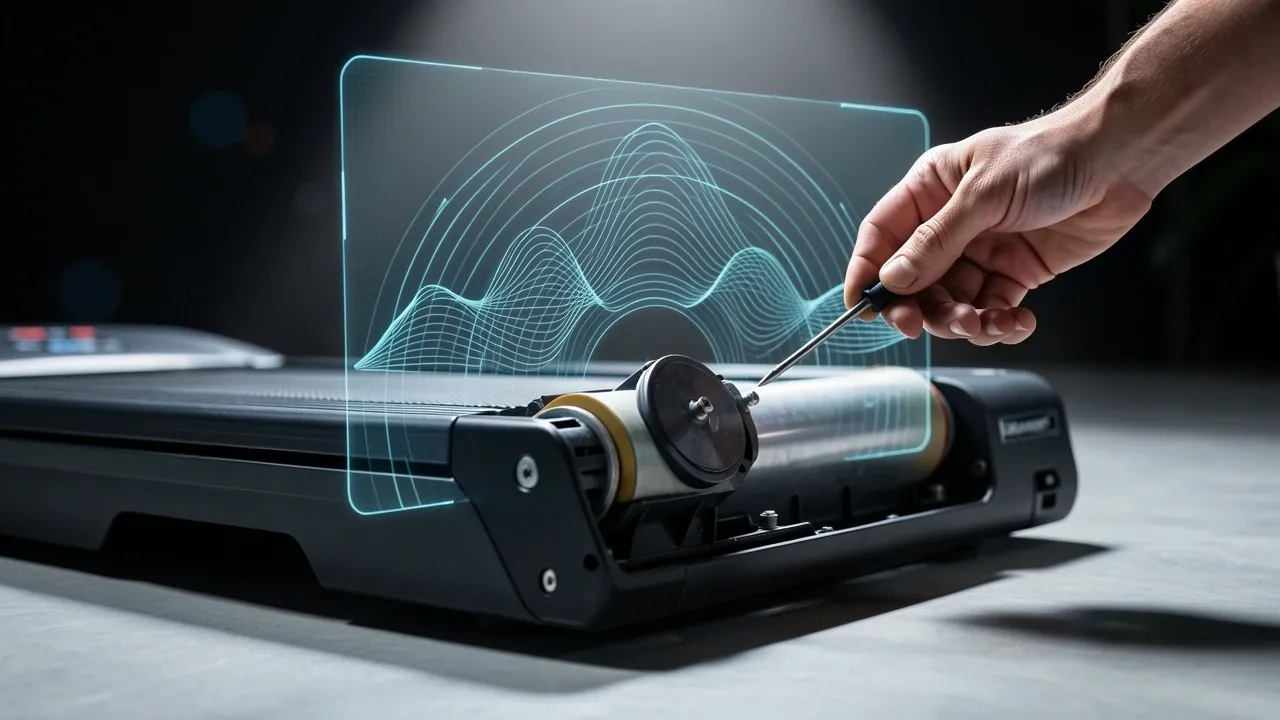
If it is rubbing against the edge, adjust it with the hex key that came with the machine. Also look for pet hair or dust stuck under the belt. A contaminated belt creates more friction.
Vacuum under it carefully.
The Chemical Plastic Smell (Motor Overheating)
This smell is sharper. It smells like hot plastic or melting electronics. It usually comes from the rear of the machine, where the motor lives. This is more dangerous than rubber.
It means the motor windings or insulation are getting too hot. Walking pads have a compact, enclosed motor. There is no big cooling fan like on a gym treadmill.
If you place the pad on a carpet, the motor has almost no airflow. The heat builds up fast. Dust inside the motor housing makes it worse. If you smell plastic, stop using the pad immediately.
Unplug it. Let it cool for at least 30 minutes. Then move it to a hard floor or a thin rubber mat. If the smell comes back after a short walk, the motor is damaged. Repair is often not worth the cost.
You may need to replace the unit.
The Electrical Short Smell (Burning Wire)
This is the worst smell. It is acrid, like a burned electrical outlet. You might also see smoke or hear a pop. This means a wire, capacitor, or circuit board is failing. It is a fire hazard.
Do not try to run it again. Do not look for a fix. Unplug it and move it away from anything flammable. Contact the manufacturer if it is under warranty. If it is out of warranty, throw it away.
Walking pad electronics are not user serviceable. A short can happen because of a power surge, a bad power cord, or a manufacturing defect. Do not risk it.
The Carpet Trap: Why Your Flooring Causes Overheating
Most people put their walking pad on a carpet. This is the single biggest mistake. Let me explain why.
The Physics of Trapped Heat
A walking pad sits flat on the floor. Unlike a gym treadmill that has legs and an air gap underneath, the walking pad’s motor and belt sit right against the floor. Carpet fibers act like a blanket.
They trap the heat from the motor and the friction of the belt. The heat has nowhere to go. Over 20 minutes of walking, the temperature under the pad can rise by 30 degrees.
That heat stresses the motor and melts the belt lubricant faster. If you have to use it on carpet, get a hard plastic walking pad mat. Not a thin yoga mat.
A thick, rigid mat that lets air flow under the machine. Even better, put it on a sheet of plywood or linoleum.
The Hidden Contamination: Dust and Pet Hair
Walking pads are low to the ground. Every time you walk, the belt pulls air in from underneath. That air is full of carpet dust, pet dander, and hair. These particles get sucked into the motor housing.
Over months, they build up and insulate the motor. The motor runs hotter and hotter until you smell plastic.
If you have pets or a dusty room, clean the motor intake vents every two weeks with a vacuum and a brush attachment. Do not blow air into the vents — that pushes dust deeper.
Vacuum gently from the outside.
What To Do Right Now: The Safety Protocol
Follow these steps in order. Do not skip any.
- Identify the smell. Is it rubber, plastic, or electrical? Use the descriptions above.
- Unplug the machine. Always. Even if the smell is faint. Safety first.
- Move it to a hard floor. If it was on carpet, that may be the cause. Put it on tile, wood, or a thick rubber mat.
- Inspect the belt. Check for tracking. Look for shiny glazed spots on the belt. A worn belt has a smooth, glossy center. If you see that, the belt needs to be replaced.
- Let it cool for 24 hours. If it is a new machine, this gives time for off-gassing to settle. Plug it in and walk for 5 minutes. If the smell is gone, it was break-in. If the smell returns strong, proceed to step 6.
- Decide to repair or replace. If the smell is rubber and the belt is worn, you can replace the belt. Parts cost about $30-$50. If the smell is plastic from the motor, and the machine is out of warranty, buying a new walking pad is often cheaper than repairing the motor.
When To Throw It Out: The Economic Reality of Walking Pads
I know you want to fix it. But walking pads are not built to be repaired easily. The motor is sealed. The controller board is often glued in. A repair shop may charge you $100 just to look at it.
A new walking pad costs $200 to $400. If the smell is coming from the motor and the unit is more than a year old, do the math. It is usually smarter to replace it.
A warning: Do not keep using a walking pad that smells like plastic or electrical burn. Even if the smell fades after a few minutes, the damage is done.
The insulation inside the motor is degraded. Next time, it could fail completely and start a fire. Especially if you leave it plugged in under your desk overnight. Unplug it when not in use.
Frequently Asked Questions
The smell stopped after I turned it off. Is it safe to use again?
Only if it was a faint rubber smell from the belt and it completely disappeared after the machine cooled. If it was a plastic or electrical smell, do not use it again. The damage is done.
Can I use a lubricant spray on my walking pad belt?
No. Most walking pads have a sealed, pre-lubricated belt. Adding silicone spray can cause the belt to slip or damage the belt speed sensor. Check your manual. If it says not to lubricate, believe it.
The smell is coming from underneath the motor. What is that?
That is the motor housing. A plastic or chemical smell from that area means the motor windings are overheating. Stop using the machine immediately. It is a sign of imminent motor failure.
I only use it for 15 minutes. Is this still a risk?
Yes. Overheating can happen quickly. A walking pad on carpet can reach dangerous temperatures in just 15 minutes. The compact design has no room for heat to escape.
Short sessions do not make you immune. If your walking pad smells like burning, do not ignore it. Take the time to diagnose the smell. Follow the safety steps.
And remember, a walking pad is a simple machine. When it starts to smell like plastic or electrical, it is telling you it is done. Listen to it.