Why Does My Under Desk Treadmill Smell Like Burning Plastic Or Rubber

You are a few thousand steps into your workday when the air under your desk turns sharp. A hot smell of plastic or rubber.
Your stomach drops, and your first thought is the same one everyone has: is this thing about to catch fire?
I hear the same question over and over: why does my under desk treadmill smell like burning plastic or rubber? People send it to me with panic in their typing. So here is the short answer.
That smell is your machine's way of telling you that something is too hot. The real question is which part. It comes down to three places — the belt, the motor, or the electronics.
A faint "new electronics" smell in the first few sessions of a new machine is normal. A smell that is strong, sharp, or appears suddenly after months of good use is a warning.
Until you know which one you are dealing with, stop using the machine and unplug it. That single step removes almost all the fire risk, and it gives you a calm moment to work through the diagnosis below.
First, Rule Out the Fire Risk
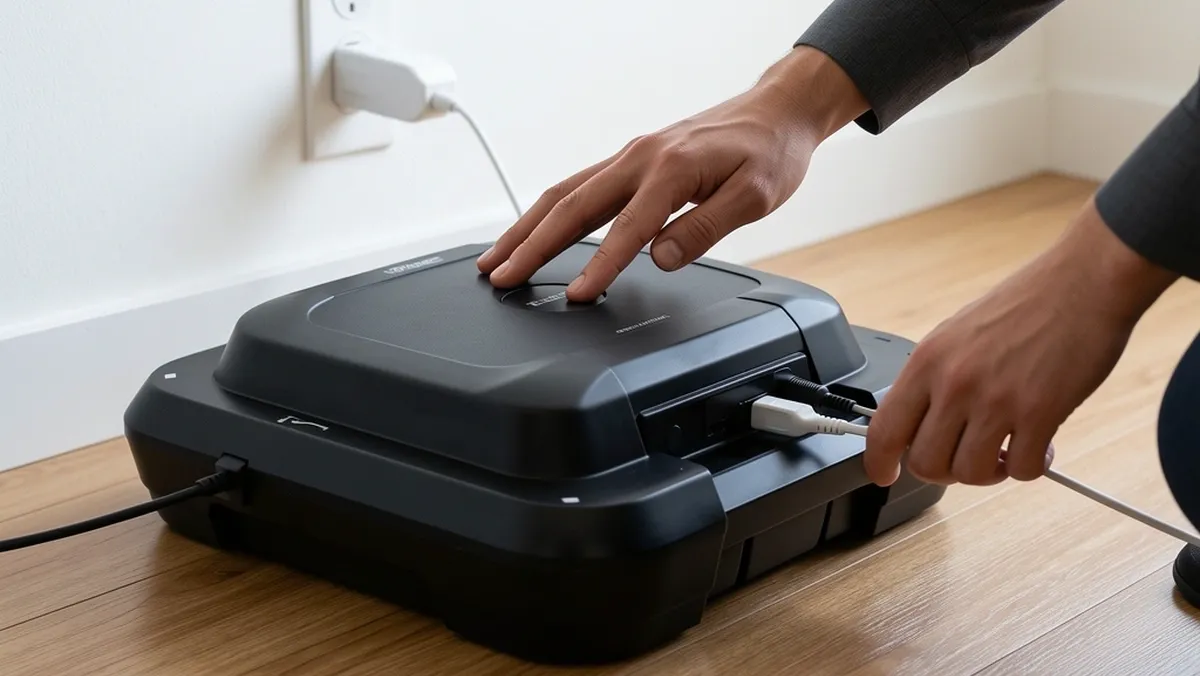
Unplug the walking pad. Then check these four spots in order:
- The motor cover. This is the plastic housing where the motor lives. Place your hand on it. If it is too hot to hold for five seconds, the motor is badly overheating.
- The deck and belt. A warm deck after thirty minutes of walking is normal. A deck that is hot to the touch is a problem.
- The power cord and plug. If the cord feels warm, or the plug is discolored or soft, you have an electrical fault. Do not use the machine again until someone qualified looks at it.
- Visible smoke or melting. Any smoke at all means the machine stays unplugged, permanently.
If everything feels warm but not hot, move on to the sniff test. The smell itself will tell you more than any other clue.
What Does Your Smell Actually Tell You? The 30-Second Sniff Test
Your nose is your best diagnostic tool here. The exact character of the smell points to a specific part inside the machine.
| What You Smell | What It Is | How Worried to Be |
|---|---|---|
| A faint "new car" or "new electronics" smell | Normal break-in. The motor brushes and belt are burning off factory residue. | Not worried. It fades after the first 1–3 weeks of use. |
| Burnt rubber, like a gym mat or a hot tire | Belt friction. The walking belt or drive belt is slipping and heating up. | Moderate. Fixable with tension adjustment and lubrication. |
| Hot metal, acrid, like a toaster or hair dryer about to fail | Motor overheating. The motor is being pushed past what it can handle. | High. Stop using the machine. |
| Sharp, chemical, ozone — like the smell right after lightning | Electrical failure. A wire or circuit board is arcing. | Highest. Real fire risk. Unplug and do not use. |
Listen as well as smell. Burnt rubber plus a squealing belt is almost always belt friction. Hot metal plus a motor that hums but struggles to keep the belt moving points straight at the motor.
And if the smell appears only when you step on the belt, it is load-related friction. If it appears when the belt is free-spinning, it is the motor or the electronics.
One more clue saves people a lot of time: timing. Where the machine is in its life, and when the smell shows up, tells you which fix you actually need.
Why a Walking Pad Is More Likely to Smell Than a Full-Size Treadmill
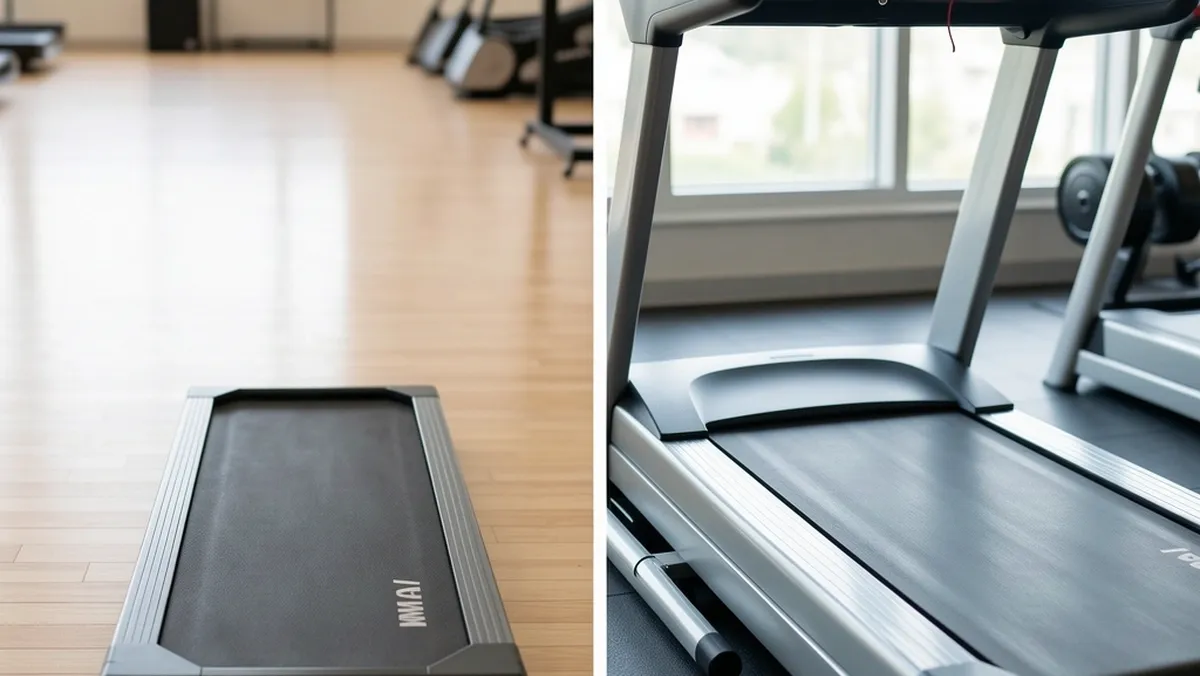
Under-desk treadmills have a harder life than the machines you see in gyms. That is not an excuse, it is a design reality. Four things make them more prone to burning smells:
- The motor is small. Walking pad motors are rated for a fraction of the power of a real treadmill. They run near their limit just to keep you walking, and running near the limit means running hot.
- The motor sits right next to the belt deck. In a big treadmill there is space between the motor and the belt. In a walking pad they are packed together, and heat from one soaks into the other.
- The housing is molded plastic. It looks sleek and keeps the weight down, but it traps heat and it melts. When you smell burning plastic on a walking pad, you are often literally smelling the housing itself.
- The belt is thin and short. It flexes more, stretches faster, and misaligns easily. A belt that drifts even a few millimeters rubs against the frame and starts to burn.
The takeaway: a walking pad is a compact, tightly packed machine with less room for error. A smell that is a five-minute fix on a big treadmill can be fatal for a walking pad.
The Timing of the Smell Tells You What Is Wrong
The same smell at different points in a machine's life means completely different things.
Why New Walking Pads Smell for the First Few Sessions
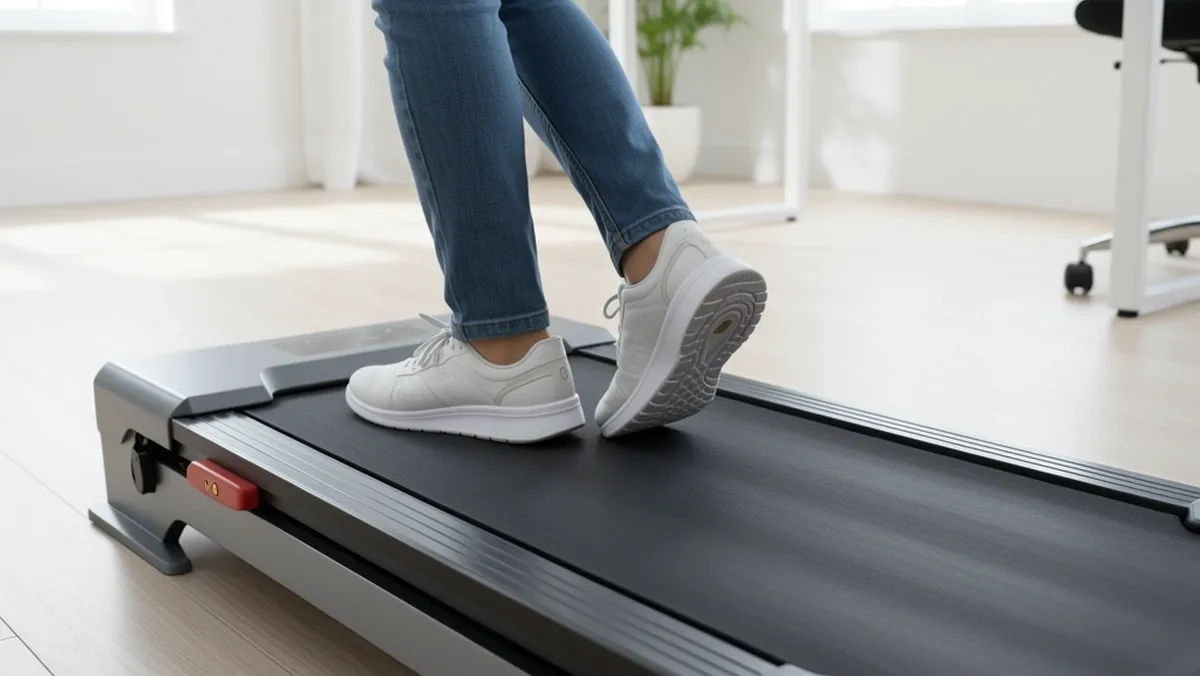
If the machine is brand new, some smell in the first one to three sessions is completely normal. The motor brushes, the belt, and the plastic parts all carry factory chemicals and residue.
The heat of the first few uses burns those off — that is the out-gassing process. It smells like a new car, or new electronics, and it gets weaker every session.
After a week or two of daily use, it should be nearly gone.
The first walking pad I owned smelled like a hair dryer for its first three sessions. By the fourth, nothing. If your machine's smell is fading on that kind of schedule, you are fine.
Why the Smell Only Appears After 30 Minutes
This is the classic walking pad complaint. You walk for half an hour, nothing. Then the smell hits.
That is heat accumulation. The motor makes heat continuously, and the plastic housing holds it in.
After thirty minutes, the lubricant between the belt and the deck starts to thin, the rubber warms up, and any dust inside the housing starts to bake.
A belt that was slipping a little on a cold machine slips a lot on a hot one.
The thirty-minute mark is also when the motor controller — the little circuit board that controls the speed — reaches its hottest.
If the smell shows up right around the half-hour point every single time, your machine is running right on the edge of its cooling capacity.
Why Your Under Desk Treadmill Still Smells Like Burning Plastic or Rubber After Months of Good Use
This is the version that scares people most, because the machine worked fine for months and then turned on them. There are usually three causes:
- The lubricant dried out. The silicone layer between the belt and the deck wears away with use. Once it is gone, the belt drags, friction builds, and the rubber starts to smell.
- The belt tension drifted. Belts stretch over time. A loose belt slips against the drive motor and burns. A belt that is too tight squeezes the motor bearings and makes the motor overheat.
- The motor is full of dust. The cooling fan pulls in dust and lint from your floor all day. That dust bakes onto the hot motor and smells like burning dust mixed with hot plastic.
There is a hard truth here.
A well-known treadmill repair shop points out that many cheap treadmills — and most budget walking pads are in this group — have motors with a cardboard or plastic core instead of a solid metal one.
Those motors are not built for sustained load. When they are pushed too hard, the plastic wrapping around them can get so hot it starts to melt. Once that has happened, the damage is permanent.
No amount of lubricant on the belt will ever fix a motor that has already overheated to the point of melting.
If the smell is coming from the motor housing area and the machine is a few months old, start planning for a replacement.
How to Fix It, the Right Way
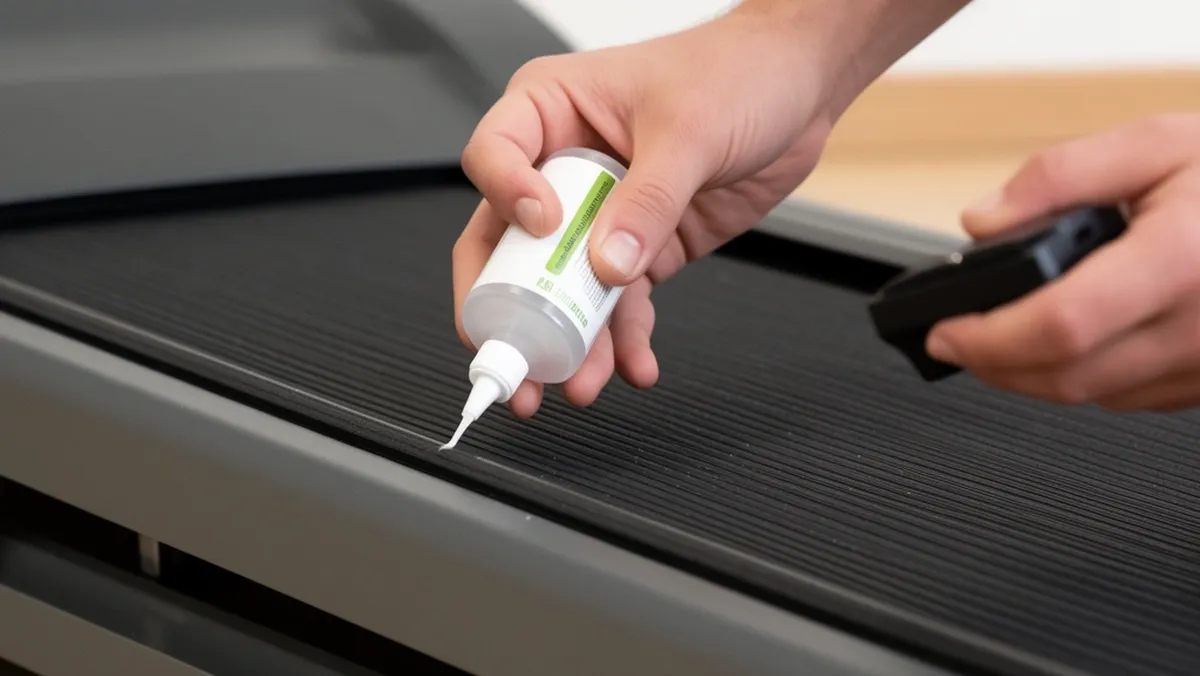
Before you reach for a lubricant, understand this: lubrication is the last step, not the first.
If you grease a belt that is too tight, too loose, or rubbing on the frame, the smell will come right back.
- Unplug the machine and clean the belt area. Wipe any visible dust off the belt edges and the exposed edges of the deck with a dry cloth.
- Check the belt tension. Lift the center of the belt with two fingers. It should rise about two to three inches off the deck. Less than two inches means too tight. More than three means too loose, and you will need to turn the tension bolts at the rear of the machine to fix it.
- Lubricate the deck, not the top of the belt. Use 100% silicone lubricant. Follow your manual for where exactly to apply it — usually along the inside surface of the belt, not on the walking surface. Then run the belt free for two to three minutes to spread it.
- Watch the belt run. If it drifts to one side, adjust the rear tension bolts a quarter turn at a time until it centers.
If you already added silicone and the smell is still there, the issue was never friction.
Either the belt tension is wrong — which lubrication cannot fix — or the heat is coming from the motor and electronics rather than the belt.
A quick squirt of lube on the walking surface does almost nothing. The lubricant has to get between the belt and the deck below it.