Why Walking Pads Make You Dizzy and How to Fix It


You stepped off your walking pad after a 20-minute session and the floor felt like it was still sliding beneath you. You sat down, but that swaying feeling stayed.
If you have never been on a boat, you might be wondering if something is wrong with your balance.
Nothing is wrong. You are experiencing a very real sensory aftereffect called land sickness.
It is the same mechanism that makes cruise passengers feel unsteady on solid ground, but your walking pad triggered it without a single wave involved.
Here is exactly what is happening in your body and how to make it stop.
You Are Not Imagining It: Walking Pad Dizziness Is Real Land Sickness

Land sickness is a temporary feeling of unsteadiness after your body has adapted to a repeated motion. When you walk on a moving belt, your brain learns that rhythm.
When the belt stops, your brain keeps expecting the movement to continue.
That is why the floor appears to sway, why you feel a phantom glide when you stand still, and why your legs feel like they are still stepping forward even though you are not moving.
This is exactly what happens to people who spend days on a ship.
Their nervous system adapts to the rocking of the vessel, and when they return to dry land, their brain keeps predicting that rocking motion. The difference is that you do not need a boat to get it.
Any surface that creates a consistent, repetitive movement pattern can trick your brain into adapting. A walking pad does that very well.
The reassurance here is important: this is not a sign of a broken vestibular system. It is a sign that your brain is working exactly as it should.
It noticed a repeated pattern, adjusted to it, and now needs a moment to readjust when the pattern disappears. For the vast majority of people, the feeling fades within minutes to a few hours.
The Argument Your Brain Is Having With Itself

To understand why a walking pad causes this, you need to know how your body keeps you upright. Your brain relies on three steady inputs that work together like a tripod:
- Your inner ear, which detects rotation and linear movement
- Your proprioception, the sensors in your joints and muscles that tell you where your body is in space
- Your vision, which tells you what is moving and what is still
When all three agree, you feel balanced. When they disagree, your brain gets confused.
Motion sickness on a boat happens because your inner ear feels the rocking of the ship while your eyes look at a cabin that appears perfectly still.
Your brain receives two conflicting reports and responds with nausea and dizziness.
On a walking pad, you get the same conflict, but in reverse. Your eyes see the belt scrolling beneath you and read that as forward motion. Your inner ear, however, detects no actual acceleration.
Your body is staying in the same place while your eyes insist you are moving forward.
Add to that the small upward bounce your head makes with every foot strike, and your brain gets a third confusing signal.
The result is the same sensory conflict that happens on a ship, just triggered by a different mismatch.
Why Your Walking Pad Is a Tougher Sensory Puzzle Than a Treadmill
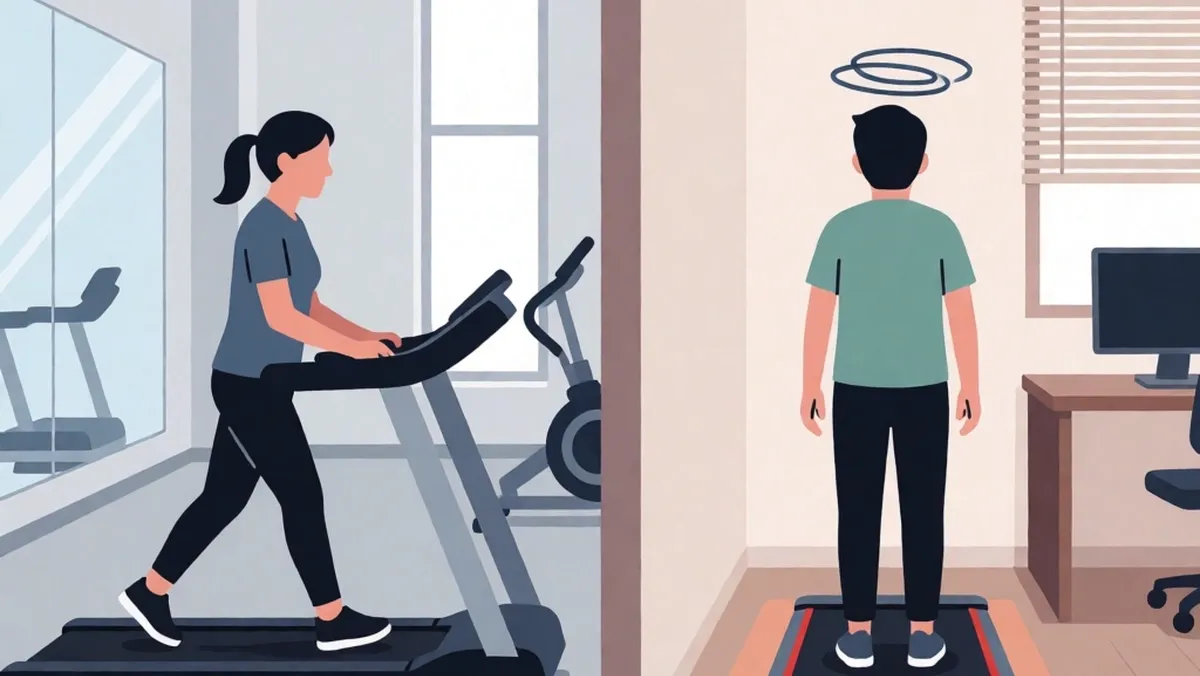
If you have used a gym treadmill without feeling dizzy, you might wonder why your walking pad hits different. It comes down to three specific factors that walking pads handle differently.
First, the visual field. On a gym treadmill, you are usually in a large room with tall ceilings, mirrors, and plenty of visual landmarks. Your brain has a clear stationary reference.
On a walking pad, you are often in a home office or living room, sometimes in a corner with a wall directly in front of you. Your brain has very little to anchor onto.
When the belt scrolls and the room stays frozen, that "I am moving forward" signal from your eyes is much stronger because everything else is so still.
Second, the height. Walking pads sit on the floor. There is no console, no side rails, and no elevated platform.
You are essentially walking on the ground, which makes the visual flow of the belt feel more immediate. Your brain also gets no upright frame of reference from the machine itself.
On a treadmill, the console and rails give your eyes fixed vertical lines to measure against. A walking pad offers none of that.
Third is the vertical bounce. When you walk at a slow speed with short strides, you create a rhythmic head bob at every foot strike.
That bob moves your head up and down roughly one to two times per second. Your inner ear detects every one of those micro-movements.
Over a 20-minute session, your brain learns that rhythm almost like a heartbeat. When you step off, your brain keeps looking for that rhythm.
It does not find it, and suddenly your body feels unanchored.
This is why walking pads feel closer to a boat than a treadmill. On a boat, your body moves while the horizon stays still.
On a walking pad, your eyes see forward motion while your inner ear feels only an up-and-down bob. Both create a conflict that confuses your balance system in a similar way.
Why the Dizziness Outlasts the Session: Your Brain's Prediction Engine
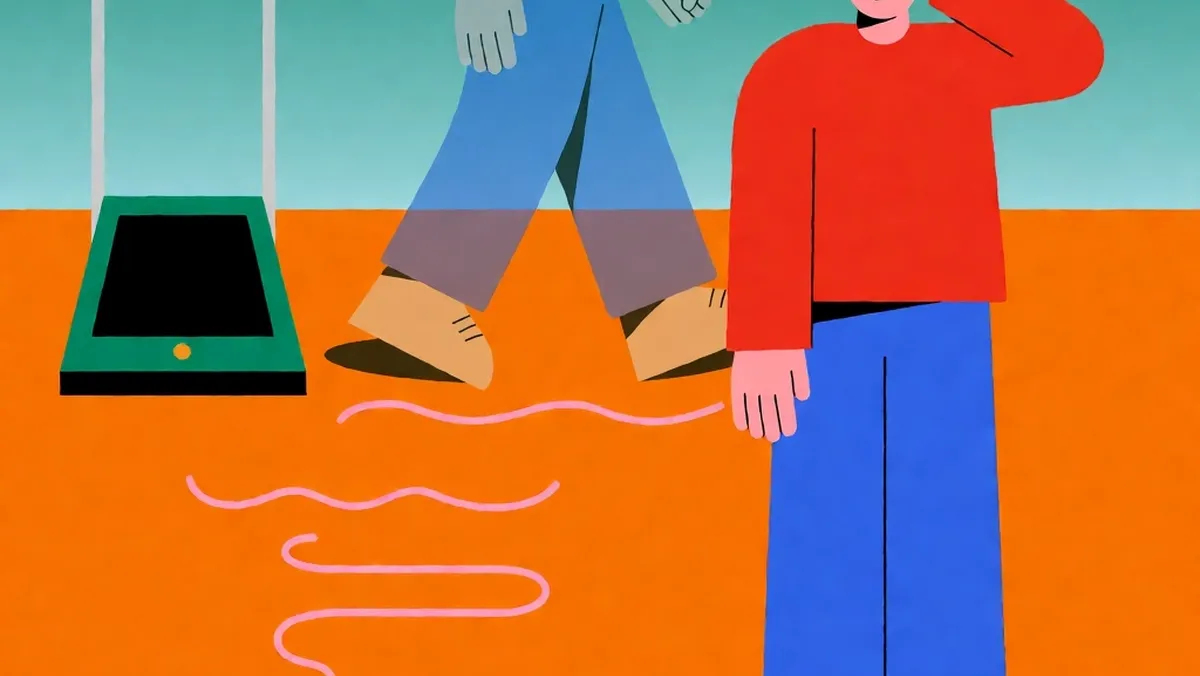
Here is the part that makes walking pad dizziness feel so strange. You step off the machine, you stand on solid ground, and yet you still feel like you are moving.
To understand this, you have to think about your brain as a prediction engine. It does not just react to what your body is doing. It anticipates what is coming next.
When you walk on a moving belt, your brain builds a mental model of that movement. It learns the speed of the belt, the rhythm of your foot strikes, and the constant forward drift.
Every step reinforces that model. By the end of your session, your brain is no longer just responding to the belt. It is predicting the next belt strike before it happens.
When you step off, the belt is gone, but the prediction persists. Your brain keeps sending signals that your body should be moving forward.
Your inner ear says no, but your brain's predictive model says yes. That mismatch creates the phantom floor sensation, where the ground seems to glide or tilt beneath you.
Closing your eyes can actually make this worse. Without visual input, your brain relies even more heavily on its internal prediction.
You lose the one stable reference that could help your brain correct itself. That is why people often feel more dizzy lying down or in a dark room.
The visual anchor is gone, and the prediction engine takes over.
This is what makes the sensation feel so persistent. It is not a physical movement happening in your body. It is your brain's software trying to reconcile a prediction with a new reality.
The Recalibration Protocol: How to Retrain Your Balance System
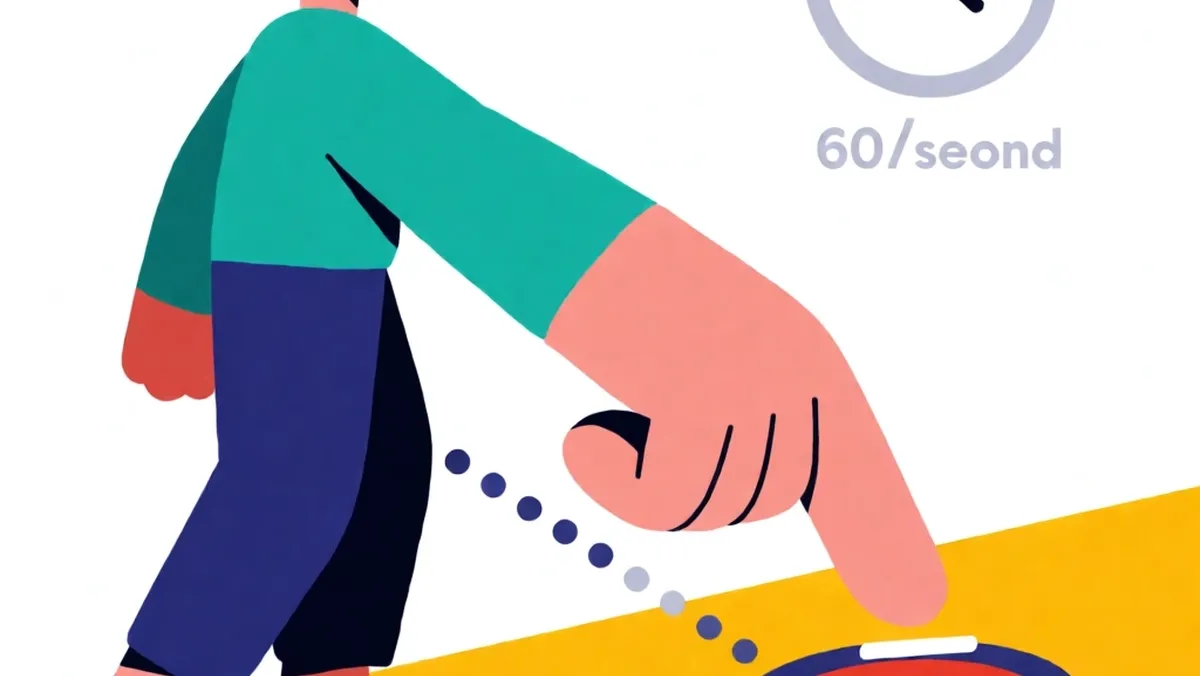
The good news is that you can train your brain to let go of the walking pad rhythm much faster. These steps are ordered by how quickly they work, so start at the top and work your way down.
Use the 60-Second Taper
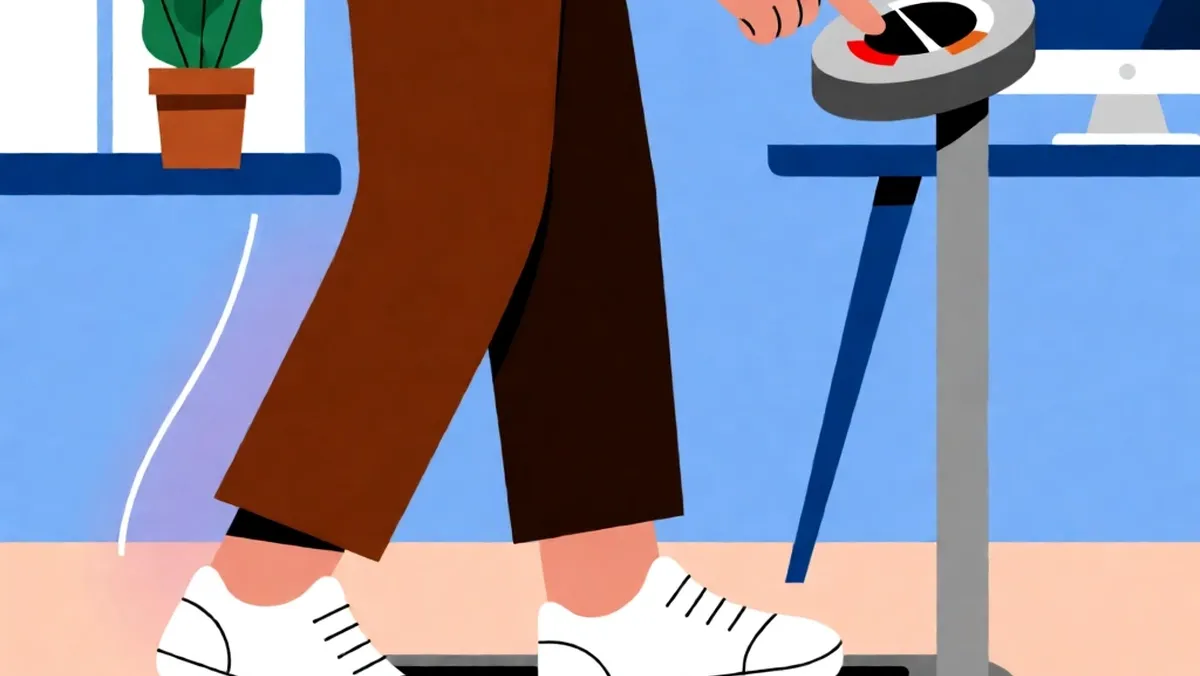
This is the single most effective thing you can do. Before you step off your walking pad, slow the belt to its minimum speed and keep walking for a full minute.
You are giving your brain a gradual slowdown instead of a sudden stop. It is the difference between gliding to a halt and slamming on the brakes.
That final minute lets your brain adjust its prediction slowly, so by the time you step off, it is already recalibrating to a stationary floor.
Go for a Post-Walk Wander
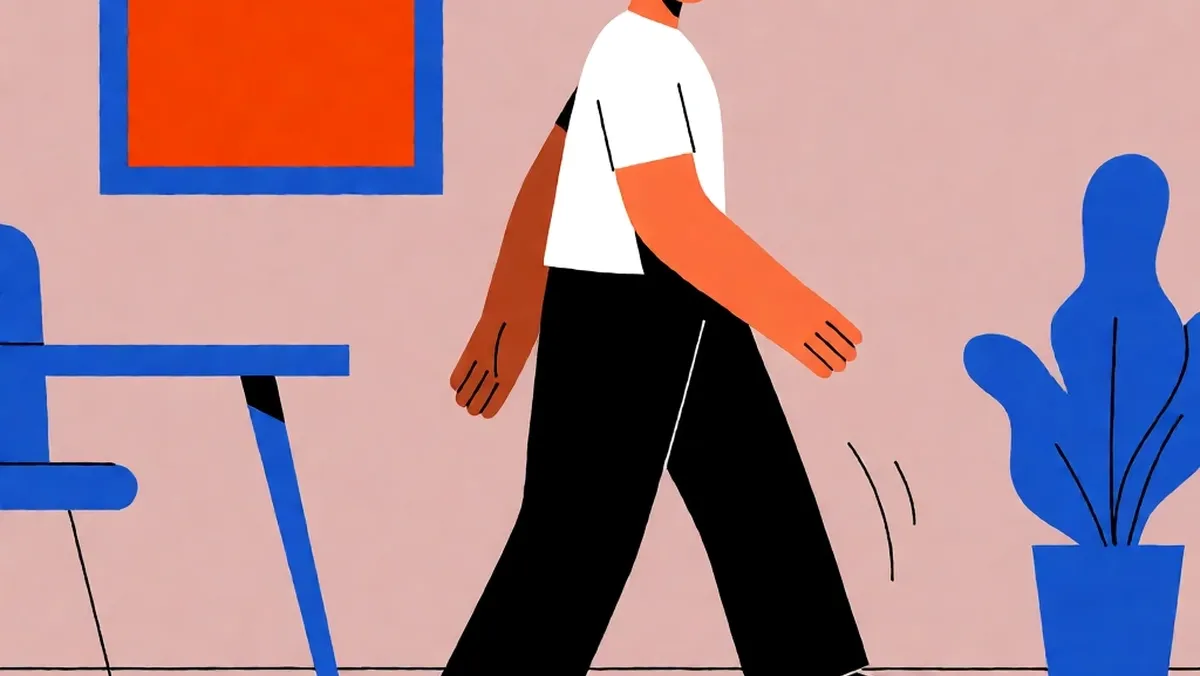
Do not sit down immediately after your session. Keep your body moving for one to two minutes. Walk around your room at your normal stride, keeping your eyes up and looking at objects at eye height.
This continued movement gives your brain a bridge between the walking pad rhythm and the real world.
It also gives your proprioception a chance to feel stable ground beneath your feet while your inner ear is still settling down.
Anchor Your Gaze

When you are on the walking pad, pick a fixed point at eye level and keep your focus on it. Do not look down at the belt. Do not watch the floor.
A stationary target gives your brain a visual reference that says "this room is still." Stare softly at a picture frame, a door handle, or a spot on the far wall.
If you are in a small room with nothing at eye level, place a sticky note on the wall at your eye height and use it as your anchor.
Take Shorter, More Frequent Breaks
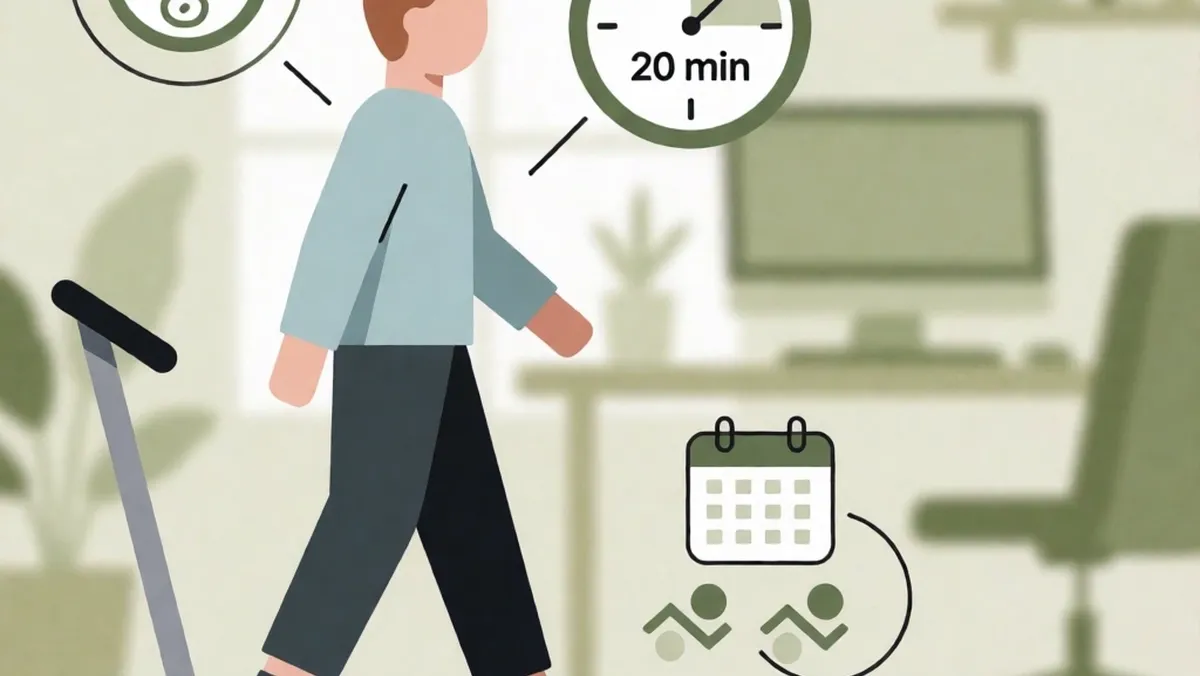
If you are using a walking pad while you work, 20-minute sessions are better than 60-minute sessions. The longer you walk, the stronger the rhythm your brain builds.
Very short sessions still give you the movement benefits but do not give your brain enough time to lock into the belt's rhythm.
If you are still feeling dizzy after a full session, cut your time in half and take two shorter walks instead.
Expect a Two-Week Adaptation Curve
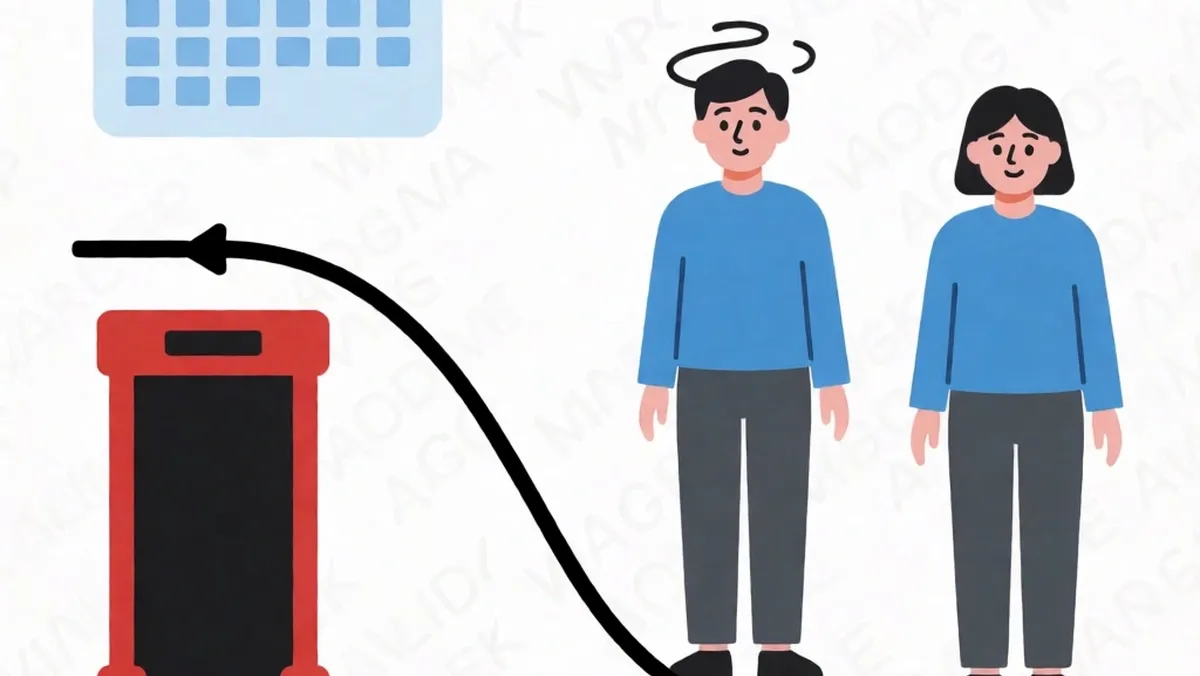
Your brain can retune itself, but it needs repeated exposure to do it.
If you use the walking pad consistently for one to two weeks, your brain will start to understand that the movement is temporary and will stop treating the stopping as a surprise.
The first few sessions might still leave you wobbly, but each session gets easier.
If you only use the walking pad once a week, your brain never builds that adaptation and every session starts from scratch.
How to Set Up Your Space So Your Brain Gets the Help It Needs

Your environment plays a bigger role in this than you might think. The walking pad itself does not cause land sickness.
It is the combination of the walking pad and a visually static environment that confuses your brain. Here is how to set up your space to reduce that confusion.
Place the Walking Pad Where You Have a Long Sightline

If you can, put your walking pad in a spot where you can see a window or a long open area. A window gives your eyes a distant, stationary reference point.
That distant anchor is powerful because it provides a strong visual cue that you are not moving forward through space.
If you do not have a window nearby, angle the pad so you are looking at the longest wall length available, and place a tall vertical object like a floor lamp or a bookshelf at the far end of your gaze.
Use Peripheral Cues to Ground the Room
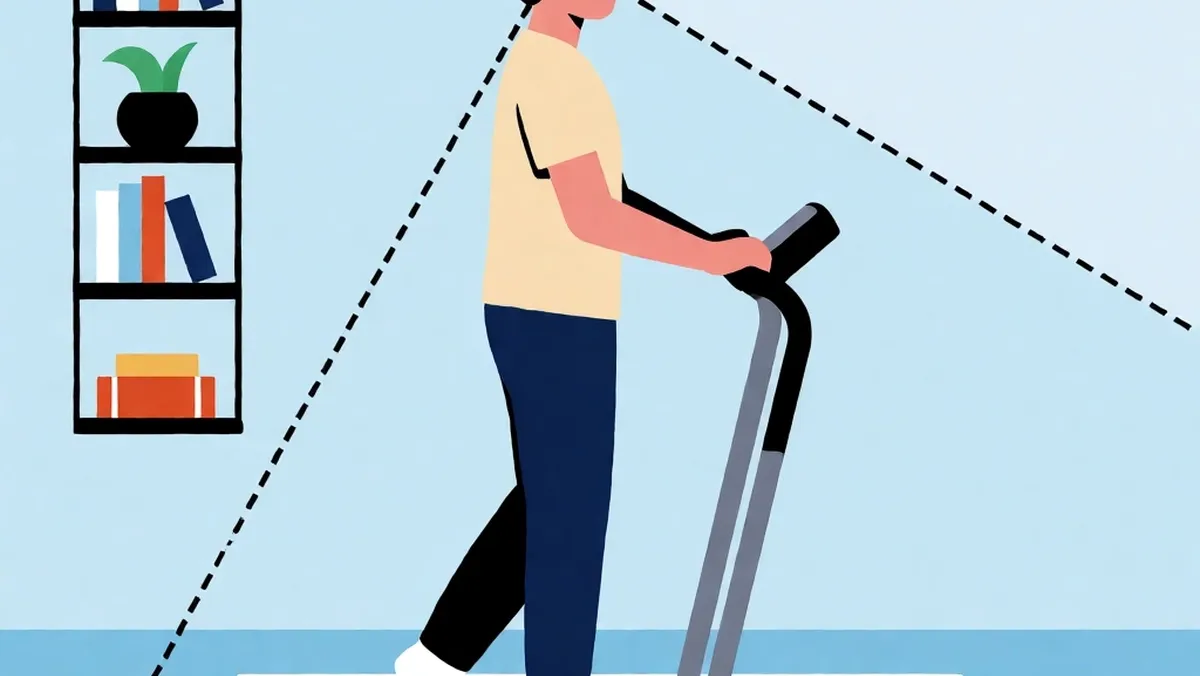
Your peripheral vision is constantly scanning for stability. A rug with a visible pattern, a furniture edge, or even a vertical line on the wall can serve as a visual anchor.
These objects tell your brain "this room is stable." If your walking pad is surrounded by a completely flat, empty floor, your brain has nothing in its peripheral field to use as a reference.
That makes the forward drift of the belt much more convincing.
Be Careful With Screens

Watching TV while you walk creates a dual visual conflict. Your screen is showing you moving images, your peripheral vision sees the belt scrolling, and your room itself is still.
That is three contradictory visual signals hitting your brain at once.
If you must use a screen, keep your gaze at eye level and try to keep the screen in your line of sight rather than looking down at it.
The best setup is a walking pad that faces your television with the screen at the same height as your natural forward gaze.
Using a phone in your hand while walking is even worse. Your eyes are locked on a small, bright screen that is itself bobbing up and down with each step.
Your brain gets a stable image from the phone, a moving image from the belt below, and a moving phone that is also bobbing. It is a sensory nightmare.
If you feel dizzy after walking with your phone, try walking without it for a few sessions to see if the dizziness disappears.
Loosening the Grip: When the Dizziness Lingers
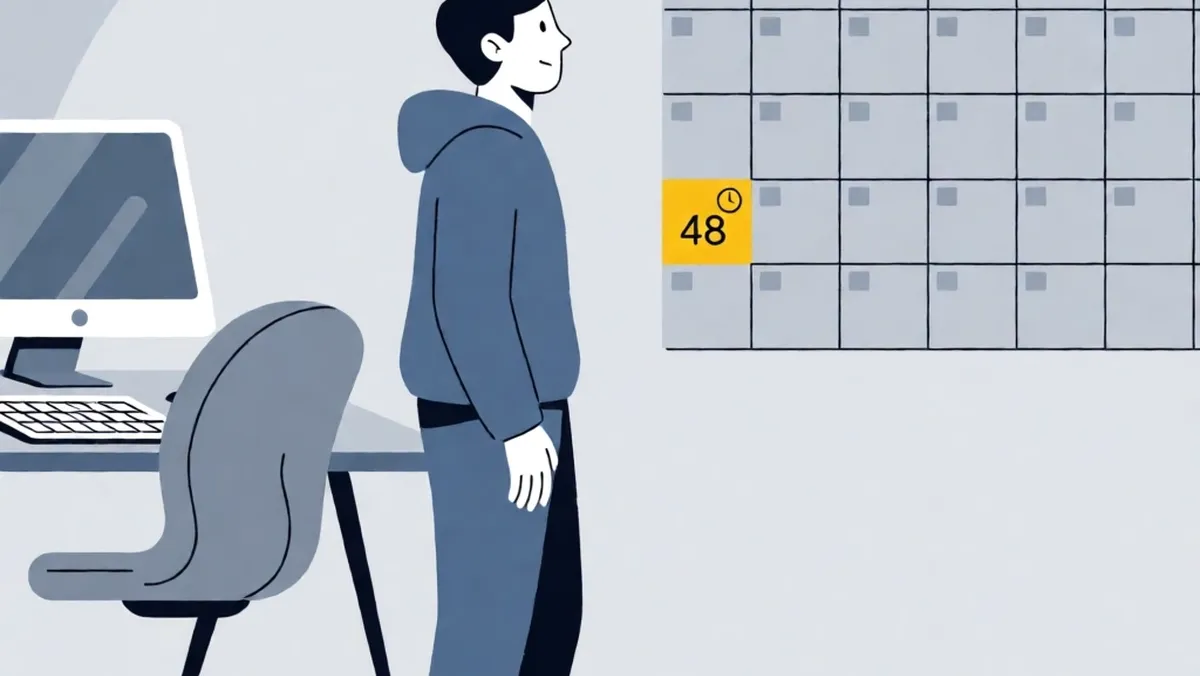
Transient land sickness from a walking pad should resolve within minutes to a few hours. If you wake up the next day and still feel off, that is when you need to pay closer attention.
The 48-Hour Boundary
Medical definitions separate short-term land sickness from a persistent condition based on a 48-hour mark. If the dizziness goes away within two days, it falls into the normal, temporary category.
If it lasts beyond that, it is worth taking seriously. You can still recover on your own, but the longer the symptoms persist, the more important it becomes to understand what is going on.
Red Flags That Warrant a Professional Evaluation

Not every dizzy feeling after a walking pad is land sickness. Some symptoms point to an underlying issue that needs medical attention.
You should see a doctor or a physical therapist if you experience any of the following:
- Vertigo that continues after you lie down or when you wake up the next morning
- Hearing changes, like muffled sound or ringing in one ear
- A headache, neck pain, or jaw pain that accompanies the dizziness
- Nausea that occurs every time you step off the walking pad, even after weeks of consistent use
These are not typical land sickness responses. They can point to issues like vestibular migraine, inner ear problems, or cervical spine strain. A professional can run tests that rule these out.
The walking pad might be aggravating an existing condition rather than creating a new one.
The Clear-Eyed Summary
For the vast majority of people, walking pad land sickness is a temporary quirk of the nervous system.
Your brain adapted to a rhythm, and it needs a moment to release that rhythm when the machine stops.
With the taper method, gaze anchoring, and a bit of consistent use, most people settle into a dizziness-free routine within two weeks.
If the symptoms do not fade within 48 hours, treat them as a reason to seek professional input.
But if you are simply feeling a little wobbly after your session, give your brain a minute and it will sort itself out.
Frequently Asked Questions
Is it safe to power through the dizziness and keep using my walking pad?
Pushing through mild dizziness is usually fine, but you should not ignore severe symptoms. The better approach is to shorten your sessions and use the taper method.
Your brain needs gradual exposure to adapt. Forcing yourself through intense dizziness creates a negative association that can make your nervous system more reactive, not less.
If the dizziness is severe enough that you feel unsteady on your feet or nauseous to the point of discomfort, stop and take a break.
Will the dizziness stop if I drink a glass of water before or during my routine?
Hydration does play a role in overall balance because your inner ear relies on fluid to function, and dehydration can affect that fluid.
But a single glass of water will not override a sensory conflict. It can help on the margins, especially if you are already mildly dehydrated, but it will not prevent land sickness on its own.
If you want to see if hydration helps, drink water consistently throughout the day and see if your symptoms are milder on well-hydrated days.
Does a faster walking pace increase the chance of dizziness, or the opposite?
This is counterintuitive, but a faster pace can actually reduce the dizziness for some people.
When you walk faster, your inner ear gets more actual movement signal, which helps it agree with your visual system.
The forward drift feels more physically real because your legs are moving faster and your body is working harder.
Slower walking on a walking pad creates a stronger disconnect because the belt moves slowly enough that your inner ear barely registers any acceleration.
If you feel dizzy at 1 mph, try bumping the speed up slightly and see if the sensation changes.
Can using a walking pad with a desk worsen symptoms compared to walking without watching a screen?
Yes, it can. Walking at a desk while looking at a screen is a dual-source visual conflict.
Your eyes are locked on a stationary screen at a close distance, your peripheral vision sees the belt scrolling, and your brain gets a third input from the room around you.
That combination is harder for your brain to reconcile than walking while watching a distant point.
If you feel dizzy while working at a standing desk with a walking pad, try walking without the desk for a few sessions. If that solves the issue, you know the screen was the problem.
How is land sickness from a walking pad different from dizziness after a treadmill workout?
The two share the same underlying mechanism, but the intensity is usually different.
A treadmill workout at the gym typically gets your heart rate up and produces metabolic stress, which can cause dizziness from exertion or dehydration. Walking pad land sickness is more purely sensory.
It comes from the visual and vestibular mismatch, not from physical exhaustion. The treatment also differs.
Treadmill dizziness responds to hydration and rest, while walking pad dizziness responds to gaze anchoring and the taper method.