
What Type of Silicone Oil Under-Desk Treadmills Need

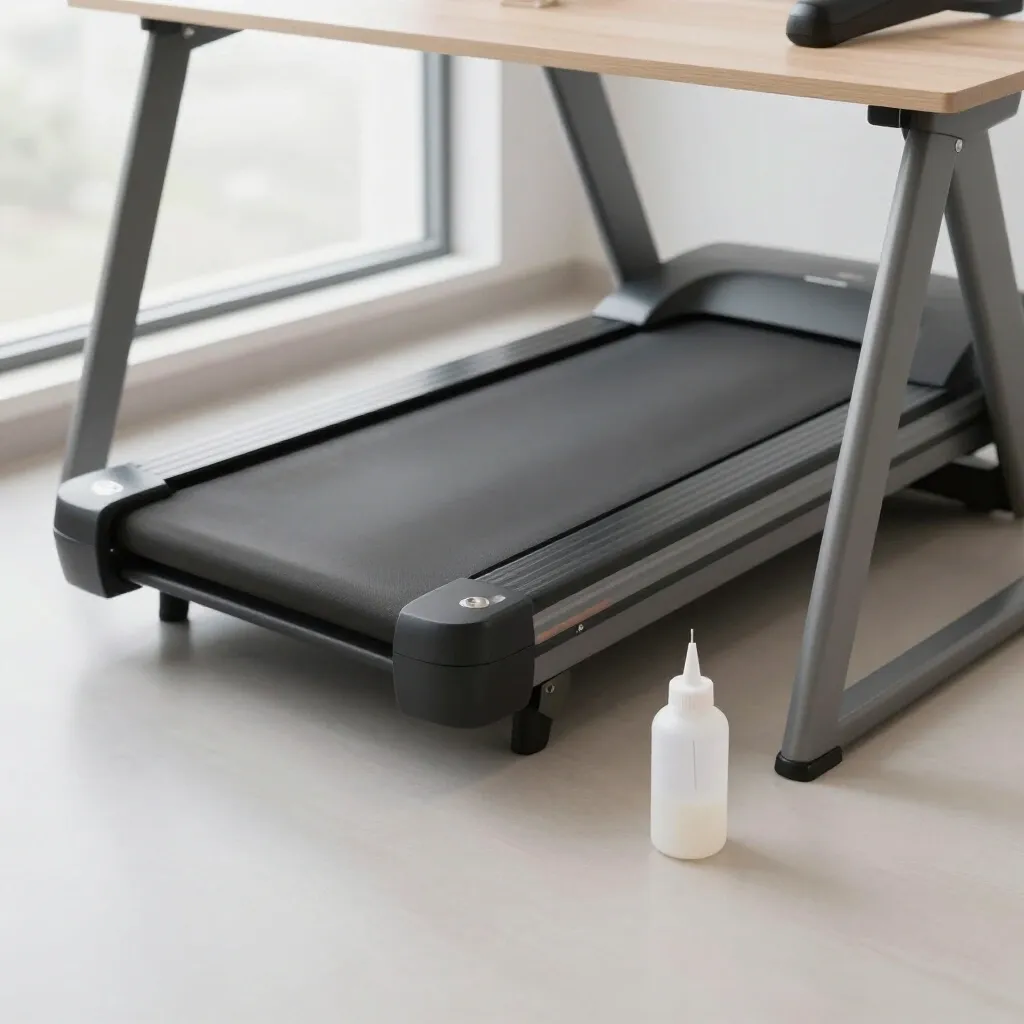
The best silicone oil for an under-desk treadmill is 100 percent pure silicone with a viscosity of 500 centistokes, sold in a needle-tip squeeze bottle.
That is the short answer, and it is also the only answer that makes sense once you understand how a walking pad is built and how it runs.
Walking pads are not mini treadmills. They are low-profile machines with the belt sitting close to the deck, often inside a shroud that you cannot easily lift.
They run for hours at slow speeds under a desk. They generate heat in a cramped space.
And they usually come with a tiny bottle of lubricant that runs out after the first year, leaving you to figure out what to buy next.
Most people buy the wrong thing. A silicone spray from the hardware store, a multi-purpose lubricant, or an automotive-grade silicone that contains additives.
These products can damage the belt, mess with the traction, and put extra strain on the motor. The right product is cheap, easy to find, and lasts a long time when used correctly.
Here is what matters, why it matters, and exactly how to apply it.
What Makes a Silicone Oil Right for a Walking Pad
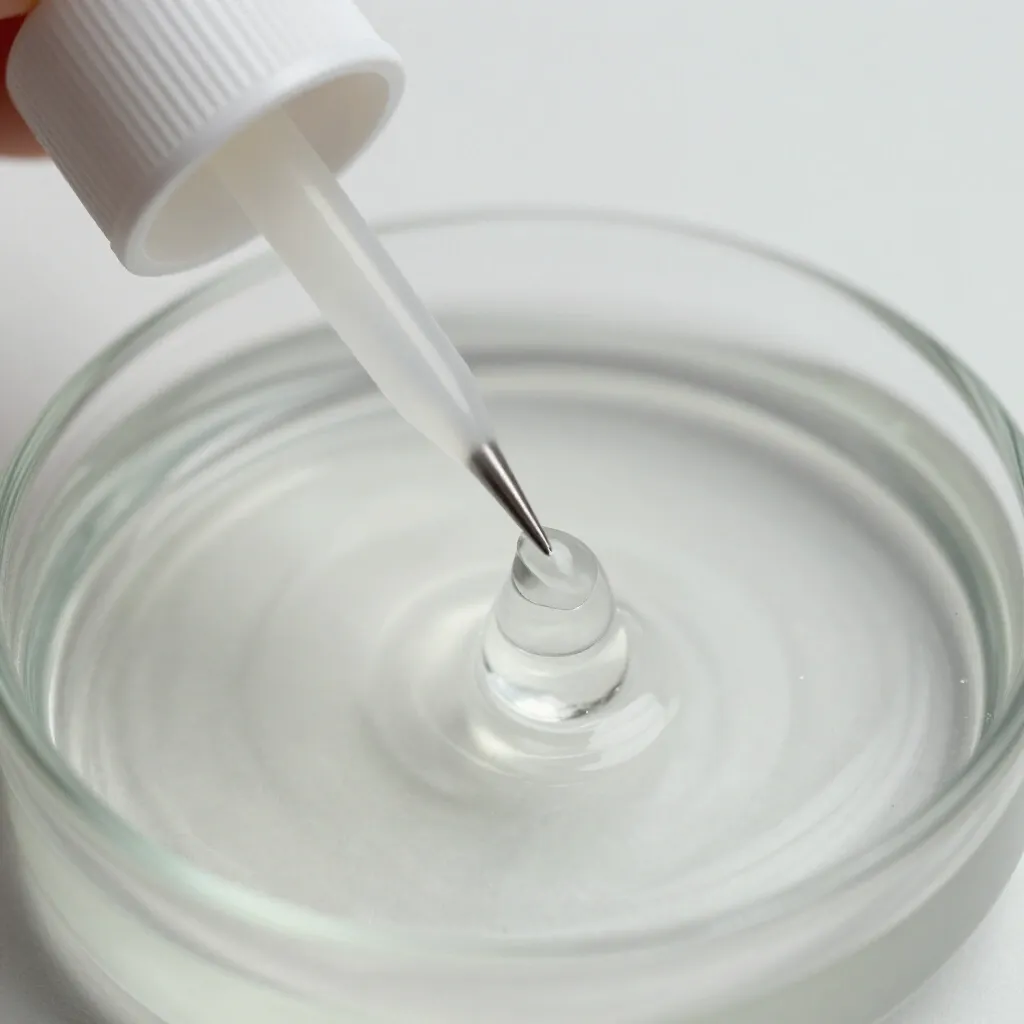
The question of what type of silicone oil is best for under desk treadmills comes down to three things: purity, viscosity, and the bottle it comes in.
Each one plays a role in keeping the belt sliding smoothly over the deck without side effects.
Purity Means No Additives
Silicone oil is a synthetic lubricant. It does not break down like petroleum oil, and it does not attack rubber or the materials used in treadmill belts. That is why treadmill manufacturers specify it.
But not every bottle labeled "silicone" is pure. Some silicone sprays and automotive lubricants contain solvents, propellants, anti-foaming agents, or friction modifiers.
These additives do two bad things. They can degrade the belt material over time, and they change the way the belt grips the deck. A belt that is too slippery is just as bad as a dry one.
You want a product that says 100 percent silicone and nothing else. If the label lists more ingredients, put it back.
Viscosity Is the Number That Matters Most
Viscosity is how thick a liquid is. Silicone oil is measured in centistokes, usually written as "cst." Water is about 1 cst. Motor oil is around 100 cst.
The silicone oil used on treadmills is typically 500 cst.
That number is not random. At 100 cst, silicone oil is thin enough to run off the deck and evaporate quickly. It might feel fine for a week, then the belt is dry again.
At 1,000 cst or higher, the oil is thick like honey. It stays put, but it makes the belt drag.
On a walking pad with a small motor, that extra drag forces the motor to work harder and can cause the belt to slip or grab. The 500 cst weight sits right in the middle.
It is thin enough to spread into a smooth film, and thick enough to stay on the deck for months of daily use.
When you look at treadmill-specific lubricant brands, almost all of them list 500 cst on the label. That is not a coincidence. It is the spec that walking pad manufacturers use at the factory.
The Bottle Is Part of the Answer
You can buy the exact right oil in the exact right weight and still struggle to apply it if the bottle is wrong. A needle-tip squeeze bottle lets you place a drop exactly where it needs to go.
A spray can does the opposite. It mists silicone into the air, coating the belt surface, the rollers, and anything else nearby.
On a walking pad, the belt sits so close to the deck that a spray cannot reach the underside anyway.
Look for a bottle with a thin metal or plastic nozzle. You want to be able to slide the tip between the belt and the deck without lifting the belt more than a few millimeters.
How Under-Desk Treadmills Differ From Full-Sized Machines
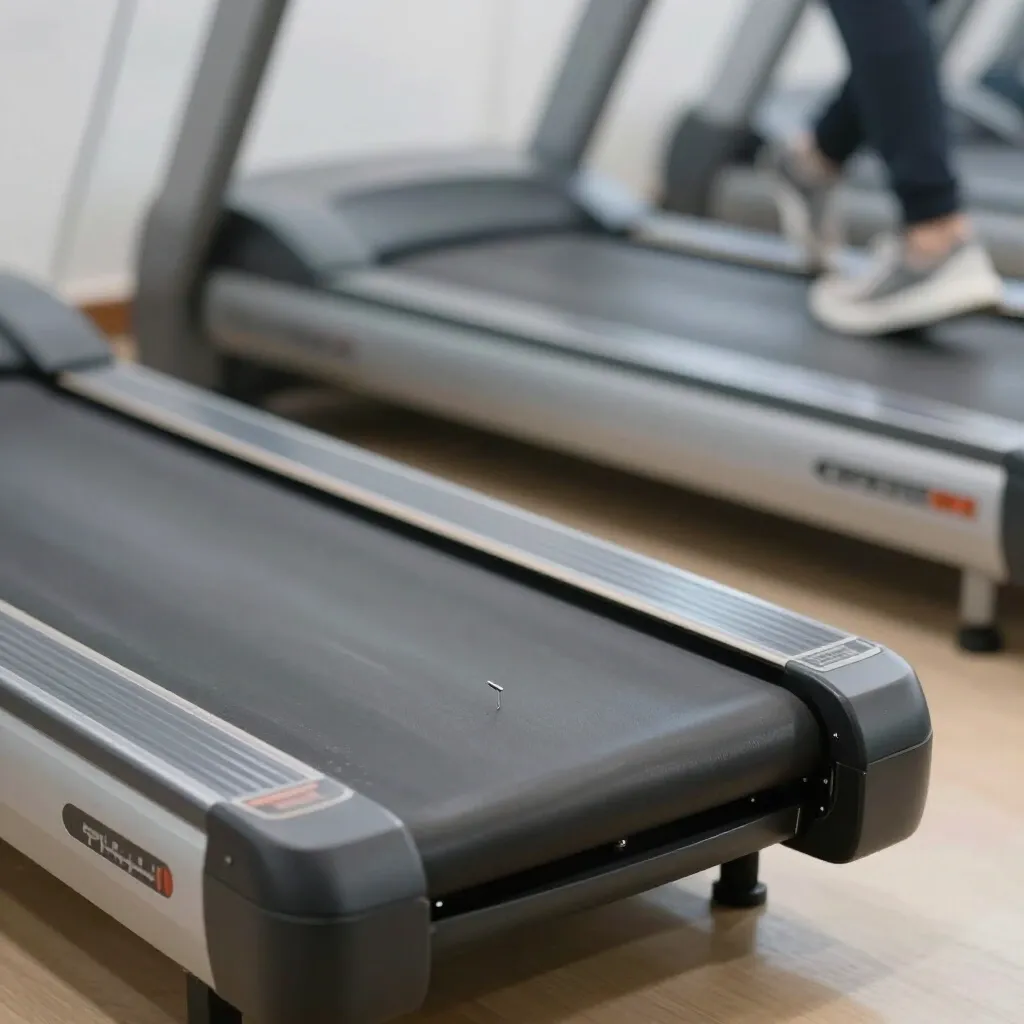
Most lubrication guides are written for full-sized treadmills. The advice assumes you can lift the belt, reach under it, and see what you are doing.
Under-desk treadmills do not work that way, and the differences change both the product you need and the way you apply it.
The Belt Is Hard to Reach
On a standard treadmill, you unplug the machine, lift the belt with one hand, and slide the oil nozzle under with the other. On many walking pads, the deck is enclosed in a plastic shroud.
The belt only peeks out at the front and rear rollers. You cannot lift the belt high enough to slide your hand under, and in some models you cannot lift it at all without removing screws.
This is why the needle tip matters so much. It can slide into the small gap between the belt and the deck at the front or rear of the machine.
I have lubed walking pads where the only access point was a two-millimeter gap near the front roller. A spray can is useless there. A squeeze bottle with a long, thin nozzle reaches it in seconds.
Heat Builds Up Differently
A walking pad under a desk runs for hours at a time. The deck is enclosed, so heat has nowhere to escape. The belt and deck get warmer than they would on a full-sized treadmill in a gym.
Heat thins silicone oil. A 100 cst oil that starts out thin will become almost watery at operating temperature and migrate off the deck.
The 500 cst weight is thick enough that even when it warms up, it stays where you put it. This is one more reason the viscosity spec is not just a manufacturer preference.
Deck material also plays a role. Many walking pads use aluminum decks to keep the weight down. Aluminum conducts heat faster than steel, so the oil on the deck heats up and thins out more quickly.
Silicone oil handles this well, but only if it starts at the right thickness.
Usage Patterns Are Completely Different
A full-sized treadmill gets used in 30 to 60 minute sessions. An under-desk treadmill can run for three or four hours a day, five days a week, at walking speed.
That is continuous friction with no cool-down period.
More hours of operation means more wear on the lubricant film. The oil does not disappear, but it slowly gets pushed to the edges of the deck or picks up dust and debris.
Walking pad owners need to relubricate more often than gym treadmill owners, even though the belt speed is lower.
The Myth of the Universal Silicone
There is a common belief that any silicone product will work because they all share the same base ingredient. That belief causes more belt damage than no lubrication at all.
WD-40 Is Not Your Friend Here
WD-40 makes a silicone spray that many people grab out of habit. It is a fine product for many jobs, but not for a treadmill belt.
The can contains a propellant and solvents that evaporate after application. The solvents can soften the belt material and the deck coating.
The spray also carries silicone into places it should not go, like the motor case and the roller bearings.
If you have already used WD-40 on your walking pad, wipe the belt and deck clean with a dry cloth before applying the correct oil.
The damage is rarely permanent, but you want to remove the residue so the new oil can do its job.
More Oil Is Not Better
Over-lubrication is a real problem on walking pads. When the belt is too slick, your foot slides slightly with each step.
You feel unstable, and the motor has to work to keep the belt moving against a slippery surface.
Excess oil also collects dust and pet hair, turning into a gritty paste that acts like sandpaper on the deck.
You need only a few drops of 500 cst silicone for a walking pad. The belt is small, the deck is small, and the oil spreads quickly. Five drops applied across the width of the belt is enough.
If you see oil seeping out around the edges after running the machine, you used too much.
Spray vs. Drops
Spray lubricants are convenient for door hinges and bike chains. They are wrong for treadmill belts because they cannot be aimed with precision.
The mist settles on the top of the belt, which is the surface your shoes touch. That makes the belt slippery underfoot and does almost nothing for the underside where the friction happens.
Drops from a needle tip go directly on the deck surface under the belt. That is the only place the oil does any good.
How to Apply Silicone Oil to a Walking Pad
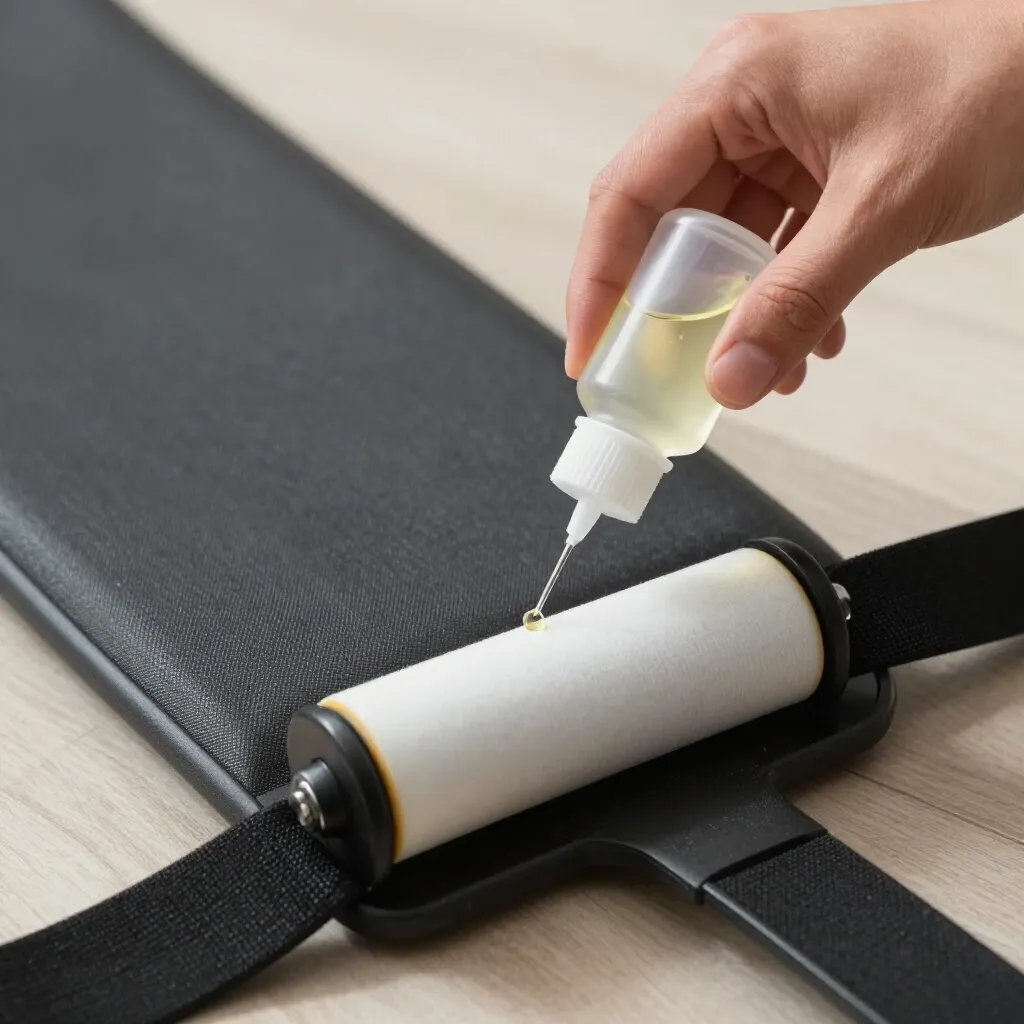
The application process for an under-desk treadmill is simpler than a full-sized machine, but the technique is a little different.
Here is the method that works, based on lubing several walking pads with different shroud designs.
- Unplug the machine. Never lubricate a treadmill that is plugged in. The belt could move unexpectedly and catch your hand.
- Find the access gap. Look at the front and rear of the machine where the belt wraps around the rollers. On most walking pads, there is a small gap between the belt and the deck, or between the belt and the shroud. This is where the needle tip goes.
- Position the needle tip. Slide the nozzle into the gap at one side of the belt. If the gap is very tight, press down gently on the belt with your other hand to create a millimeter or two of space. Do not force the belt up more than that.
- Apply the oil in a line. Squeeze out a single drop, then move the nozzle a few inches across the belt width and squeeze another drop. Four to five drops spread evenly is the right amount for a walking pad. Do not dump a puddle in one spot.
- Run the belt slowly. Plug the machine back in and run it at the lowest speed for two minutes. This spreads the oil along the deck. Then run it at maximum speed for another minute to work the oil into the full belt path.
- Wipe away any seepage. Oil that works its way out around the edges of the belt is excess. Wipe it with a dry cloth so it does not collect dust or drip onto the floor.
- Test the traction. Step on the belt at a low speed. You should feel a smooth glide with no squeaking. If the belt feels slippery under your shoes, you used too much. Run the machine for a few more minutes and the excess will usually work its way to the edges where you can wipe it off.
If your walking pad has a sealed deck with no access gap at all, check the manual. Some models require a small screwdriver to remove a panel near the front roller.
A few newer models are designed with a lubrication port, a small hole where the needle tip goes straight in. Do not remove the belt to lubricate. That is a much bigger job and usually not necessary.
The Real Cost of Using the Wrong Oil
The cheapest bottle of 500 cst treadmill silicone costs about the same as a fast-food meal. A bottle lasts a year or more on a walking pad because each application uses only a few drops.
The cost of the wrong oil is much higher. A replacement walking pad belt costs anywhere from 40 to 70 dollars.
Replacing it takes an hour of work, and if you are not careful with the tension and alignment, you can damage the motor.
A motor replacement on an under-desk treadmill often costs more than the machine itself.
One bad choice, like a can of silicone spray or an automotive lubricant with friction modifiers, can shorten belt life by half.
The 10 to 15 dollars you save by buying the wrong product disappears the moment the belt starts slipping.
Lubrication Schedule for Under-Desk Treadmills
How often you lubricate depends on how many hours the machine runs, not on the calendar. Use this schedule as a starting point and adjust based on the sounds your machine makes.
| Usage Pattern | Lubricate Every | Check Belt Every |
|---|---|---|
| Light walking, about 1 hour per day | 3 months | Monthly |
| Standard office use, 2 to 4 hours per day | 1 to 2 months | Every 2 weeks |
| Heavy use, 4 or more hours per day, or slow jogging | 2 to 4 weeks | Weekly |
A high-pitched squeak when the belt starts moving is the most common sign of a dry deck.
If you hear a low thrumming sound instead, the belt may be over-lubricated or misaligned, so check that before adding more oil.
Frequently Asked Questions
Can I use automotive silicone lubricant on my under-desk treadmill?
Automotive silicone products often contain additives that change the friction profile, such as anti-foaming agents or conditioners.
These additives can make the belt too slippery or break down the belt material over time. Stick with a product labeled for treadmill use, or a pure 500 cst silicone that lists no other ingredients.
How do I know if my walking pad needs lubrication without opening the deck?
Listen to the belt. A dry belt makes a high-pitched squeak or a rubbing sound when it first starts moving. You can also do a stop test: run the belt at low speed and press your foot down gently.
If the belt stops while the motor keeps running, the belt is dragging on a dry deck and needs oil.
Are silicone oils sold in hardware stores the same as treadmill-specific brands?
If the hardware store bottle says 100 percent silicone and lists a viscosity of 500 cst, the liquid inside is essentially the same as a treadmill-brand bottle. The difference is the applicator.
Treadmill-specific products come with the needle tip and squeeze bottle that make application possible on a low-clearance walking pad. That is worth the small price difference.
Can I apply the oil on top of the belt instead of underneath?
It works in an emergency, but it is the wrong way to do it. Oil on the top surface makes the belt slippery under your shoes and does not reach the deck, which is where the friction happens.
If you cannot reach the underside, use a needle-tip bottle to slide oil into the gap at the front roller, then run the belt to spread it.
What happens if oil gets on the walking pad's motor case?
Wipe it off immediately with a dry cloth. Silicone oil is not electrically conductive, so it will not short anything out, but it attracts dust.
A layer of dust mixed with oil on the motor case acts like an insulator and traps heat. Over time, that can contribute to motor overheating.