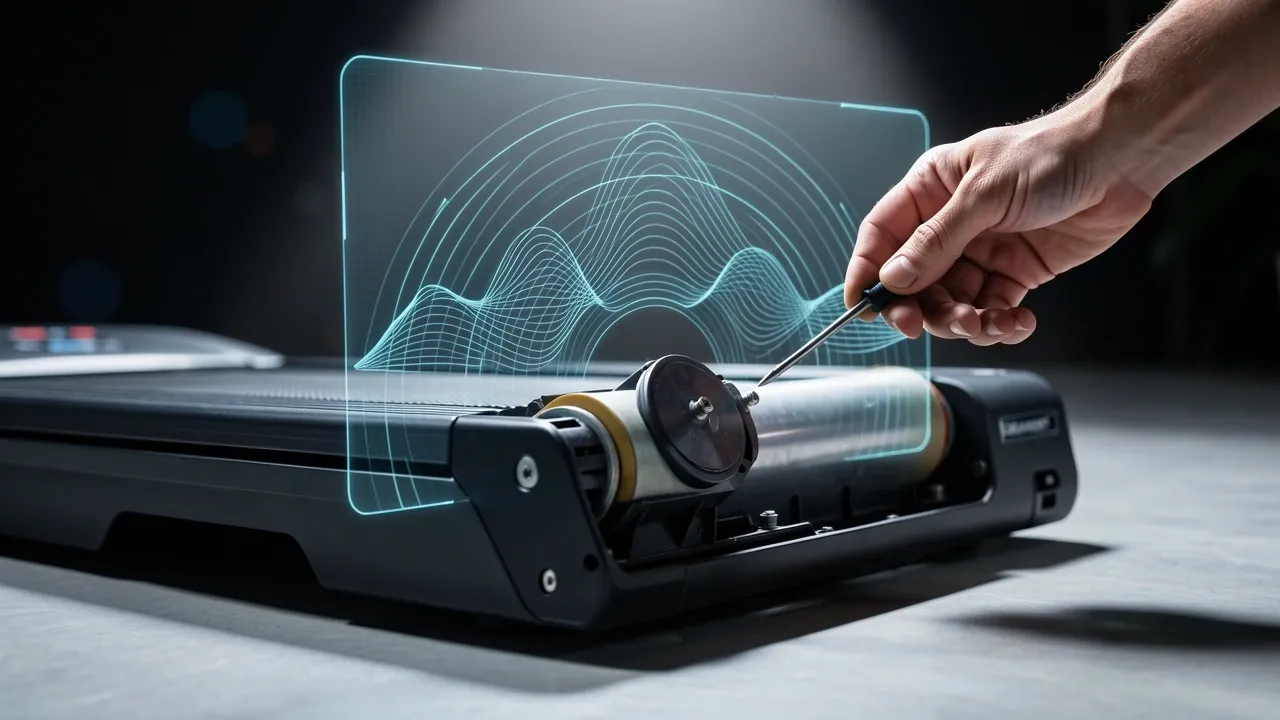
Under Desk Treadmill Max Weight Capacity and What Happens If You Exceed It

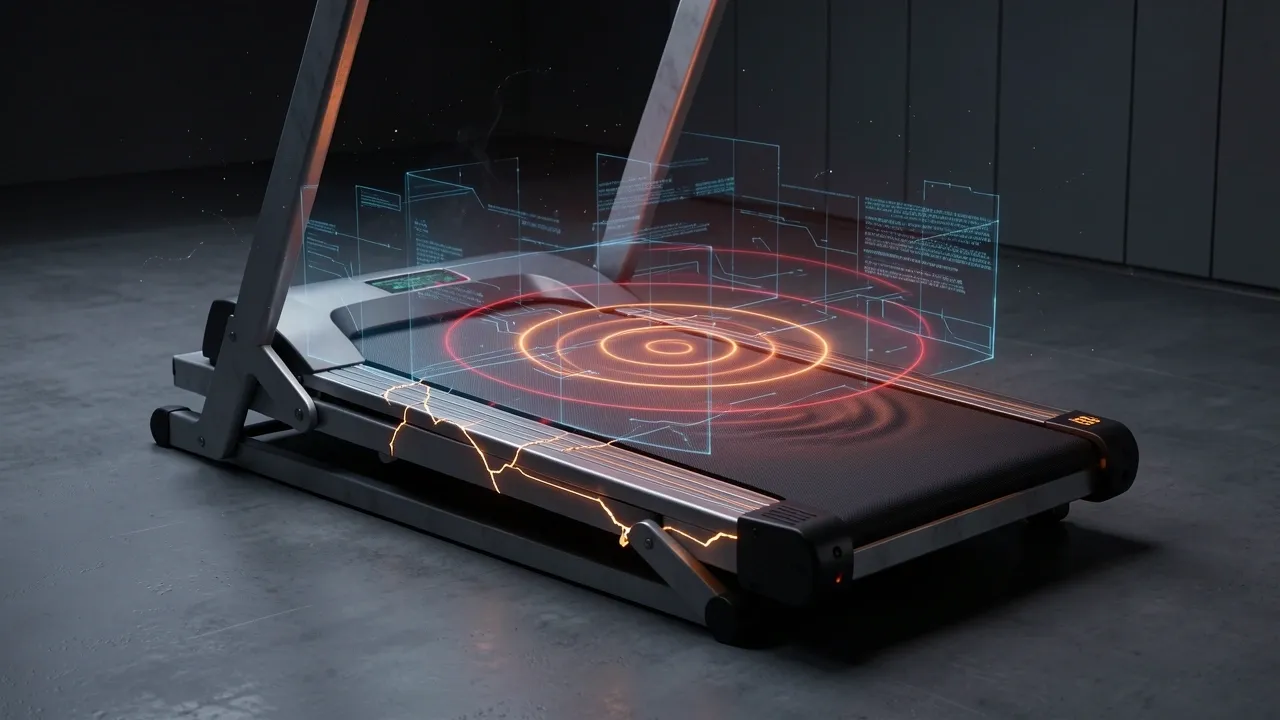
Every under-desk treadmill has a sticker that says "Max Weight: 300 lbs" or "220 lbs," and most people treat it like a suggestion. It's not.
That number is a ceiling, and walking on a machine you outweigh is a slow mechanical disaster that ends with a seized motor, a snapped frame, or a warranty claim that gets denied before you finish explaining what happened.
I've spent years around these machines — repairing them, testing them, and watching what actually fails when a heavier user walks on a rating that wasn't built for them.
The short version: exceeding the weight limit doesn't cause a sudden collapse. It starts a quiet failure cascade that you'll only notice when it's too late to stop.
Here's what under-desk treadmill maximum weight capacities actually mean, what happens if you exceed them, and how to tell if you're already damaging your machine.
What the Max Weight Number on a Spec Sheet Actually Means
The weight capacity listed by a manufacturer describes the heaviest stationary load the frame can hold without deforming.
It's measured by placing weight on a stopped belt and checking whether the frame bends. That's it. The number says nothing about what happens when that weight starts moving.
Think about that for a second. A rating of 300 lbs means the treadmill can sit there with 300 lbs on it.
The moment you step on and start walking, you're asking the machine to do something the spec sheet never promised.
Under-desk treadmills fall into three rough categories:
- Lightweight walking pads: usually rated 220–265 lbs, weigh under 50 lbs, built for occasional use.
- Mid-tier walkers: rated 300 lbs, the industry standard, with slightly wider belts and heavier frames.
- Heavy-duty models: rated 350–400 lbs, with reinforced decks, bigger motors, and unit weights above 100 lbs.
The 300-lb mark is the industry baseline because it covers the average adult male. It was never intended to be a fitness goal or a "close enough" number.
It's a legal boundary, too — the line where the manufacturer stops being responsible for what happens if you keep using their machine anyway.
Why the Weight Rating Lies (The 2 mph Physics Problem)
Here's the part nobody tells you on the product page: your body weight is not the force your treadmill feels.
When you walk, each footfall is a small collision. Your foot hits the belt, the belt absorbs the impact, and the motor fights to keep moving underneath you.
Biomechanics research shows that a walking person generates about 110–130% of their body weight in ground reaction force per step.
That means a 280-lb person walking at 2 mph is not putting 280 lbs on the deck — they're slamming the belt with roughly 310–365 lbs of force, about 60 to 80 times per minute.
The treadmill never gets a rest. Every single step is an impact event.
The problem gets worse on under-desk treadmills specifically because they're compact. Short decks, small rollers, thin belts, and minimal cushioning mean there's less material to spread the force out.
A full-size treadmill has a 60-inch deck and shock absorbers. A walking pad has a board an inch thick and nothing else.
Speed matters too. The faster you walk, the harder each foot strike hits, and the more often it hits.
Even slowing down to a shuffle doesn't fix the math — you're always above your static weight while you move.
A few manufacturers have started being honest about this. The TrueForm Runner, for example, lists a 700-lb capacity for walking and a 450-lb capacity for running, because the forces are that different.
But most brands selling under-desk treadmills publish a single number and leave you to figure out the physics yourself.
Here's a rough idea of what your under-desk treadmill is actually dealing with:
| Your Weight | Force at 1 mph | Force at 2 mph | Force at 3 mph |
|---|---|---|---|
| 220 lbs | 240–260 lbs | 255–275 lbs | 270–295 lbs |
| 250 lbs | 275–300 lbs | 290–315 lbs | 305–335 lbs |
| 280 lbs | 305–335 lbs | 325–355 lbs | 340–375 lbs |
| 300 lbs | 330–360 lbs | 350–380 lbs | 365–400 lbs |
| 350 lbs | 385–420 lbs | 405–445 lbs | 430–470 lbs |
Notice what this means in practice. A "300-lb" treadmill used by a 280-lb person is actually absorbing 325+ lbs with every step — from the very first minute.
That's why a 280-lb person can destroy a walking pad that's rated for them. The rating wasn't lying. The machine was simply outmatched before you ever pressed start.
The Failure Timeline: What Breaks First, Second, and Third
When a treadmill exceeds its rated capacity, components fail in a predictable sequence. I've opened up enough failed walking pads to walk you through it stage by stage.
The process is slow, and the machine gives you warnings at every step — most people just don't know what they're looking at.
Stage 1: The Drive Belt Stretches and Slipping Starts
The drive belt connects the motor to the front roller. Under heavy load, the motor has to work harder to keep the walking belt moving, and the drive belt is the first thing to give. It stretches.
It glazes over from friction. It starts slipping, which means the motor spins but the walking belt doesn't move at the speed it should. This is the burning rubber smell you notice after a few weeks.
Most people blame the motor. It's the drive belt sending you a warning.
Stage 2: The Motor Overheats and Shuts Down
When the drive belt slips, the motor compensates by drawing more current. It runs hotter.
Under-desk treadmills use DC motors with a thermal breaker — a small switch that kills power when the motor reaches a dangerous temperature.
When it trips, the treadmill stops mid-stride, the display goes dark, and you stand there wondering if you broke it. You did, sort of.
The breaker resets after the motor cools, so you keep using it, and the cycle repeats with shorter intervals between shutdowns.
Stage 3: The Speed Sensor Misfires
As the belt speed becomes inconsistent, the speed sensor gets confused. It reads the belt slowing down, tells the motor to speed up, then overcorrects.
The result is a treadmill that jolts, hesitates, or suddenly surges. Some models just throw a generic error code — usually E1 or E2 — and refuse to start until you unplug it and reset it.
That error code is your walker's cry for help.
Stage 4: The Deck Flexes and Micro-Cracks
Underneath the walking belt is a solid board called the deck. Under-desk treadmills typically use decks under an inch thick to stay portable.
With every footfall above the rated load, this board flexes slightly.
Micro-cracks form, grow with repeated impact, and eventually the deck develops a dead spot — a section where the belt drags or the walking surface feels soft and mushy.
A cracked deck can also throw off belt alignment, causing the belt to rub against the frame on every rotation.
Stage 5: The Frame Fails
This is the catastrophic stage. The frame welds get tired and start cracking over months of stress. Side rails start wobbling. The front roller bracket shifts.
On folding walking pads, the hinge mechanism is usually the weakest point — it can crack or snap entirely while you're mid-step. This is the stage where people fall.
The important truth: most of this damage happens invisibly. The machine doesn't fail on day one. It fails slowly, week by week, and every session makes the next one more dangerous.
Six Warning Signs You're Already Damaging Your Treadmill
If you're using a treadmill near or over its rated capacity, watch for these signs. They're your early warning system, in the order you'll most likely notice them:
- Burning rubber smell. The drive belt is slipping and glazing. This is usually the first and most obvious sign.
- Speed hesitation or surging. The belt slows and speeds up without you touching the controls. The motor is losing the battle.
- Side-rail wobble. Grab both side rails and gently rock the machine. If there's play in the frame, the welds are already fatiguing.
- Dead spots on the belt. Certain points on the walking surface feel slower or sticky. That's a cracked or flexing deck underneath.
- Recurring error codes. E1, E2, E4, or similar codes that require unplugging to reset. The electronics are sensing overload.
- Excessive motor heat. The area around the motor casing feels hot to the touch even after ten minutes of walking. The thermal breaker is working overtime.
If you notice any of these signs, stop using the treadmill immediately. Every additional session compounds the damage and shortens the time until the final stage.
You're Over the Limit. What Now?
If you already own a treadmill rated below your weight, the first question is how far over you are. That determines whether you keep walking or start planning a replacement.
Within 10% of the Limit (e.g., 275 lbs on a 300-lb pad)
You're over the rating while moving — every step puts 320+ lbs of force on a machine rated for 300. It may work for a while.
Keep speeds below 2 mph, keep sessions under 30 minutes to let the motor cool, and expect a shortened lifespan. Consider this borrowed time.
10–20% Over the Limit
This is the danger zone. The drive belt will slip, the motor will overheat, and the warranty is already void. You might get months of use before the failures start, but they will start.
The deck and frame are also being stressed beyond design limits — and the risk of a mid-stride failure is real.
More Than 20% Over the Limit
Do not use the treadmill. Not for one session. The frame is not designed to hold you, and the failure isn't a question of if but when.
The moment a walking pad's hinge gives out at speed, you're falling backward onto a hardwood floor. The medical bill will cost more than replacing the treadmill.
The Warranty Trap
Here's the part that stings. Manufacturers don't weigh you before processing a warranty claim — but they inspect the damage. Every failed treadmill sent back gets photographed.
Here's what the warranty inspector looks for:
- Heat-scoring patterns on the underside of the deck — the signature of a too-heavy user
- Stretched, glazed drive belts with visible wear lines
- Stress fractures around the frame welds and folding hinges
- Roller damage from excessive belt tension
If the damage signature says "overload," the claim is denied.
It doesn't matter if you were 5 lbs over the limit or 100 lbs over — the failure pattern looks the same, and the manufacturer will point to the sticker you knew was there.
And if the treadmill fails mid-step and you fall, the manufacturer's liability ends at the rated capacity. You don't have a product liability case. You have an expensive lesson.
What to Buy Instead (The 2x Safety Margin Rule)
The simple rule that saves you from all of this: buy a treadmill rated for double your body weight. A 280-lb person should be shopping for a 400-lb-rated machine, not a 300-lb one.
The extra margin covers the dynamic force of walking, leaves room for the machine to age gracefully, and keeps you firmly on the right side of the manufacturer's liability line.
Not sure if a listed rating is honest? Run the honest brand test before you buy:
Does the brand list continuous horsepower (CHP)?
Peak horsepower is a marketing number — the maximum the motor can spike for a second. Continuous horsepower is what the motor can sustain while you're actually walking.
A genuine 400-lb rated under-desk treadmill should have at least a 2.0–2.5 CHP motor. If the spec sheet only says "2.25 HP" with no mention of continuous or peak, assume it's peak.
How heavy is the treadmill itself?
Steel is heavy for a reason. A 400-lb-rated walking pad that weighs 45 lbs is either made from lightweight compromises, or the rating is fiction.
Genuinely heavy-duty under-desk treadmills weigh 100 lbs or more. The InMovement UnSit, for example, carries a 400-lb rating and weighs 162 lbs.
That weight is the frame reinforcement you're standing on.
Read the warranty fine print
High-capacity treadmills back their claims with warranties.
A lifetime frame warranty is the industry's way of saying "we know the frame won't break." If the warranty language excludes damage caused by users over the weight limit — and then demands photographic evidence — at least you know ahead of time what you're dealing with.
Search for long-term owner reviews at your weight
Look for reviews from people who weigh close to what you weigh and have owned the machine for six months or more. The first 30-day reviews are always glowing.
The six-month reviews are where the truth about overweight failures shows up.
Resist the urge to buy a cheap walking pad and roll the dice.
I've watched people do this — and I've watched them hobble off a dead treadmill with a sore ankle and a repair bill that exceeded the purchase price.
If your weight is anywhere near the limit, a budget walking pad is the most expensive machine you can buy.
Frequently Asked Questions
Can I add a shock-absorbing mat under the treadmill to reduce the force on it?
A mat reduces vibration transmitted to your floor, and it can protect your flooring from dents. It does not reduce the force the belt transmits to the motor, the deck, or the frame.
The impact energy has to go somewhere — a mat underneath doesn't soften the collision between your foot and the belt. It's a floor protector, not a weight-capacity extender.
Is it safer to walk barefoot or with shoes when I'm close to the weight limit?
Barefoot walking technically reduces impact force compared to cushioned athletic shoes, because shoes store and release extra energy on every step.
But the difference is small — a few percentage points at most — and walking barefoot on a moving belt risks foot injuries on the seam edges and roller gaps. It's not a meaningful workaround.
If you're close to the limit, the problem is the machine, not your footwear.
If my treadmill is rated for 300 lbs and I weigh 295, can I use it at the lowest speed only?
You can, but you're still above the dynamic rating. Even at 0.5 mph, your footstrike generates force above your static weight.
Lower speed reduces the force per step and gives the motor an easier time, but it doesn't bring you under the rating.
The real question is your margin and your session length — keep it under 2 mph and under 30 minutes, and start planning your replacement.
Do under-desk treadmills with a 400-lb capacity actually exist, or is it marketing?
They exist, and some are genuinely built for it — the InMovement UnSit, the Urevo high-capacity 2-in-1 models, and a few commercial-grade under-desk treadmills truly meet a 400-lb rating.
A good rule: trust the ones that weigh 100 lbs or more themselves. A lightweight pad claiming 400 lbs on a 45-lb frame is the marketing red flag.
What's the difference between "max weight capacity" and "max dynamic load"?
Max weight capacity is the static load the frame can hold without bending — the spec-sheet number.
Max dynamic load accounts for the force of movement, which is 10–30% higher than static body weight while walking. Very few consumer brands publish a dynamic load rating.
That's why you have to build your own safety margin with the 2x rule.
I'm over the limit of my current walking pad. Should I sell it and lose money, or use it anyway?
If you're more than 10–20% over the limit, sell it. Use the money toward a correctly rated machine.
The cost of a fall — medical bills, lost work, and a permanent distrust of exercise equipment — exceeds the resale value every single time. Don't think of it as losing money on the old treadmill.
Think of it as the entry fee for not hurting yourself.
A weight limit isn't a line you can stand on — it's a ceiling you should stay well beneath. Respect the number, buy with a margin, and your under-desk treadmill will last years instead of months.