Is a Walking Pad Better Than an Elliptical?

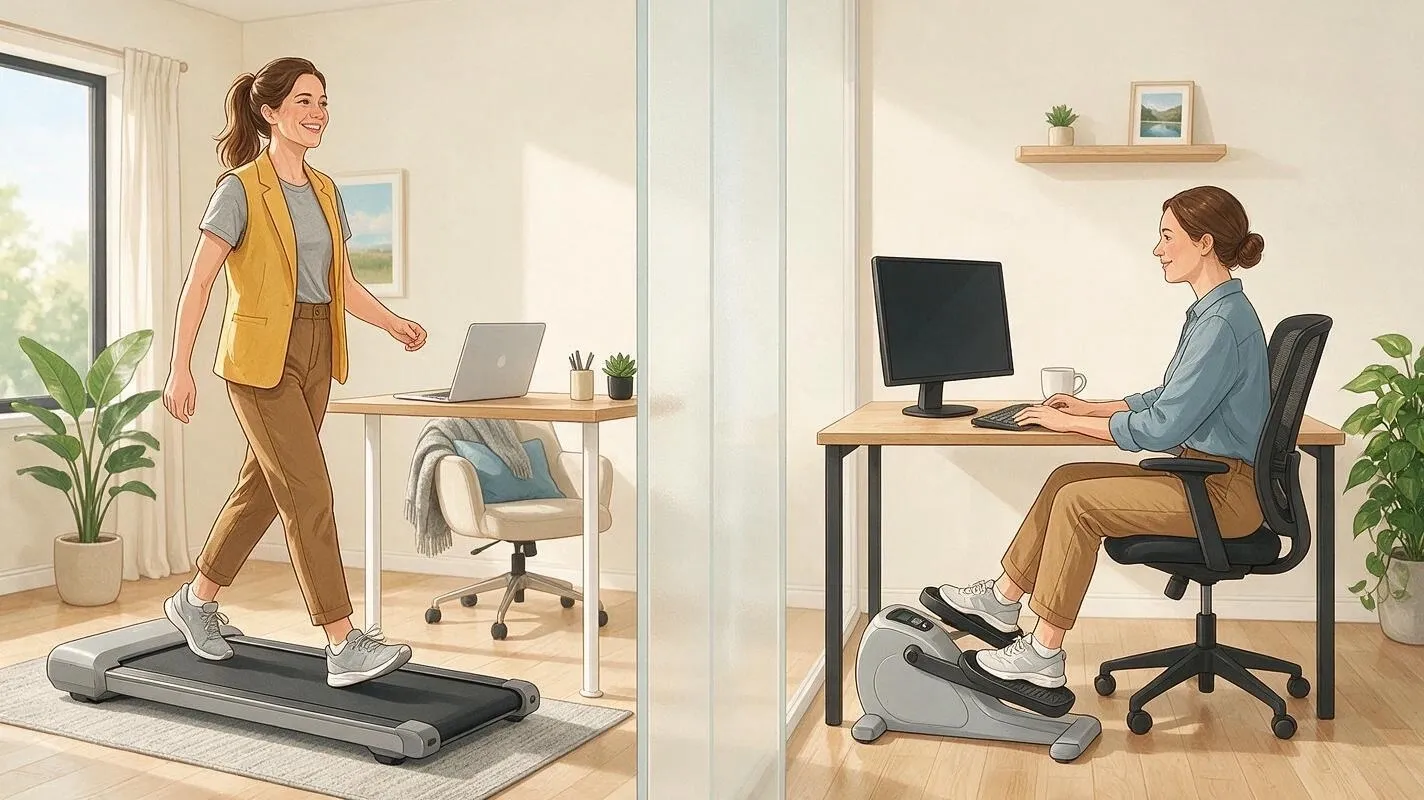
I’ve used both a walking pad and an under‑desk elliptical for months while working from home. Here’s what I learned: there is no universal winner.
The right choice depends on your body, your goals, and your workspace. If your main goal is to burn calories, build bone density, and get walking steps, a walking pad wins.
If you need low‑impact movement while seated, want to tone legs without joint stress, and require a whisper‑quiet machine, an under‑desk elliptical is the better choice.
What Makes Them Fundamentally Different
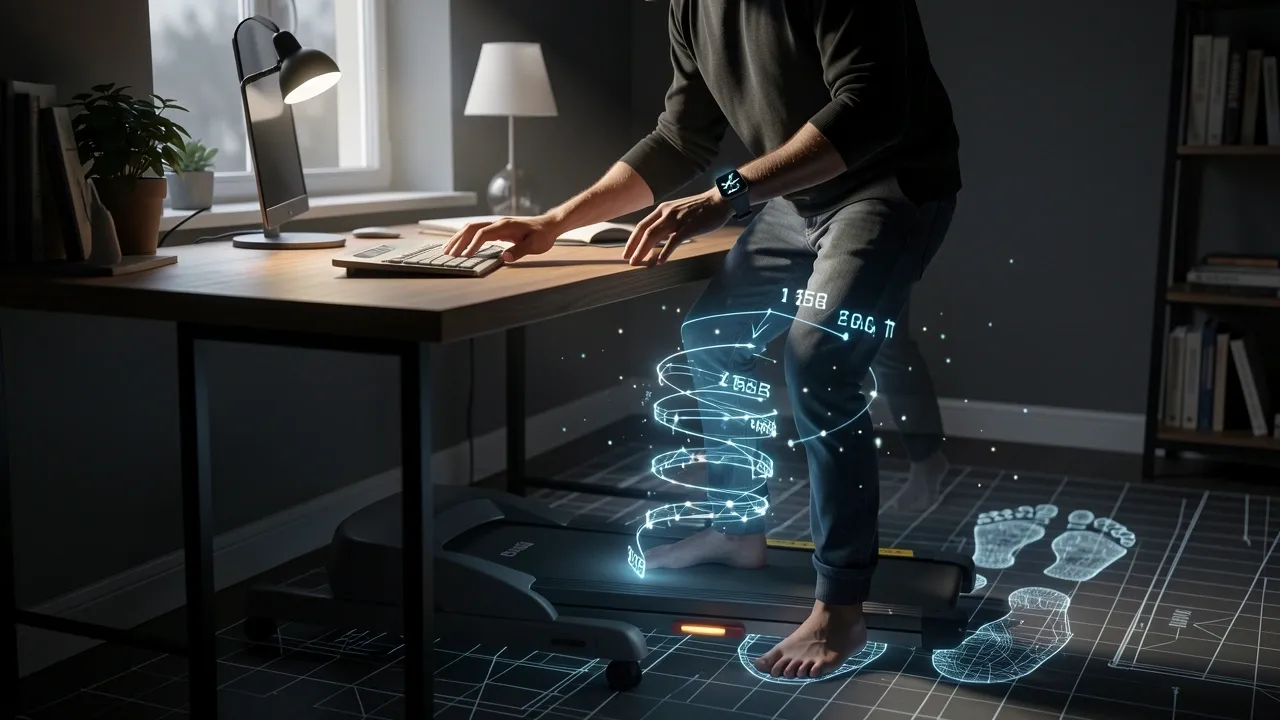
The core difference is weight‑bearing versus non‑weight‑bearing movement. A walking pad forces you to stand and walk, putting your full body weight through your legs, hips, and spine.
This stimulates bone formation, improves balance, and engages your core and upper body to stay upright. An under‑desk elliptical, on the other hand, lets you sit while pedaling.
Your skeleton carries no load. The motion is purely muscular, using your quads, hamstrings, glutes, and calves in a circular pedal stroke.
Because of this, a walking pad mimics natural walking and can replace some of the steps you would normally take outdoors.
An elliptical is closer to a seated cycling motion, but with less resistance than a stationary bike. The two machines also affect posture differently.
On a walking pad you stand tall; on an elliptical you remain seated, which can keep your hips and lower back in a flexed position for hours.
How They Compare on Key Metrics
I tested both machines under the same conditions: a standard desk, a 40‑inch standing desk, and a quiet home office. Here is how they stack up head‑to‑head.
| Metric | Walking Pad | Under‑Desk Elliptical |
|---|---|---|
| Calories burned per hour (moderate effort) | 200–300 calories at 2–3 mph | 100–180 calories on medium resistance |
| Bone‑density benefit | Weight‑bearing; helps preserve bone mass | None – non‑weight‑bearing |
| Joint stress | Low impact, but some stress on knees/hips with poor walking form | Nearly zero impact; ideal for arthritis or rehab |
| Noise level | Low hum from the motor (45–55 dB) | Barely audible whisper (under 30 dB) |
| Footprint | Foldable; 32″ x 20″ x 5″ when folded (about 5 sq ft) | 22″ x 20″ x 10″ always (just under 3 sq ft) |
| Durability (motor/resistance) | Motor and belt may need replacement after 2–4 years of daily use | Magnetic resistance has few moving parts; can last 5+ years |
| Desk compatibility | Requires a standing desk (or a high counter) | Fits under any standard desk with enough legroom |
Which One Is Right for You?
Instead of guessing, match your situation to the profiles below.
- Weight‑loss seeker: Choose a walking pad. You will burn more calories per hour and get additional oxygen‑consumption benefits from standing. Aim for at least 30 minutes of walking at 2.5–3 mph while working.
- Rehabilitation patient (knee, hip, or back injury): Choose an under‑desk elliptical. The non‑weight‑bearing motion allows you to move without aggravating joints. Start with low resistance and increase slowly.
- Senior with mobility issues: Choose an under‑desk elliptical. It reduces fall risk, works leg muscles safely, and can be used while watching TV or sitting. No balancing required.
- Desk‑bound professional (standard desk, no standing option): Choose an under‑desk elliptical. A walking pad is unusable without a standing desk, unless you move the keyboard to a countertop.
- Fitness enthusiast who wants to multitask: Choose a walking pad if you already have a standing desk. You can walk 4–6 miles during an 8‑hour workday. Use the elliptical only if you need to stay seated for meetings where camera visibility matters.
Common Myths About Walking Pads and Ellipticals
Myth: “Walking pads always burn more calories than ellipticals.” While a walking pad does burn more calories at a comparable perceived effort, intensity matters.
Crank the elliptical resistance to the highest setting and you can get your heart rate up enough to match a slow walk. The machine itself does not determine burn; how hard you push does.
Myth: “Ellipticals are useless for building bone density.” True, the elliptical itself does not load the skeleton.
But it still strengthens leg muscles, which helps with balance and reduces fall risk. Strong muscles protect bones indirectly.
If you are concerned about osteoporosis, the walking pad is better, but the elliptical is far from useless.
Myth: “You can’t get a real workout on an under‑desk elliptical.” I disagree. On high resistance I have had my quads burning after 20 minutes.
For cardiovascular fitness it is weaker than walking, but for muscle endurance it works well. It is not meant to replace a gym session; it is meant to replace sitting still.
Can You Use Both?
Yes, and I often do. I use the walking pad for the first part of my day when I am standing and need high calorie burn.
After lunch, when my knees start to feel tired, I switch to the under‑desk elliptical while seated.
This hybrid approach gives me the bone‑health benefits of walking plus the joint‑friendly movement of the elliptical. If space is tight, use one for a few days and rotate.
Both machines are compact enough to live under the same desk if you keep the walking pad folded.
Frequently Asked Questions
Is it safe to use a walking pad without a standing desk?
Not really. You need a surface at standing height for your keyboard and mouse. A regular desk is too low; you would have to hunch over, which hurts your neck and shoulders.
Use a standing desk or a tall counter.
Which device is quieter for open‑office or shared walls?
The under‑desk elliptical is quieter. A walking pad makes a constant low motor hum plus the sound of your footsteps.
The elliptical is nearly silent; you can use it on a Zoom call without anyone hearing.
Can I use an under‑desk elliptical while lying down or reclining?
Yes, if you place it on the floor and pedal with your legs straight out. It works the same muscles, but your hips and lower back remain stable.
This is useful for people who work from a recliner or have back pain.
Do walking pads require lubrication or belt adjustments?
Yes, about every six months you should lubricate the walking belt and check the belt tension. It is simple maintenance, but skipping it shortens the machine’s life.
Under‑desk ellipticals with magnetic resistance need almost no maintenance other than wiping dust off.
How does the resistance on an elliptical compare to a real staircase?
A real staircase requires lifting your full body weight against gravity. An elliptical with magnetic resistance cannot match that effort.
Even on the highest setting, it feels more like a moderate hill than a steep climb.
If you want the real stair‑climbing effect, choose a walking pad on an incline (if your model has one) or a stair stepper.
Final Verdict
Neither machine is universally better. The walking pad is superior for calorie burn, bone health, and replacing outdoor steps.
The under‑desk elliptical is superior for joint safety, quiet operation, and seated use. Look at your primary goal, your desk setup, and any existing joint issues.
If you can, try both for a few days — many retailers offer returns. I have kept both in my home office, and I reach for each on different days. That flexibility is the real win.