
Why Your Walking Pad Scratches Hardwood Floors and How to Stop It

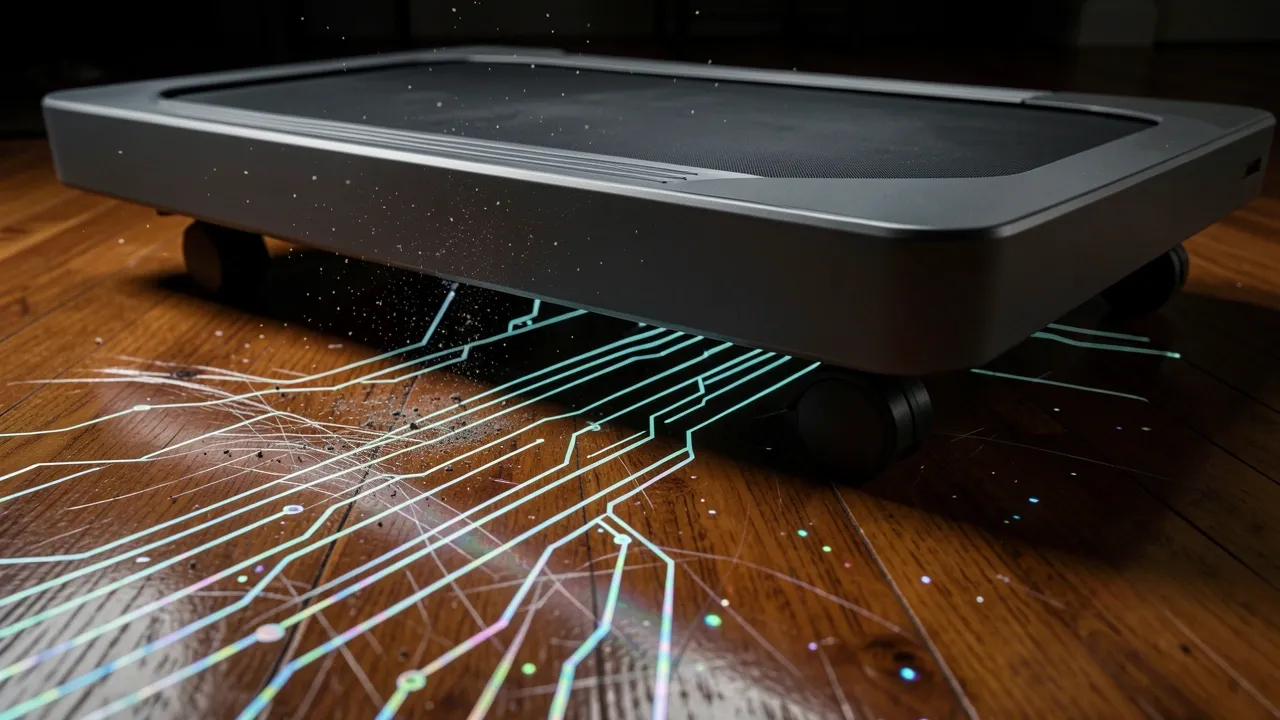
If you use an under-desk treadmill on hardwood floors, you have probably already noticed the damage. It starts as a dull patch. Then you see fine lines running in the same direction.
Left alone, those lines turn into grooves that catch light and ruin the finish.
The frustrating part is that this damage does not happen the way you expect. It is not the weight of the machine pressing into the wood. It is not even the rubber belt rubbing against the surface.
The real culprit is a combination of tiny wheels, slippery lubricant, and invisible grit that grinds away at your floor's finish like sandpaper.
Here is how to understand the problem, fix it for good, and repair what is already damaged.
Why Under-Desk Treadmills Are a Unique Threat to Hardwood Floors
Full-size treadmills sit on a wide, heavy base. Once you place them, they do not move. Under-desk treadmills are the opposite.
They are light enough to lift with one hand, they roll on small caster wheels, and they shift forward and backward as you walk. That constant movement is what damages wood.
There are three mechanical reasons why walking pads scratch hardwood floors:
- Tiny caster wheels concentrate pressure. The entire weight of the machine plus your body lands on four or six small wheels. That concentrated force presses any debris on the floor directly into the wood finish.
- The deck scoots during use. As your weight shifts from heel to toe, the treadmill slides a fraction of an inch forward and backward. Each micro-movement drags the wheels across the surface, creating fine scratches that run parallel to the belt direction.
- The machine skates over debris instead of crushing it. A heavy full-size treadmill will grind dust and dirt into powder. A lightweight walking pad simply rides over the grit, pushing it across the wood and leaving deep gouges behind.
If you have ever picked up your walking pad to move it and seen a pile of dark dust underneath, that dust is the sand that is scratching your floor. And it gets worse with every single step.
The Real Culprit: Lubricant, Grit, and the Sandpaper Effect
There is a hidden reason why hardwood floors under walking pads become extremely slippery and heavily scratched over time. It is not sweat. It is the belt lubricant.
Most under-desk treadmills use a silicone-based lubricant on the belt to reduce friction between the belt and the deck. Over months of use, that lubricant migrates.
It seeps out from the edges of the belt and aerosolizes as the belt spins. The result is a thin, invisible film of silicone that coats the hardwood floor around the treadmill.
That film is a magnet for dust. Every speck of dirt, pet hair, and dead skin cell that floats into the room sticks to the lubricated floor.
Now you have a micro-layer of grit sitting directly under the treadmill's wheels. Every step you take rolls those wheels over the grit, pressing it into the wood finish.
This is the sandpaper effect, and it is the primary reason walking pads destroy hardwood floors.
The silicone film also creates a serious slip hazard. A floor that feels slick to the touch is dangerous when you step off the treadmill.
If you have noticed your wood floor getting shinier and more slippery near your desk, this is why.
The Right Mat and the Wrong Mat for Hardwood
Every treadmill mat claims to protect floors. Very few actually do on hardwood. The wrong mat can make things worse by trapping heat, sliding around, or leaving rubber marks on polished wood.
Here is a checklist for choosing a mat that actually works under a walking pad:
- Firm top surface only. Choose PVC or hard rubber. Do not buy a squishy EVA foam mat. Soft foam compresses under the wheels, creates a rut, and traps grit against the wood.
- Thickness between 3mm and 6mm. Anything thinner offers no vibration dampening. Anything thicker creates a trip hazard when you roll your office chair across it to get to your desk.
- Size matters. The mat must extend at least 4 to 6 inches beyond the treadmill on all sides. If the mat is exactly the same size as the base, you will step off the edge with every stride, and the wheels will roll onto the bare wood.
- Check the underside. The bottom must be grippy but smooth. Some rubber mats have a textured bottom with raised nubs that themselves can scuff polished hardwood. Look for a mat with a flat, non-slip backing.
One more thing to avoid: mats designed for carpet use. These have a rubberized backing meant to grip carpet fibers. On hardwood, that backing does not grip at all.
The mat slides around, the treadmill slides on the mat, and you end up with worse scratches than if you had used nothing.
Mat Materials Compared
| Material | Good For | Bad For |
|---|---|---|
| PVC (hard plastic) | Flat surface, easy to clean, slides slightly | Heavy impact absorption |
| Natural rubber | Excellent grip, vibration absorption, durable | Can leave dark marks on some finishes if textured |
| EVA foam (soft) | Comfort underfoot, cheap | Compresses under wheels, traps grit |
| Recycled rubber (stall mat) | Heavy-duty, thick, solves sliding | Strong odor, very heavy |
5 Alternatives That Cost Nearly Nothing
If you do not want to spend forty dollars on a dedicated walking pad mat, you have options.
These alternatives work because they solve the same problem: they create a hard, stable barrier between the wheels and the wood.
1. Half-Inch Plywood Board
Cut a sheet of plywood to a size that extends a few inches beyond the treadmill on every side.
This is the best DIY solution for walking pads with caster wheels because the wood does not compress at all. Sand the edges smooth so you do not snag your socks.
Place a thin rubber mat under the plywood to keep it from sliding on the hardwood.
2. Horse Stall Mats
These are thick, heavy rubber mats sold at farm supply stores. They are the same material used in home gyms.
A stall mat is overkill for a walking pad, but it solves sliding completely because it weighs so much. The downside is the smell. Horse stall mats off-gas for weeks.
Air them out in the garage before bringing them inside.
3. Clear PVC Chair Mats
You already have one of these under your office chair. Buy a second one and place it under the treadmill.
The hard plastic surface is smooth, so the wheels roll freely without scratching the wood underneath. The main drawback is that the treadmill can slide on the smooth plastic while you walk.
Use a strip of double-sided carpet tape under the mat to hold it in place.
4. Anti-Fatigue Kitchen Mats with a Hard Top Layer
Not all anti-fatigue mats are soft. Look for one with a firm, vinyl top surface and a grippy rubber bottom. These are designed to stand on for hours, so they handle weight well.
They are also thinner than you might expect, which means less trip hazard at your desk.
5. Interlocking Garage Floor Tiles
These plastic tiles snap together and create a hard, flat surface. They are designed for cars, so they handle weight easily.
The downside is that the edges can be slightly raised where the tiles connect. If your treadmill wheels catch on a seam, the unit will rock while you walk. Use a single, continuous piece if possible.
How to Set It Up So Nothing Slides
Buying the right mat is only half the battle. If the mat slides on the hardwood, it creates a new set of problems. Here is how to set everything up so it stays put.
- Clean the floor thoroughly. Wipe the hardwood with a damp microfiber cloth to remove any dust or silicone film. Let it dry completely before laying anything down.
- Let the mat lay flat for 24 hours. Mats arrive rolled up. If you place a treadmill on a curled mat, the edges will catch your feet and the wheels will ride up the curl. Lay the mat flat overnight with a few heavy books on the corners to flatten it.
- Check the treadmill's leveling feet. Most walking pads have adjustable rubber feet at the corners. If the unit rocks even slightly, the rocking motion will cause it to scoot forward and backward. Adjust the feet until the unit is perfectly stable.
- Tape down the mat edges. Use double-sided carpet tape under the corners of the mat. This prevents the mat itself from sliding on the hardwood. It also prevents the treadmill from pushing the mat forward as you walk.
Take two minutes to do this setup right. If you skip it, you will be adjusting the mat every single day.
How to Erase Scratches That Are Already There
If you are reading this because you already see scratches, do not panic. Most scratches from walking pads are in the finish, not deep into the wood.
You can repair them with items you likely already own.
Micro-Scratches in the Finish
These are the fine, hairlike lines that you only see when light hits the floor at an angle. Rub a raw walnut over the scratches.
The natural oils in the nut fill the micro-scratches and darken them to match the surrounding wood. Buff the area with a soft cloth afterward. This works surprisingly well for shallow damage.
For slightly deeper marks, use a furniture repair marker or a wax crayon matched to your floor's color. Fill the line, wipe away the excess, and buff gently.
Deeper Scratches That Reach the Wood
If you can feel the scratch with your fingernail, it has penetrated the finish. Use a wax repair stick.
These are soft wax sticks that you press into the groove, scrape off the excess with a putty knife, and buff to a sheen.
They hold up reasonably well under foot traffic but will need to be reapplied every few months.
For very deep gouges, use a moisture-cure wood filler. This is a two-part product that hardens to match the surrounding wood.
It requires sanding after it dries, so only use this if you are comfortable with basic woodworking.
When to Call a Professional
If the scratches cover a large area, or if the finish has worn away entirely in patches, refinishing is the only real solution.
A professional will sand the floor down to the raw wood and apply a new finish. This costs hundreds of dollars, which is why prevention is always ten times cheaper than repair.
The 3-Minute Weekly Routine That Keeps Grit Out
Prevention is not a one-time job. It is a weekly habit that takes three minutes and protects both your floor and your treadmill motor.
- Wipe the belt edges. Run a dry microfiber cloth along the edges of the belt where lubricant tends to seep out. This prevents the silicone film from spreading to the floor.
- Vacuum under the mat. Lift one corner of the mat and vacuum the dust that has accumulated underneath. This grit is the sandpaper that causes scratches.
- Move the mat once a month. Slide the mat to the side and let the hardwood air out for a few hours. This prevents the silicone film from building up on the wood itself.
- Check the casters. Inspect the treadmill wheels for embedded debris. A small stone stuck in a wheel will carve a line into your floor every time you walk.
That is it. Three minutes a week. Your floor stays clean, your treadmill runs smoother, and you never have to worry about hidden damage building up under your desk.
Frequently Asked Questions
Can I keep my walking pad on an area rug instead of a mat?
No. Area rugs are a hazard with under-desk treadmills. The caster wheels grab the fabric fibers and cause the treadmill to climb the rug, creating an unstable walking surface.
You are far more likely to lose your balance and fall. A rug also hides the damage underneath while the wheels grind grit into the hardwood below. Use a hard mat or nothing at all.
Is laminate or LVP safe for an under-desk treadmill without a mat?
Laminate and luxury vinyl plank are harder and more brittle than hardwood.
Scratches on these surfaces show up as white lines that are nearly impossible to repair because the color runs through the entire wear layer.
The silicone lubricant problem is also worse on laminate because the surface is slicker, so the treadmill slides more. Use a mat on these floors even more than you would on hardwood.
Should I unplug and move my walking pad off the mat every day?
No. Moving the treadmill daily is worse for your floor than leaving it in place. Every time you lift and drop the unit, the caster wheels slam into the wood and leave impact dents.
Repeated movement also wears down the mat faster. Set up a dedicated floor station and leave the treadmill there.
Do treadmill mats smell? How long does the odor last?
Cheap rubber mats can have a strong chemical odor that lasts for weeks. PVC mats and EVA foam mats generally have less smell.
If you buy a rubber mat, unroll it in a well-ventilated room or outside for two to three days before setting up your treadmill.
If the smell does not fade after a week, return it and buy a different material.
Does a mat void my treadmill's warranty?
It can. Some walking pad manufacturers specify a minimum clearance around the motor for airflow.
A thick mat traps heat and can cause the motor to overheat, which the manufacturer may use to deny a warranty claim. Check your treadmill's manual for clearance requirements before adding any mat.
If the manual says nothing about mats, keep the mat thin and ensure the motor area is not covered.