
How to Tighten a Walking Pad Belt Without Breaking It

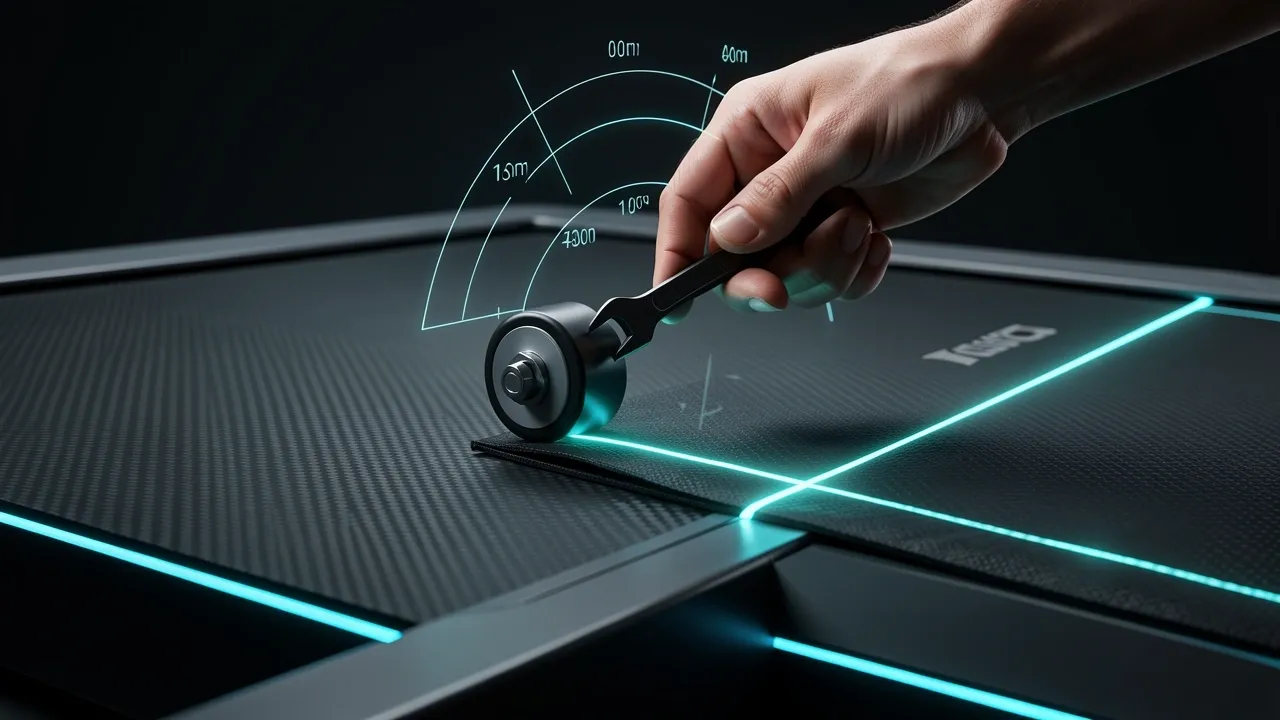
There is a quick way to fix a slipping walking pad belt, and there is a safe way. The quick way is to turn the two rear bolts until the belt stops slipping.
I learned the hard way that this often goes too far. On my first walking pad, I cranked both sides too tight, and within a few weeks the motor started to whine.
The belt no longer slipped, but the whole machine was working too hard just to keep the belt moving. That failure cost me far more than a loose belt ever would have.
Here is how to properly tighten a loose or slipping walking pad belt without guesswork. You need one small Allen wrench, about ten minutes, and a little patience.
The process only works if you first figure out which problem you are actually dealing with. Most people skip right to the bolts, and that is where the damage starts.
So before anything else, we diagnose.
Diagnose the Belt Failure Before You Touch the Bolts
A walking pad belt has two separate problems, and they are not fixed the same way. If you treat a tracking problem like a tension problem, you can actually shred the belt edge against the frame.
The good news is the symptoms are completely different.
Slip means the belt cannot grip the roller
When the belt runs smoothly with no weight on it but stutters or pauses the moment you step on it, that is called a slip. The belt is too loose, or the deck underneath it has lost its lubrication.
Your body weight creates extra friction, and the belt does not have enough grip on the front roller to keep moving at the same speed. This is a tension issue.
Drift means the belt is walking sideways
When the belt moves toward the left or right rail and rubs against the frame, that is a tracking problem. The two rear bolts are not pushing the roller straight.
One side has more pressure than the other, so the belt follows the path of least resistance and wanders on the belt until it hits the plastic rail.
A drift is corrected by turning one bolt at a time, never both together.
Here is a quick comparison, because these two feel very different under your feet:
| What you feel | What is happening | What it means |
|---|---|---|
| Belt stutters under your foot, but runs fine when empty | Belt loses grip on the front roller under load | Belt is too loose |
| Belt rubs against the frame on one side | Belt walks to one side as it turns | Uneven tension side to side |
| Belt drifts and slips at the same time | A loose belt often wanders off center first | Start with tension first |
Before you touch anything, run this quick test. Set the speed to the lowest setting, around 1 mph, and let the belt move on its own.
Press the palm of your hand down in the middle of the belt while the belt is moving. If it stalls slightly under your hand, it is too loose. Then step on it gently for a few seconds.
If it stutters under your body weight but ran fine when empty, you have confirmed a slip.
If the belt simply walks toward one side the entire time it runs, do not touch the tension at all yet. That is a tracking issue, and you will fix it later with a completely different rule.
Touch the tension bolts first only if you are dealing with a slip.
Set the Baseline Tension with the Equal-Turn Method
Now that you know it is a slip, you need to find the rear adjustment bolts.
On almost every walking pad, these are two Allen head bolts located at the back end caps, one on the left and one on the right. The bolts push the rear roller backward.
When the roller moves back, the belt has to wrap more tightly around both rollers, and that extra grip stops the slipping.
First, unplug the walking pad from the wall. Do not skip this. Even with the belt stopped, an accidental start while your hand is near the roller can hurt badly.
The motor on these machines can kick on suddenly, and there is no safety benefit to leaving it plugged in.
- Find the two rear bolts and insert the Allen wrench that came with the machine. Most walking pads use a 5 mm or 6 mm size.
- Turn both bolts clockwise by the same amount. A full turn is 360 degrees, so a quarter turn is 90 degrees. That is your maximum step size.
- Plug the pad back in and let it run empty at 1 mph for about 30 seconds.
- Press down on the moving belt again with your hand. If it still stalls, unplug it and repeat the quarter-turn on both bolts.
- Keep going only until the belt stops stalling under hand pressure. Do not walk on it yet. Once it passes this test, step on at a slow speed and walk naturally. If it feels solid under your feet, the tension is complete.
There is one important visual check during this process. Look at the belt from the side. A correctly tightened belt has no visible sag along its entire length.
If you can see a dip in the top run of the belt, it needs more tension. You should also be able to roll the belt forward with your hand and feel resistance immediately.
A belt that feels slack or mushy has not been tightened enough yet.
The "Squeeze" Rule and the Lift Test
Here is the part most online guides leave out. The classic rule says you should be able to lift the side of the belt about two to three inches off the deck.
That rule comes from full-size treadmills with a long belt and a long frame.
A walking pad has a much shorter belt, so the exact number is different and less important than what the belt actually feels like at the roller.
Try this instead. With the machine unplugged, pinch the belt at the middle of the side edge and lift it only slightly.
A correctly tightened belt will lift off the deck easily, but you should notice it has a firm squeeze around the rear roller. There should be no loose gap between the belt and the roller.
If you can lift the belt away from the roller and see a gap, it is too loose. If you can barely lift it at all, the belt might already be too tight, and you need to stop.
That squeeze is your real guide. You are not trying to make the belt tight. You are trying to make the belt hug the roller firmly enough that it moves with the roller, not against it.
Once the belt grips the roller well enough to turn under your foot and still lifts off the deck with a slight resistance, you are done.
New belts stretch during the first few weeks of use. If your walking pad is new and the belt slips within the first month, this equal-turn process is completely normal.
You may go through this adjustment once during the first week and once again after a month of use, and then it will settle.
The One-Bolt Rule to Fix Belt Drift
Once your belt has the right tension, a drift to one side is easy to correct, but only if the baseline tension is already correct.
If the belt is still too loose, no amount of one-bolt adjustment will keep it centered. Set the tension first, then come back to this section.
The logic is simple. When you turn one rear bolt, you angle the rear roller slightly. That angle steers the moving belt back toward the middle.
You want to release the side the belt is already drifting toward, and tighten the opposite side by the same amount.
If the belt is drifting to the right, loosen the right bolt a quarter turn. Then tighten the left bolt by the same quarter turn. Use equal amounts.
This pulls the belt back toward center. If the belt drifts left, do the exact opposite: loosen the left side a quarter turn and tighten the right by a quarter turn.
Then let the belt run empty at a low speed for two minutes and watch it. It should slowly walk back to the center. You may need a second quarter-turn, but give the belt time.
Do not keep turning bolts while the belt runs. Make the change, let it run, and watch it settle.
If the belt keeps drifting after one full side of adjustment, stop. That usually means the walking pad is not level on the floor.
A pad that is slightly tilted to one side will constantly push the belt to the lower side. Check the floor first and adjust to level before you keep turning bolts.
Stop Signs That Tell You It is Too Tight
There is a moment where the belt stops being tight and starts causing damage.
You will not hurt the walking pad permanently if you stop at the first sign, so it pays to know what these three stop signs feel like.
- The motor hums or whines. A small hum from the motor is normal at start-up. A continuous, high-pitched whine means the belt is putting too much pressure on the motor and the front roller bearings. Loosen both rear bolts counterclockwise a quarter turn as soon as you hear this.
- The belt squeals or smells like burning rubber. That squeal is the belt skipping over the roller because it cannot turn freely. The smell is friction heat inside the belt material. Both are urgent signs to loosen immediately.
- The belt bounces or waves at the top. Watch the top surface while the belt runs empty. If you see a wave or bounce traveling down the belt, the belt is stretched too tightly over the rollers and the top cannot run flat. Loosen both sides evenly.
You should never be able to push hard on the machine and stop the belt by hand. That is a sign the belt is extremely over-tightened, and it puts real strain on the motor mount.
If you reach any of these signs, loosen by a quarter turn on both sides, run the belt, and re-check.
Prevent the Next Slip with Silicone and Cleanliness
Even a perfectly tightened belt will slip again if the underside is dry and dirty. A walking pad deck needs a thin layer of silicone to let the belt slide over it.
That sounds backward, but it is exactly how these machines work. The belt must grip the front roller, but it must slide freely over the deck board.
Those are two different contact points, and they need different conditions.
Lubricate the deck every three months or after 30 to 50 hours of walking, whichever comes first.
Lift the belt and spray 100% silicone spray across the top surface of the deck, in a straight strip down the middle.
Let it dry for a few minutes, then run the belt for about two minutes with no one on it and spread it evenly across the belt.
Do not use regular oil-based household lubricants, because they will break down the belt material over time. A silicone lubricant protects the belt and the deck.
You can spot-check every couple months and remove the belt if you feel friction. A few drops more silicone could stop the next slip before it begins.
Dust is just as important. Under a desk walking pad, carpet fibers and pet hair work their way under the belt edge and turn into a gritty strip between the belt and deck.
That grit slows the belt down and can make it slip under load. Vacuum along the belt edges weekly. This takes thirty seconds and will reduce how often you need to tension the belt.
Frequently Asked Questions
Can I use motor oil to lubricate the walking pad belt?
No. Motor oil is petroleum-based, and it breaks down the belt material. Only use 100% silicone spray. It keeps the deck smooth and dry and does not ruin the belt.
Most walking pad manufacturers specifically recommend this and only this.
Why does the belt keep slipping even after I tighten it?
If you have reached a correct half-inch squeeze and the belt still stutters under your weight, the belt itself is likely worn out. A belt has a lifespan.
If the walking pad is more than three years old, the edges are frayed, or the underside looks shiny and hard, the surface has become glazed.
A glazed belt cannot grip the roller no matter how much tension you add, and it only needs a replacement.
Do I need to grease the deck, or just tighten the belt?
Those are two separate fixes. Tightening increases the belt grip on the roller. Lubrication reduces friction between the belt and the deck. To stop a slip on a used pad, you usually need to fix both.
A dry belt and a loose belt feel nearly the same underfoot, and a clean silicone deck is part of proper tension. If the belt is new, tension first. If it is old, check the deck condition first.
My walking pad belt slips only under my left foot but not under my right
This is not a normal tension issue. When a slip happens on one side, it is usually the result of a worn deck board that has flattened in the middle or an issue in one roller bearing.
Uneven deck wear is hard to fix with the bolts, and you risk over-tightening on the other side. Check if the deck has a visible dip and check for a roller bearing that rattles.
If the pad is over a few years old or the deck is worn unevenly, it may be time to consider a replacement walking belt and a re-lubricated deck.