How to Clean Pet Hair and Dust From Inside an Under Desk Treadmill Motor

I have opened dozens of walking pads that died well before their time. The cause is almost always the same: a motor chamber packed with pet hair and dust.
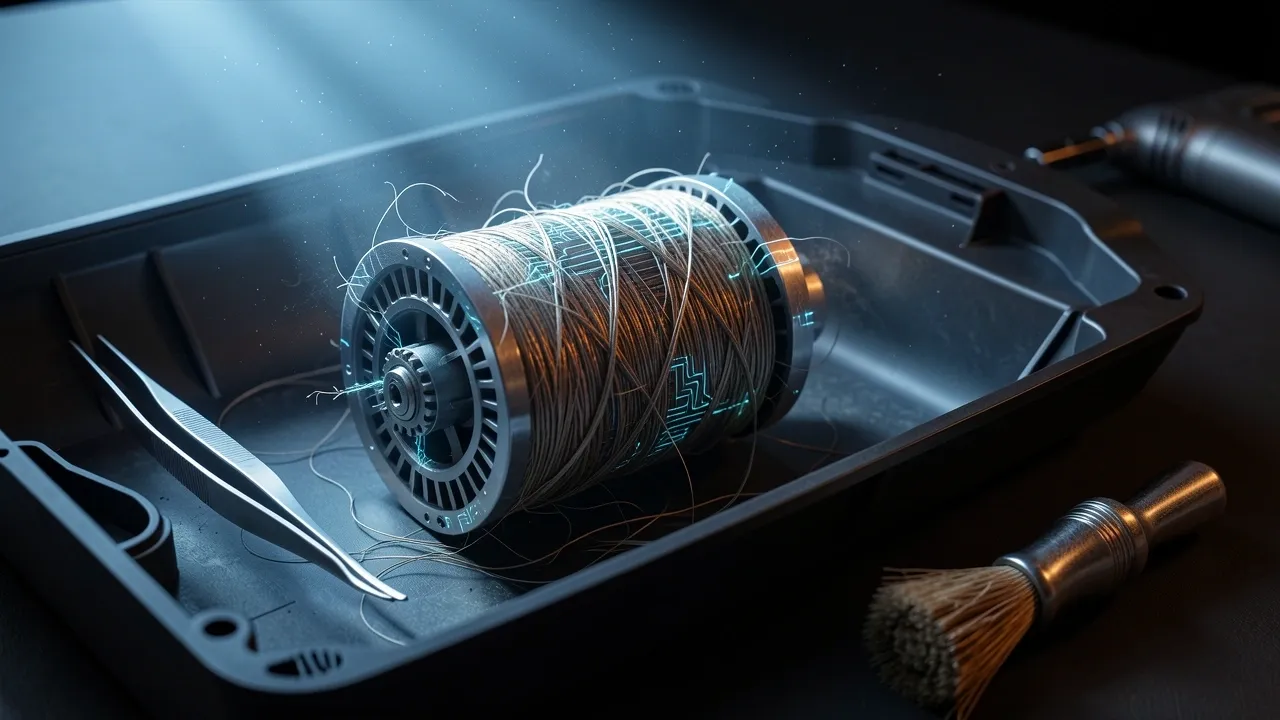
One customer brought in a treadmill that had burned out after only ten weeks. When I opened the housing, fur was wrapped so tightly around the motor shaft that it looked like fishing line on a reel.
The motor never stood a chance.
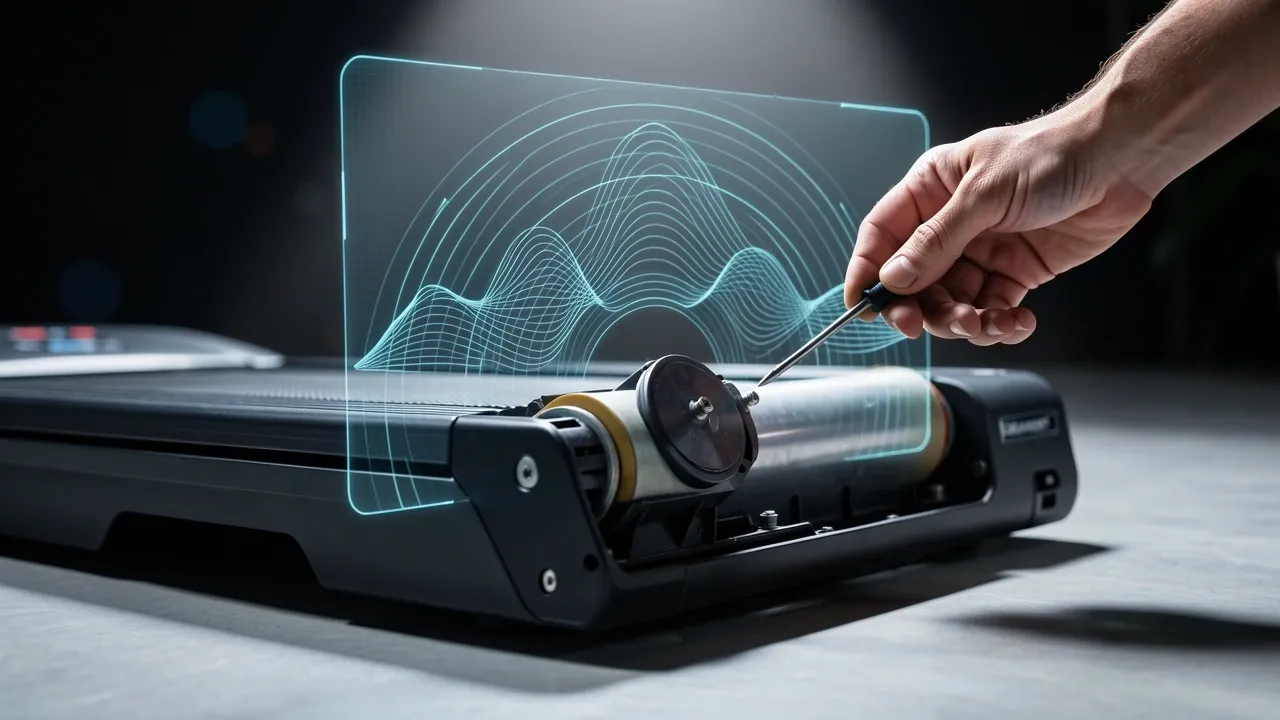
The good news? You can clean pet hair and dust from inside an under desk treadmill motor in about 20 minutes with a screwdriver and a few safe tools.
Doing it every 2 to 4 weeks, depending on how much your pet sheds, prevents the single most common cause of premature walking pad failure.
This guide covers safe access, the cleaning steps in the right order, a post-clean test, and how to keep the fur from coming back.
Why Pet Hair Is a Different Threat Than Ordinary Dust
Dust and pet hair damage treadmills in completely different ways. Understanding the difference changes how you clean.
Dust is a thermal problem. It settles on the motor casing and inside the cooling fins, acting like a blanket.
The motor gets hotter, the insulation degrades faster, and eventually the thermal protection trips or the motor burns out. It is a slow killer.
Pet hair is a mechanical problem. Hair does not just sit there — it wraps.
The motor shaft spins thousands of times per minute, and every rotation pulls loose fur tighter around the shaft, the drive pulley, and the roller bearings. It acts like thread on a spool.
Enough wrapped hair creates physical resistance that the motor has to fight against. The belt slows down, the drive belt slips, and the motor overheats from the extra strain.
The two combine into an even worse problem. Wrapped hair traps dust, and dust traps heat. Together they accelerate each other's damage.
That is why a house with pets can kill a treadmill in months instead of years.
Because the threat is mechanical as much as thermal, a simple vacuum pass will not cut it. You need a specific set of tools — and one important safety rule — before you open anything.
What You Need (and What Will Fry Your Treadmill) Before Opening Anything
The static electricity trap. Most people grab a household vacuum cleaner for this job. Do not.
A standard vacuum generates static charge as air and debris rush through the plastic hose.
That charge can arc into the treadmill's controller board — the PCB that tells the motor what to do — and instantly brick it. One discharge and your treadmill becomes a paperweight.
I have seen this happen.
Compressed air alone has a different problem. It blows loose dust out, but it drives wrapped hair deeper into the bearing seals or packs it tighter around the shaft.
You need extraction tools first, then air.
Here is what I actually use:
| Safe Tools | What It's For |
|---|---|
| High-RPM electric duster | Blowing loose dust out of the chamber |
| Canned air (held upright) | Same job, if you don't own an electric duster |
| Soft-bristle detail brush | Scrubbing dust off motor fins and crevices |
| Tweezers or hemostat forceps | Unwinding hair from shafts and pulleys |
| Plastic spudger | Opening clips without scratching plastic |
| Microfiber cloth | Wiping chamber walls after cleaning |
| Isopropyl alcohol | Dampening the cloth for stubborn grime |
And what to keep far away:
- Standard vacuums — static discharge risk
- Leaf blowers — too forceful, can snap the cooling fan blades
- Metal tools near exposed contacts — short-circuit risk
- WD-40 — leaves an oily residue that attracts more dust
Before you touch a screw, unplug the treadmill and wait at least 30 minutes. This keeps you safe from the capacitors' leftover charge and lets the motor cool so you don't burn your hands.
Take a photo of the underside first. It becomes your reference for putting everything back.
One more thing: opening the housing does not automatically void your warranty. In the US, laws like Magnuson-Moss protect consumers who perform their own repairs.
That said, manufacturers do not always honor it gracefully. Check your manual's service clause and keep photos of your work as evidence.
Once you have the right tools and know the risks, the next hurdle is getting the housing off without breaking it.
How to Open the Motor Chamber Without Breaking the Plastic
Every under-desk treadmill is a little different, but the motor chamber is usually a plastic shroud on the underside or rear of the machine.
The easiest way to find it is to follow the power cord — it enters the chamber at some point. That is your target.
Screws. Most brands use Phillips head screws, though some use Torx or hex. Budget treadmills often have soft screws that strip easily.
Use the correctly sized bit, push down firmly, and turn slowly.
If a screw starts to strip, stop and try the rubber-band trick — place a rubber band over the screw head and drive into it for extra grip. A slightly larger Torx bit works as a last resort.
Hidden plastic clips. This is where most first-timers snap something. Many walking pads hold the shroud on with internal plastic latches, not just screws.
Prying from the wrong edge breaks them. Run a plastic spudger along the seam and apply even, gentle pressure.
Never use a metal flathead screwdriver — it will gouge the plastic and can slip into a wire. Work your way around the edge until the clips release one by one.
Ribbon cables. When the shroud finally lifts, it may still be attached by wires. Motor cables and console ribbon cables are fragile. Tilt the shroud, don't yank it.
Note where each cable routes before disconnecting anything, and use the photo you took earlier as a map.
A quick note on a controversial option: some owners leave the shroud off permanently, the so-called open casket method.
It gives better ventilation and easier access later — I do it on my own treadmills. But for most people, keeping the shroud on is safer because it protects pets and cords from spinning parts.
With the chamber open, the actual cleaning takes about ten minutes — if you do it in the right order.
How to Clean Pet Hair and Dust From the Motor Chamber
The order matters more than most people realize. If you blow air first, you push hair deeper into the bearings. If you brush first, you grind dust into the motor fins.
This is the sequence I use on every treadmill I service.
Step 1: Extract the wrapped hair
Start with the tweezers or forceps. Look at the motor shaft, the drive pulley, and the seams of the roller bearings. Hair will be wound around these like thread.
Unwind it slowly, rotating the shaft by hand as you go. Do not cut the hair flush at the bearing — leave a small tail and pull it out gently so fragments don't work their way into the seal.
This is tedious work, but it is the step that actually saves the motor.
Step 2: Blow out the loose dust
Switch to the electric duster or canned air. Use short bursts, angled outward from the center of the chamber toward the vents. Hold the nozzle at least an inch from any component.
If you are using canned air, keep the can upright the entire time — tilt it and you spray freezing propellant onto the electronics.
Work from the back of the chamber to the front so the dust exits instead of recirculating.
Step 3: Brush the stubborn residue
Dust that has caked onto the motor casing fins will not blow off easily. Use the soft-bristle brush on the fins and inside crevices.
Brush outward, then follow with another short burst of air to clear what you loosened.
Step 4: Wipe the chamber floor and walls
Dampen a microfiber cloth with a little isopropyl alcohol and wipe the interior surfaces of the chamber. Keep the cloth away from exposed circuit boards and wire connectors.
You are cleaning the housing, not the electronics. A light touch is all you need.
Step 5: Inspect while you're in there
This is the free bonus step. Check the drive belt — the small rubber belt connecting the motor to the front roller — for black soot or cracks.
Soot means the belt has been slipping and needs replacement. Then spin the front roller by hand. If it feels grindy or jerky instead of smooth, the bearings are worn and will need attention soon.
If the walking belt itself feels dry, this is also a good time to lubricate the deck with silicone lube. That is a separate task from the motor cleaning, but you already have everything open.
A clean motor is only half the job. Putting everything back correctly and testing it prevents a second, self-inflicted failure.
Reassembly and the 5-Minute Post-Clean Test
Before you close anything up, re-seat every cable you moved. A pinched wire can short out and start a fire.
Tuck ribbon cables into their original routes and make sure connectors click fully into place.
Align the shroud's clips first, then start the screws. Tighten them gently. Over-tightening strips the plastic bosses that hold the screws, and once those are gone, the shroud never fits right again.
Hand-tight plus a quarter turn is the rule.
Now the test. This is non-negotiable — it catches problems while the treadmill is still open and fixable.
- Plug the treadmill in and stand on the side rails, not the belt.
- Start at the slowest speed and let it run for one minute unloaded. Listen for new squeaks or grinding.
- Run it at maximum speed for two minutes, unloaded. Check that the belt tracks centered and does not drift to one side.
- Walk on it at your normal speed for two minutes. Watch for a burning smell, speed stutter, or hesitation.
If you smell burning, stop immediately and look for a forgotten rag, brush, or tool inside the chamber. If the belt stutters under load, the belt tension may need adjustment.
If an error code appears, check your manual's fault table — KingSmith treadmills show E03 for overheating, for example.
If your treadmill was already acting up before the clean, the test above will also tell you whether the cleaning was enough or whether damage is already done.
How to Tell if the Damage Is Already Done
Not every treadmill can be saved by cleaning. The trick is knowing which symptoms cleaning fixes and which ones point to real damage.
Symptoms that cleaning alone will fix:
- Overheating after 30 or more minutes of use
- Reduced speed under load that improves after the clean
- Visible debris in the vents
- Belt stuttering that smooths out after the clean
Symptoms that indicate component damage:
- A burning or hot-plastic smell that persists after cleaning. The motor or controller has been stressed. Check the drive belt for soot — if it is blackened, replace it before using the treadmill again.
- The motor won't start, or starts then cuts out. This points to the controller board or the motor itself. On most budget treadmills, this is warranty territory. A replacement motor often costs 60 to 80 percent of a new unit, so repairing is usually not worth it.
- Grinding from the roller area. That is bearing failure, not hair. Stainless steel replacements like the S6201ZZ are a documented fix and outlast the original rust-prone bearings.
The decision rule is simple: clean, test, then judge. If your symptoms vanished after the clean, you caught it in time.
If they persist, you now have a clean machine to troubleshoot — and an honest answer about whether a repair makes financial sense.
Once your motor is clean and running right, the next goal is keeping it that way for longer than the ten weeks that poor fur-victim got.
Keeping Pet Hair Out of the Motor in the First Place
Prevention is easier than cleaning, and way easier than replacing a motor. Here is the schedule I recommend based on how many pets you live with:
| Situation | Clean the motor chamber | Check vents |
|---|---|---|
| 1 shedding pet, light use | Every 4–6 weeks | Weekly |
| 2+ pets or a heavy shedder (Lab, Husky) | Every 2 weeks | Weekly |
| Non-shedding pets (poodle, hairless breeds) | Every 2–3 months | Monthly |
Beyond the schedule, a few simple changes cut the amount of hair that reaches the motor in the first place.
Add a barrier. If your treadmill's motor chamber has visible air intakes, attach a fine mesh screen or a nylon stocking over them with a zip tie.
It blocks hair while letting air through. Check the mesh monthly and clean it when it gets furry.
One caution: restricted airflow trades one problem for another, so only do this if the intakes are easy to access and you commit to cleaning the mesh.
Use a treadmill mat. A mat catches hair and dust at floor level instead of letting the belt's static charge pull it into the chamber.
Vacuum under the treadmill twice a week and the mat will do most of the prevention work for you.
Think about placement. Do not put the treadmill near a pet bed, grooming station, or the spot where your dog shakes. Hair that never gets near the machine never gets inside it.
Warm-start every day. Run the belt unloaded for 30 to 60 seconds before you step on.
This flings loose hair off the deck before it migrates toward the chamber, and it gives the motor a gentle ramp-up instead of a cold start under load.
Here are the questions I get most often from owners who are about to attempt this for the first time.
Frequently Asked Questions
Is canned air safe to use on a treadmill motor?
Yes, if you hold the can upright and use short bursts. The danger is tilting the can, which sprays freezing propellant onto the electronics and can crack components.
Keep the nozzle at least an inch from the board and motor casing.
Can I use a shop vac or leaf blower instead of an electric duster?
A shop vac risks static discharge that can kill the controller board. A leaf blower is worse — the force can snap the motor's cooling fan blades.
An electric duster costs about the same as a few cans of canned air and lasts for years. Use the right tool.
Will opening the motor housing void my treadmill's warranty?
It depends on the manufacturer and your region.
In the US, Magnuson-Moss consumer protection laws generally prevent a warranty being voided just because you opened the product, but manufacturers do not always cooperate.
Check your manual's service clause and document your work with photos before you start.
What does it mean if my walking pad smells like burning plastic?
Usually overheated motor insulation or a slipping drive belt. Clean the motor chamber first, then check the drive belt for black soot. If the belt is blackened, replace it.
If the smell persists after cleaning, the motor itself has likely been damaged.
My treadmill keeps shutting off mid-walk and works again after cooling down. Is this hair-related?
Very likely. That pattern is the classic thermal shutdown — the motor overheats, protection trips, and the machine powers back on once it cools.
Restricted airflow from pet hair and dust is the most common cause. Run the cleaning procedure in this article and the problem usually disappears.
Does a treadmill mat actually reduce pet hair getting inside?
Yes, indirectly. A mat traps hair and dust at floor level, and it reduces the static charge on the belt that pulls debris toward the motor chamber.
It is not a complete solution — you still need the cleaning schedule — but it cuts the workload significantly.
Is it worth replacing the motor on a cheap under-desk treadmill?
Usually not. A replacement motor often costs 60 to 80 percent of a new treadmill. If you are within warranty, use it.
If not, put the money toward a new unit with a brushless motor, which runs cooler and lasts significantly longer than brushed motors.