
Can I Plug My Walking Pad Into an Extension Cord

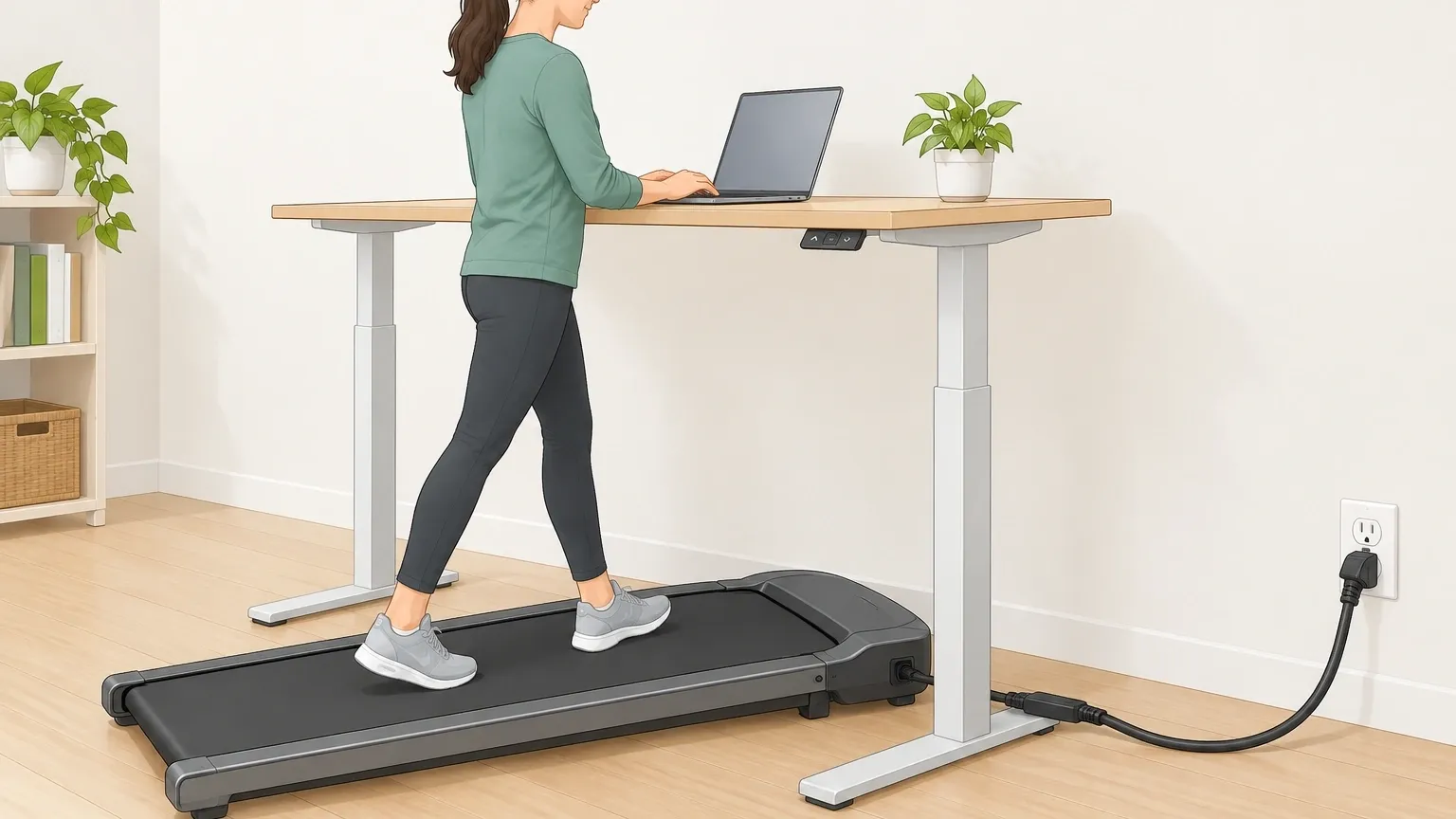
If you just bought a walking pad and the outlet is too far away, you are probably wondering if you can plug it into an extension cord without causing any problems.
The straightforward answer is yes, you can, but it comes with serious conditions. A walking pad needs steady, reliable power to run its motor smoothly, and the wrong extension cord can mess that up.
This guide will walk you through exactly when it is safe to use an extension cord, what kind to buy, and what to watch out for.
What Your Walking Pad Needs to Run Properly
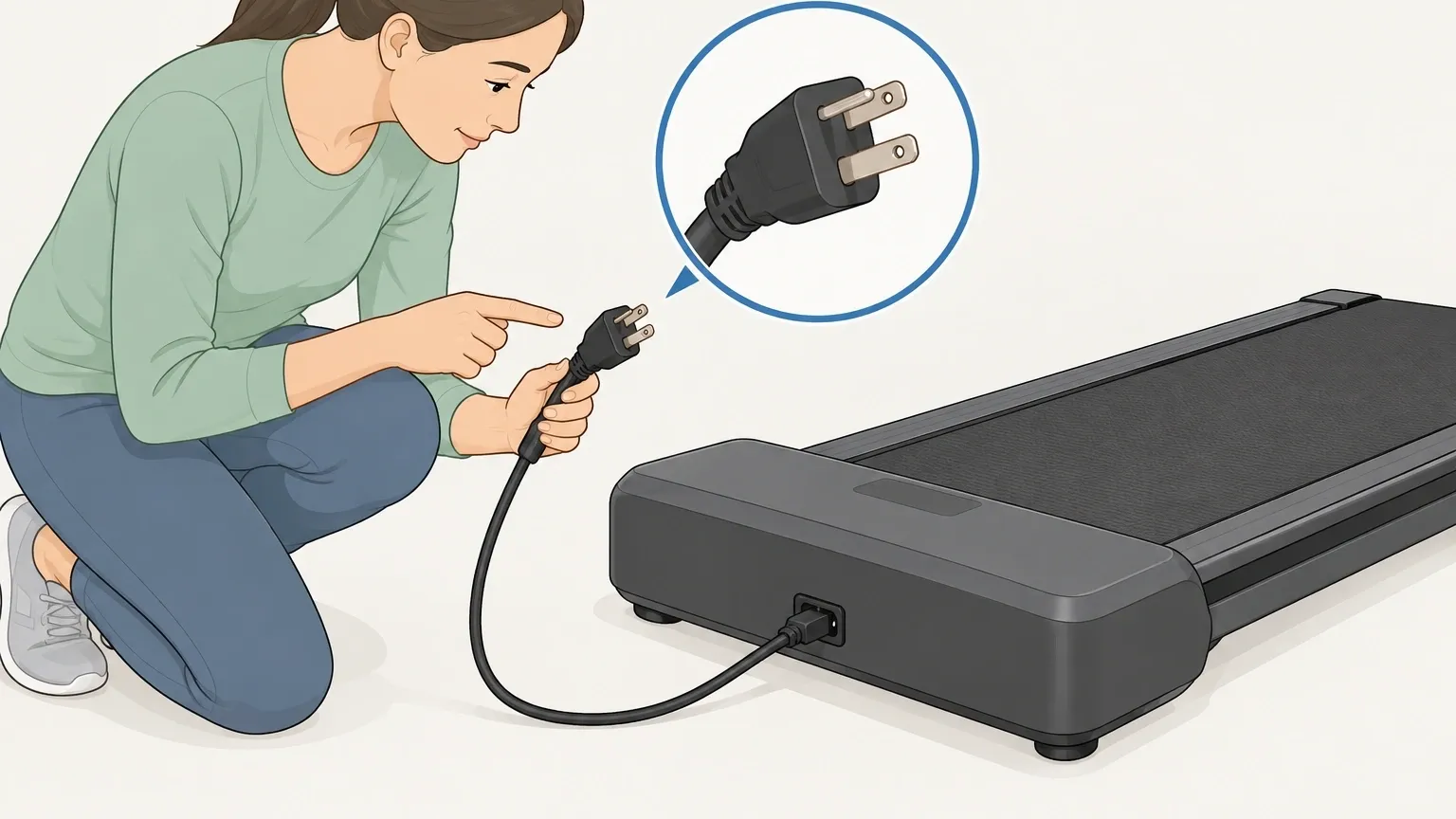
Before you plug anything in, you need to understand what your walking pad demands from the wall. It is not the same as a lamp or a phone charger.
Voltage and Amperage Basics
Every walking pad runs on standard household voltage, which is 120 volts in the US and 220 to 240 volts in many other countries.
The important number is the amperage, which is how much current it draws. Most walking pads use between 1.5 and 3 amps during normal walking.
But here is the catch: when the motor starts up or when you increase the speed, it can briefly pull two to three times that amount. That surge is what trips up cheap extension cords.
Why Inconsistent Power Hurts the Motor
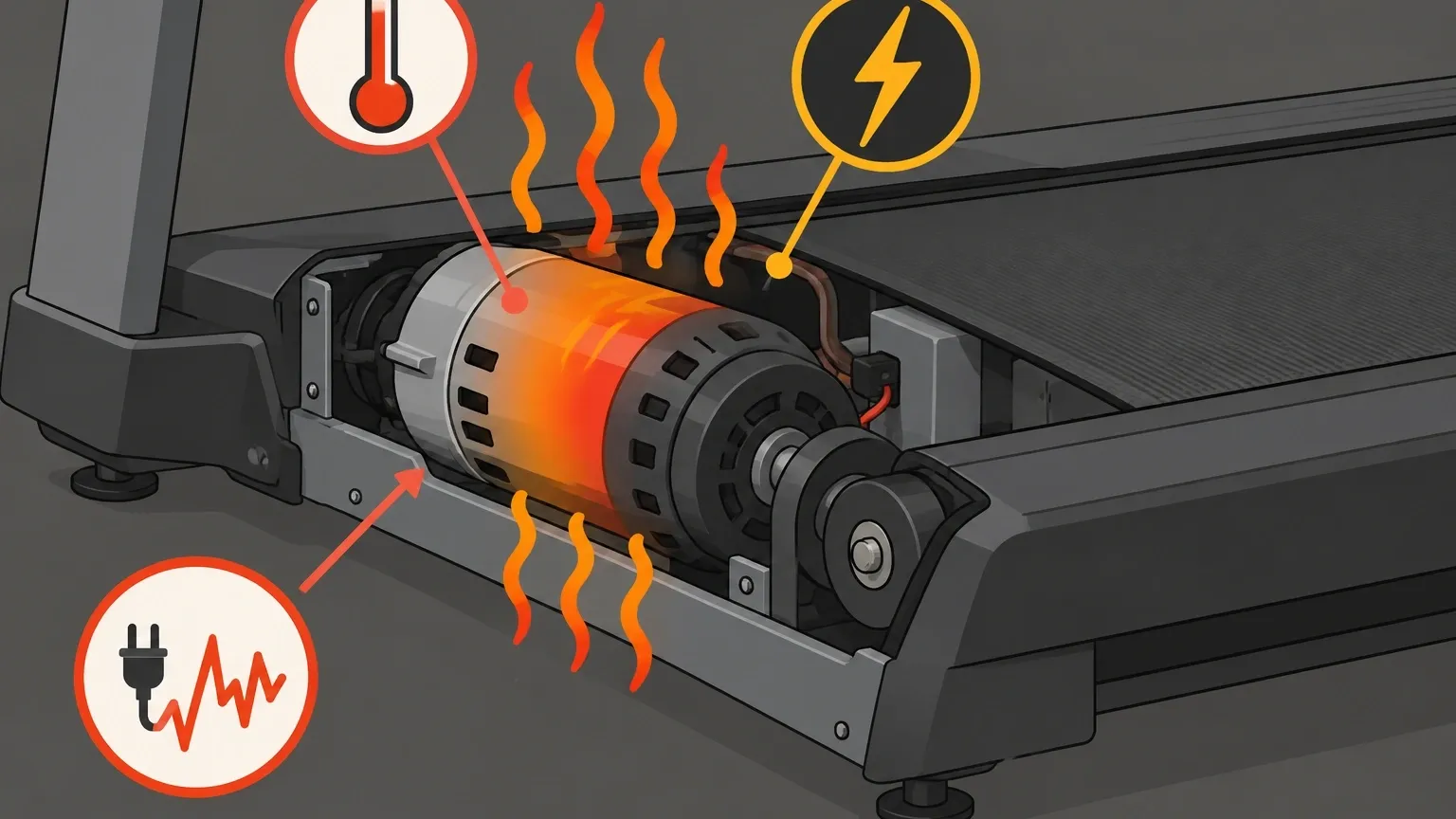
When the motor does not get enough power, it has to work harder. This extra strain creates heat. Over time, that heat wears down the internal components.
You might notice the belt moving slower than it should, a burning smell from the motor area, or the walking pad shutting itself off during use.
These are signs that your power setup is failing your equipment.
When Can You Safely Use an Extension Cord
There are only a few specific scenarios where using an extension cord is acceptable. If your situation does not match all of these conditions, skip the cord and find another way.
Strict Requirements for Safe Use
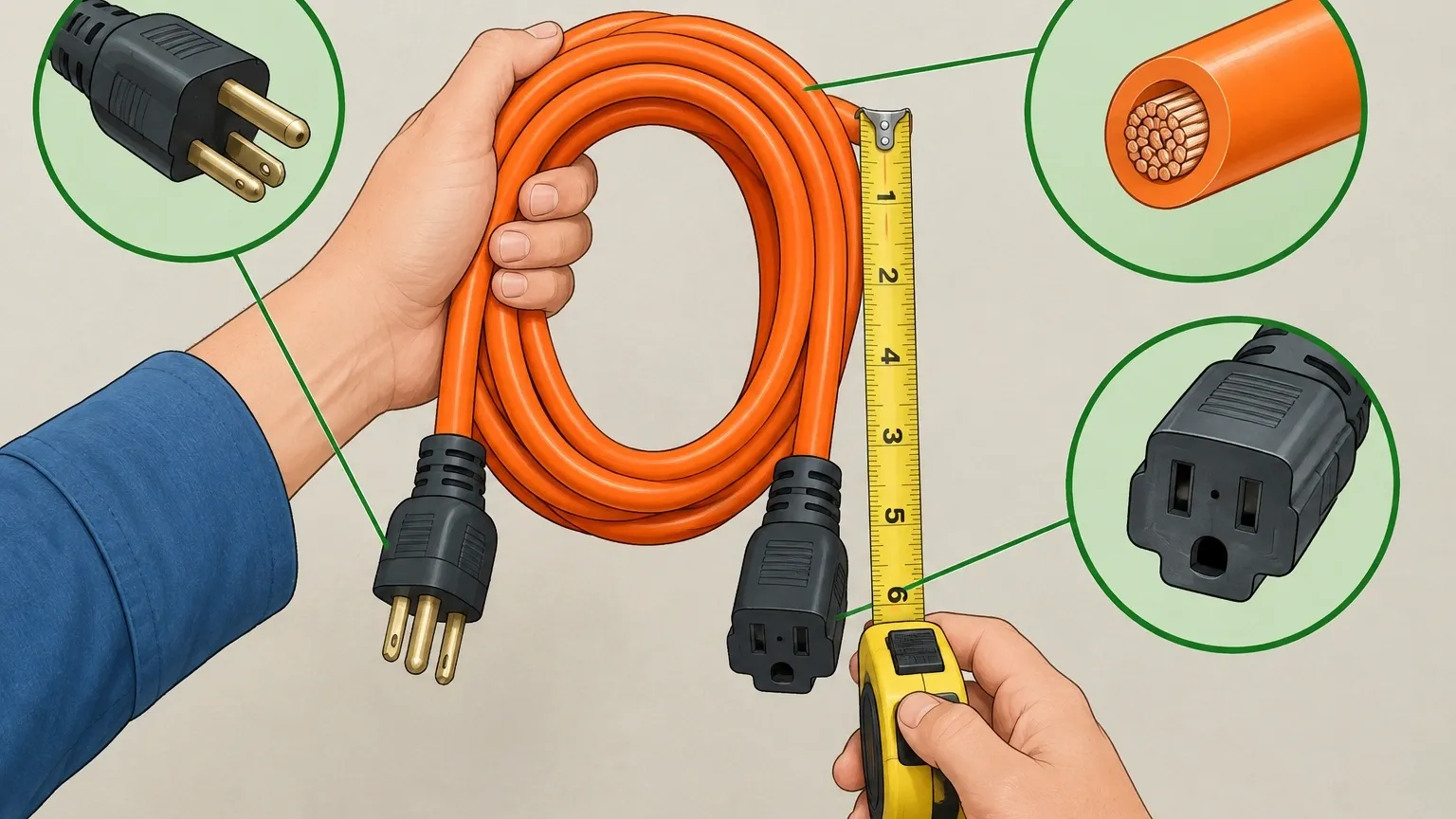
The cord must be grounded. That means it has three prongs, including the round ground pin. Never use a two-prong cord or an adapter that lets you plug a three-prong plug into a two-prong outlet.
The cord must be heavy-duty. Look for a rating of 14 AWG (American Wire Gauge) or 12 AWG. The lower the number, the thicker the wire. A 16 AWG cord is too thin for a walking pad.
The cord must be short. Six feet or less is best. Every extra foot of cable adds resistance, which drops the voltage reaching your walking pad.
A 25-foot cord, even a thick one, introduces noticeable voltage drop. The cord must be in perfect condition. No fraying, no cracks in the insulation, no bent prongs. If it looks old, throw it away.
The use must be temporary. If you need an extension cord every time you walk, you need a permanent solution like moving the pad or adding an outlet.
Situations That Are Never Safe
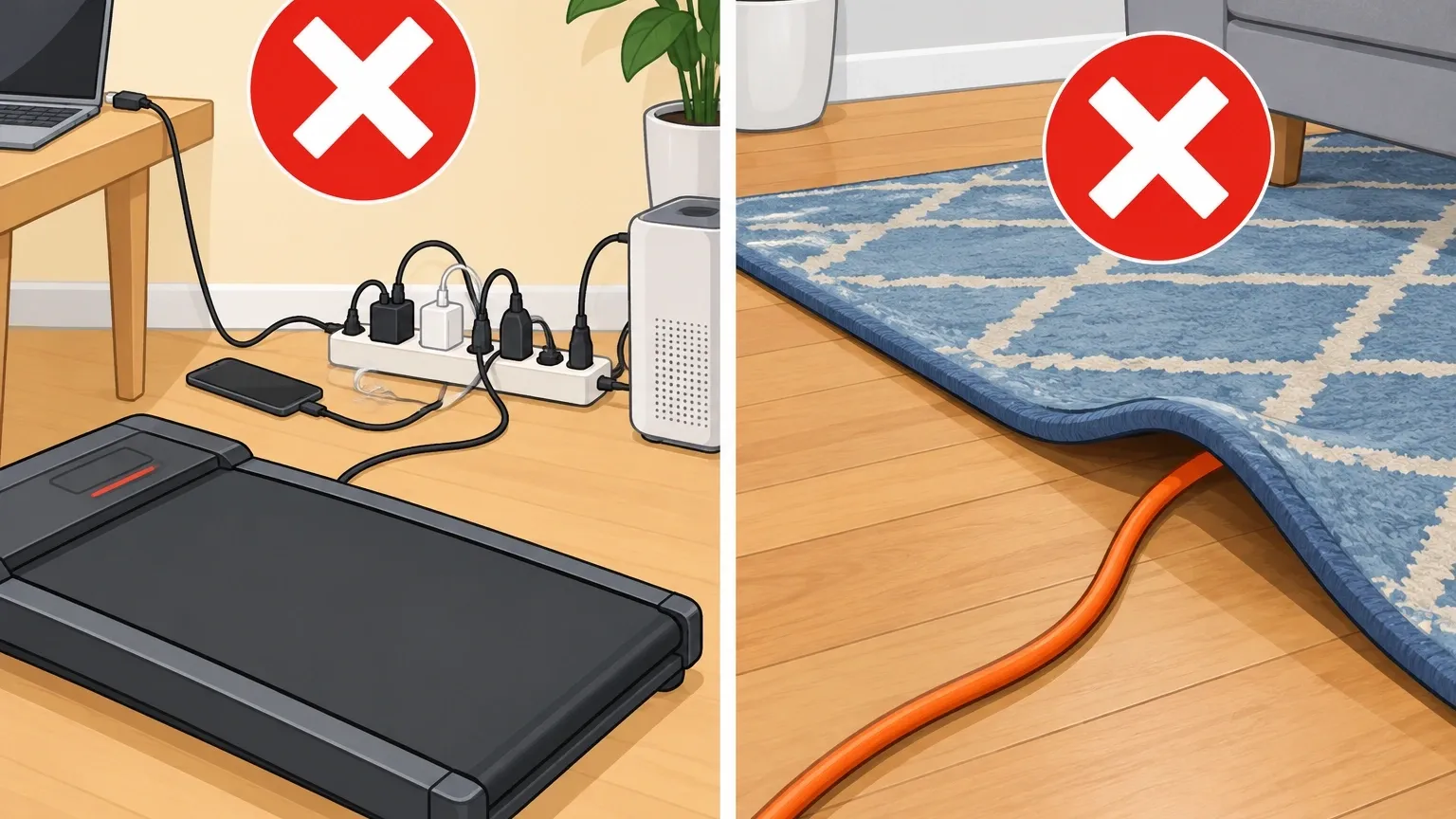
Never plug your walking pad into a power strip. Power strips are designed for small electronics like computers and phone chargers. They cannot handle the continuous current of a motor.
Never use a surge-protected extension cord. Your walking pad likely has its own internal surge protection.
Adding another one can interfere with the power delivery and cause the walking pad to shut down or behave erratically. Never run the cord under a rug or across a doorway.
This traps heat and creates a tripping hazard. If the cord gets pinched under the walking pad, it can overheat and melt.
How to Match Your Walking Pad to the Right Cord
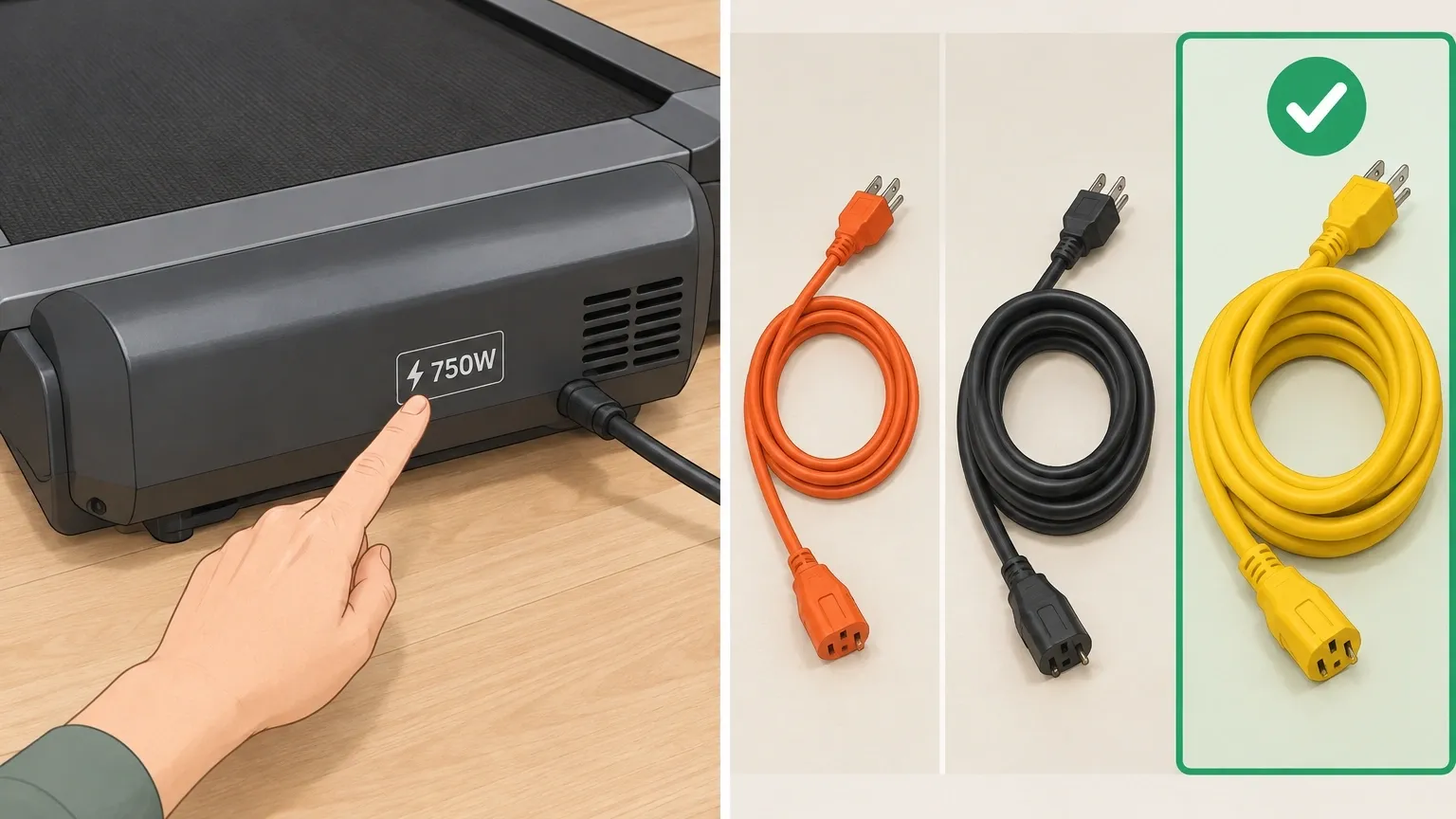
Picking the correct extension cord is not complicated if you know your walking pad's wattage. You can find this number printed on the motor housing or in the user manual.
Simple Math for Cord Selection
Take the wattage and divide it by voltage to get the running amps. A 180-watt walking pad at 120 volts draws 1.5 amps. A 300-watt pad draws 2.5 amps. A 500-watt pad draws about 4.2 amps.
Recommended Cord Gauge by Walking Pad Wattage
| Walking Pad Wattage | Running Amps (at 120V) | Minimum Cord Gauge | Maximum Safe Length |
|---|---|---|---|
| Up to 180 watts | 1.5 amps | 14 AWG | 25 feet |
| 180 to 300 watts | 2.5 amps | 14 AWG | 15 feet |
| 300 to 500 watts | 4.2 amps | 12 AWG | 15 feet |
| Over 500 watts | Over 4.2 amps | 12 AWG or 10 AWG | 6 feet |
If you are unsure, always go with a thicker cord (lower AWG number). It costs a little more but gives you peace of mind.
The Warranty Problem Nobody Talks About
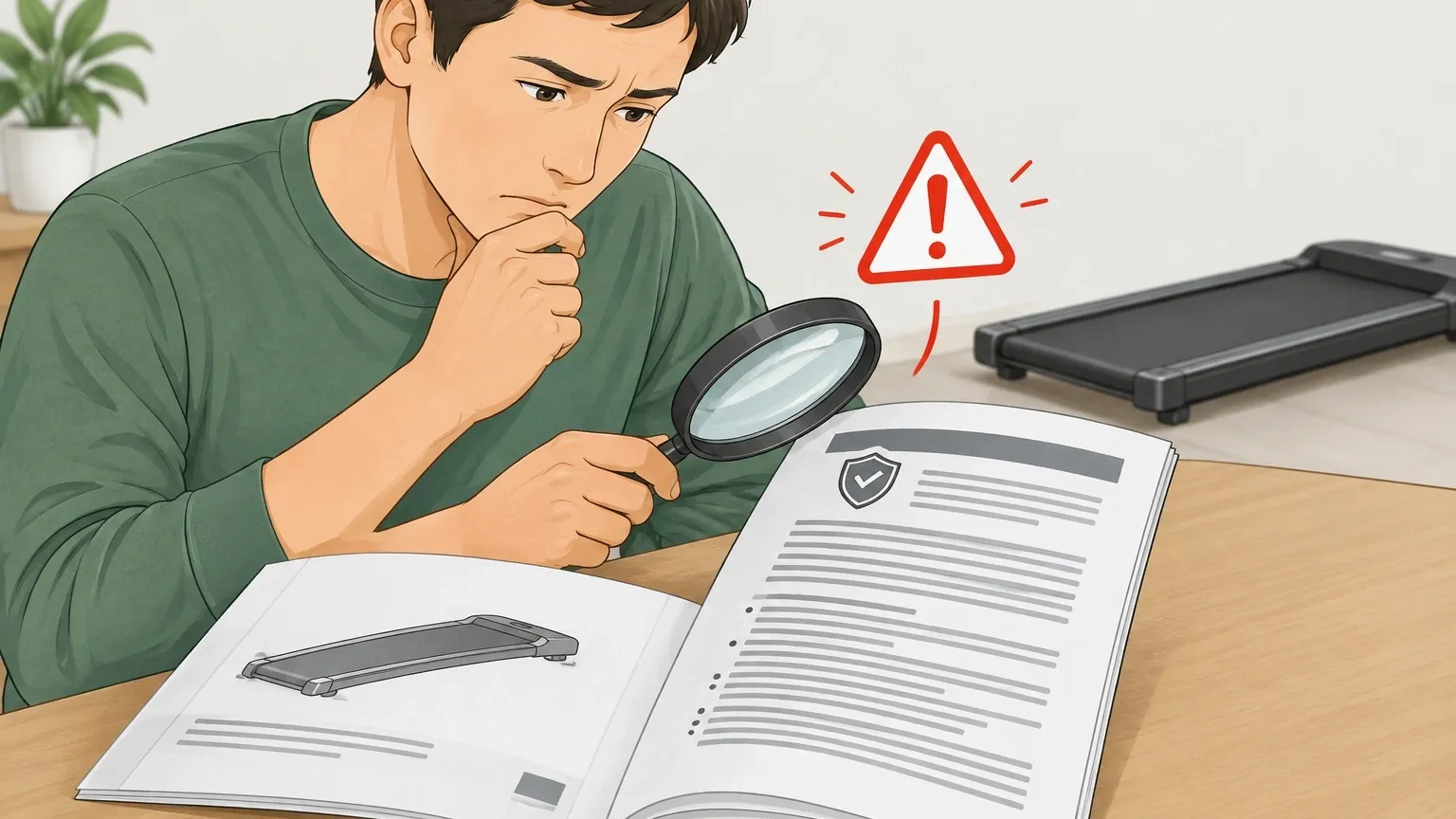
Here is a fact most articles skip. Many walking pad manufacturers explicitly forbid the use of extension cords in their warranty terms.
If you use one and your motor burns out, the company can refuse to repair or replace it.
What the Fine Print Says
I have read through several popular walking pad manuals. Most of them contain a sentence that reads something like: "Do not use an extension cord unless absolutely necessary.
Using an extension cord may void the warranty." Some brands are stricter and say no extension cords at all.
How to Protect Your Warranty
If your walking pad is still under warranty, your safest bet is to plug it directly into a wall outlet.
If you cannot reach an outlet, consider these options: Call the manufacturer and ask them to confirm in writing what extension cord is acceptable.
Pay a local electrician to install a new outlet near your desk or walking area. Return the walking pad and buy a model with a longer power cord. Ignoring the warranty terms is a gamble.
It might work fine for years, but if something goes wrong, you are out of luck.
Better Alternatives to Extension Cords
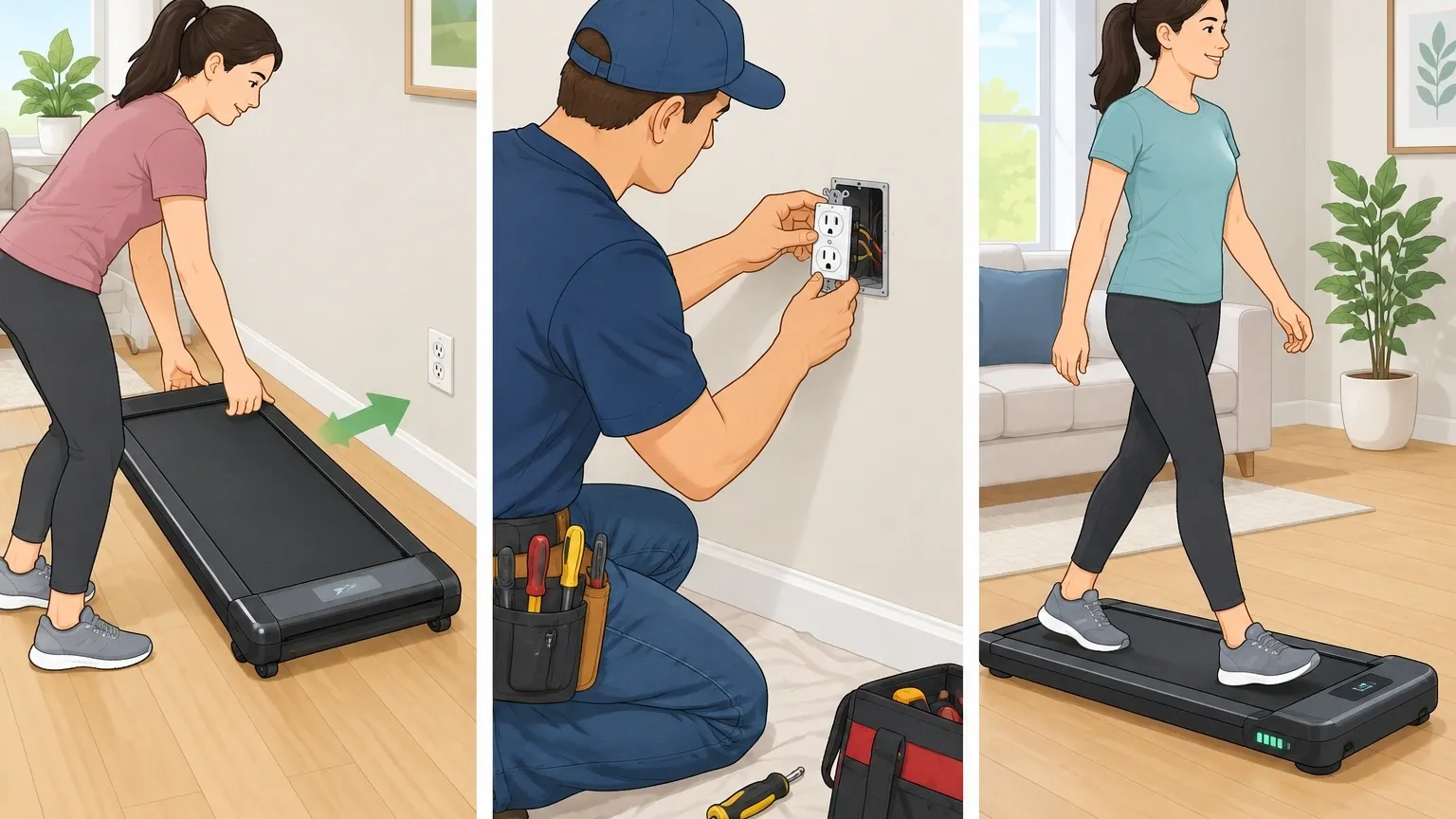
If you find yourself needing an extension cord every day, it is time to change your setup. Here are practical alternatives that are safer and more reliable.
Move the Walking Pad Closer to an Outlet
This is the simplest fix. Place your walking pad within six feet of a wall outlet. Measure the cord length on your walking pad first. Most come with a cord that is four to six feet long.
If you can position the pad so the cord reaches the outlet without stretching, you are done.
Install a New Outlet
Hiring an electrician to add a dedicated outlet where you need it costs between 100 and 250 dollars. That is less than the price of a new walking pad if your motor burns out from voltage drop.
This is the permanent solution that fixes the problem for good.
Use a Cordless Walking Pad
Battery-powered walking pads are becoming more common. They run without any cord at all. You charge the battery, and you can walk anywhere in the room.
These models cost more upfront, but they eliminate every power cord concern.
Reposition Your Desk Setup
If you use the walking pad under a standing desk, you might be able to move the desk closer to the wall outlet.
Unplugging other electronics from the same area can also free up an outlet for the walking pad.
Frequently Asked Questions
Can I plug my walking pad into a surge protector designed for electronics?
No. Surge protectors are for sensitive electronics like computers and TVs. Your walking pad has its own internal surge protection.
Plugging it into an external one can cause interference, random shutdowns, and may void the warranty.
What gauge extension cord do I need for a 300-watt walking pad?
You need a 14 AWG cord for a 300-watt walking pad. Keep the length to 15 feet or less. If you have to go longer, step up to 12 AWG to reduce voltage drop.
Does a walking pad draw more power when starting up?
Yes. When the motor starts from a stop, it can pull two to three times its running amperage for a split second.
This startup surge is why a thin extension cord can fail even if it seems to work at a steady walking speed.
How do I know if my extension cord is overheating?
Touch the cord near the plug and along its length after 15 minutes of walking. If it feels warm or hot to the touch, stop using it immediately.
Overheating means the cord is too thin for the load, which is a fire risk.
Is it safe to use a two-prong extension cord with a grounding adapter?
No. Never use a two-prong cord or a grounding adapter with a walking pad. The ground prong protects you from electrical shock if there is a fault in the motor. Without it, you are at risk.
Can I plug multiple devices into the same extension cord as my walking pad?
No. The extension cord should only power the walking pad. Adding a phone charger, lamp, or fan increases the total current draw and can overload the cord. Use a dedicated cord or wall outlet.
What is the maximum safe extension cord length for a walking pad?
Six feet is the safest length. You can push up to 15 feet if you use a 14 AWG cord and your walking pad uses less than 300 watts.
Anything longer than that introduces too much voltage drop and should be avoided.