
Can a Walking Pad Be Put on Carpet?

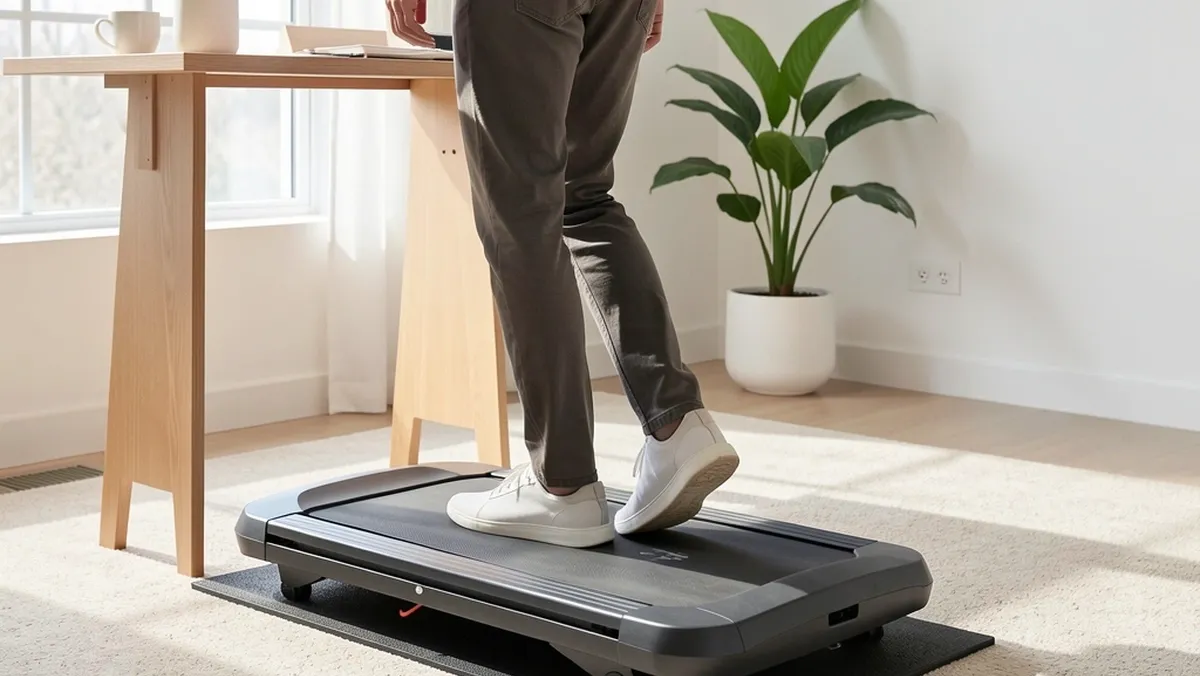
If you own a walking pad or are thinking about buying one, you have probably asked yourself this question. The short answer is yes, you can put a walking pad on carpet. But there is a catch.
It only works safely if your carpet is thin and you use the right mat underneath. If you skip these steps, you risk damaging your walking pad, ruining your carpet, or hurting yourself.
I have set up walking pads on different floor types, and I have seen what works and what does not.
This guide walks you through everything you need to know, from checking your carpet to picking the best mat.
By the end, you will know exactly how to set up your walking pad on carpet without any problems.
What Type of Carpet Works Best for a Walking Pad
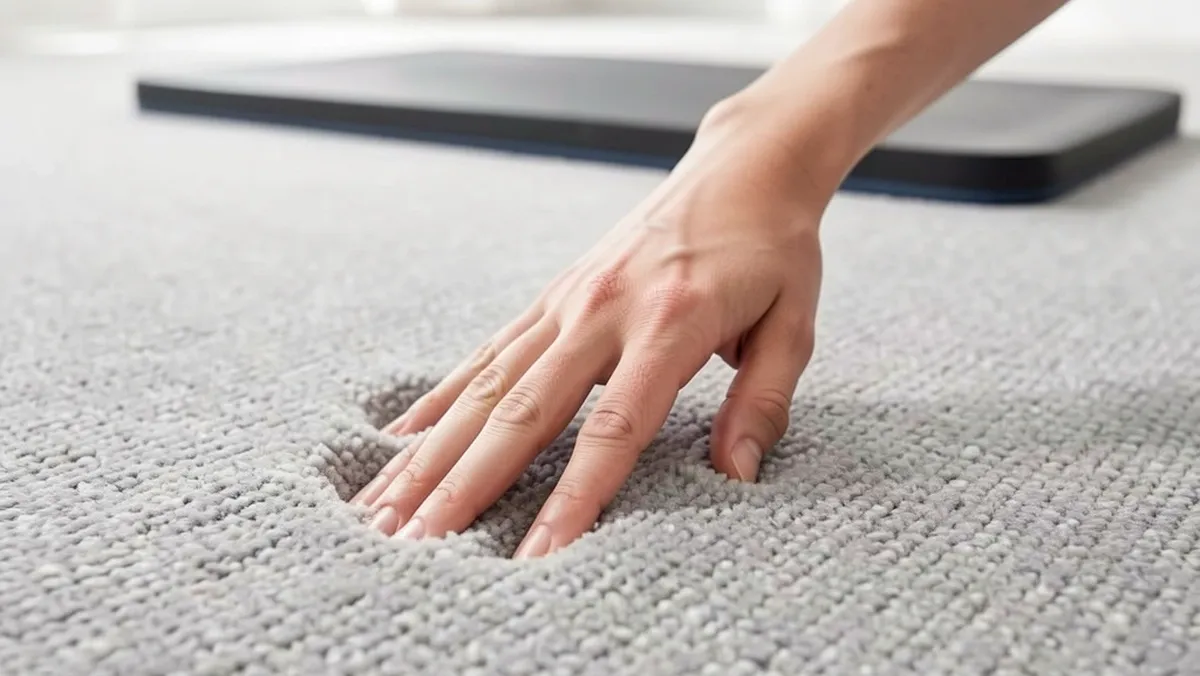
The most important factor is the thickness of your carpet. Walking pads need a flat, stable surface to work correctly. Thick carpet creates an uneven base that can make the pad wobble or tilt.
Here is a simple way to measure your carpet. Stand on it in bare feet. If your heel sinks in more than a few millimeters, the carpet is too thick. For a more precise measurement, use a ruler.
Low-pile carpet is under 6 millimeters thick. Medium-pile is between 6 and 12 millimeters. High-pile is anything over 12 millimeters.
Low-pile carpet is the only type that works well. This includes commercial carpet, industrial carpet, or any tight, flat weave. Berber carpet with a tight loop is also fine as long as it is thin.
Avoid shag carpet, thick berber, or any carpet with a deep, plush pile. These types will cause the problems I describe in the next section.
If you are not sure about your carpet, do the heel test. If your heel sinks in noticeably, do not put a walking pad on it without extra precautions.
Choosing the Right Mat for Your Walking Pad on Carpet
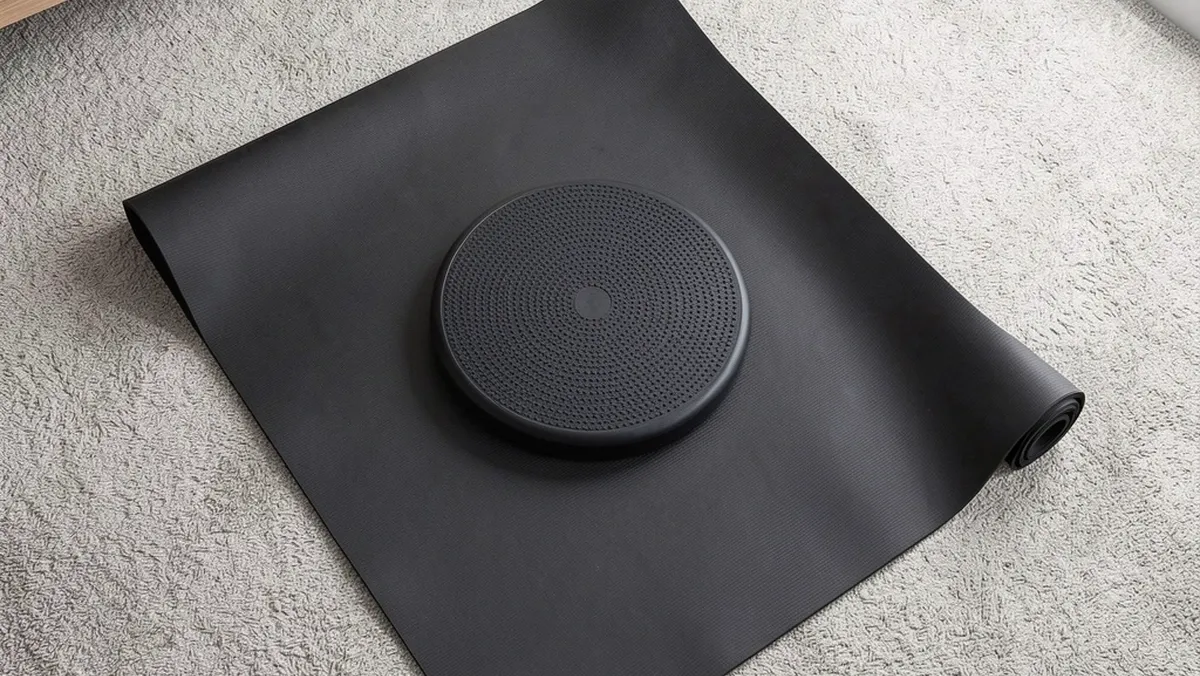
Even with low-pile carpet, you need a mat. A mat does three things. It protects the carpet from wear. It keeps the walking pad stable.
And it prevents the pad from overheating by allowing air to flow underneath.
Not all mats are the same. Here is a comparison of the most common types.
| Mat Type | Thickness | Best For | Drawbacks |
|---|---|---|---|
| Rubber mat | 3 to 6 mm | Low-pile carpet, heavy use | Can be heavy, may have a smell at first |
| PVC mat | 2 to 4 mm | Low-pile carpet, light use | Can slide on carpet, less durable |
| EVA foam mat | 5 to 10 mm | Medium-pile carpet with plywood | Compresses over time, not rigid enough alone |
| Plywood board | 12 to 18 mm | Medium or high-pile carpet | Heavy, needs to be cut to size |
For most people, a 5-millimeter rubber mat is the best choice. It is firm enough to stop the walking pad from sinking into the carpet. It does not compress much. And it stays in place.
You can find these at hardware stores or online. Look for a mat labeled as a treadmill mat or equipment mat.
If your carpet is medium-pile but you still want to use a walking pad, you need a rigid base. A 1/2-inch or 3/4-inch plywood board works well.
Cut it to the size of your walking pad plus a few inches on each side. Place the plywood on the carpet, then put the mat on top, then the walking pad. This creates a solid, level surface.
Step-by-Step Guide to Setting Up a Walking Pad on Carpet
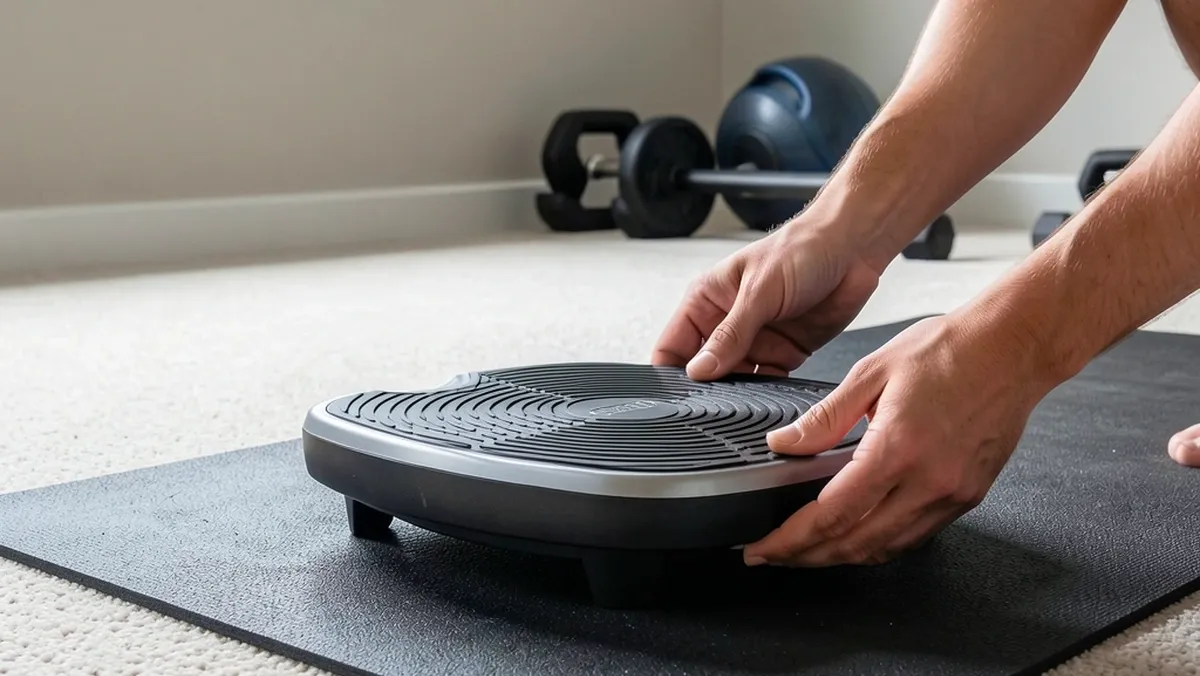
Follow these steps to set up your walking pad safely on carpet.
- Clear the area. Remove any furniture, rugs, or objects from the space where the walking pad will go.
- Vacuum the carpet. Loose fibers and dust can get caught in the walking pad belt. A clean carpet reduces this risk.
- Place the mat. Put your rubber mat or plywood board on the carpet. Make sure it is flat and does not have any wrinkles or bumps.
- Position the walking pad. Set the walking pad on top of the mat. Check the clearance underneath. You should see at least 5 millimeters of space between the belt and the carpet. If the belt touches the carpet, the carpet is too thick.
- Test at low speed. Start the walking pad at the slowest speed. Walk on it for a minute. Listen for any unusual noises. Feel for wobbling or slipping. If everything feels stable, you are good to go.
- Check regularly. Once a week, lift the walking pad and look at the mat. If the mat has shifted, reposition it. Also check the belt for any carpet fibers that may have gotten stuck.
Risks of Using a Walking Pad on Carpet Without Precautions
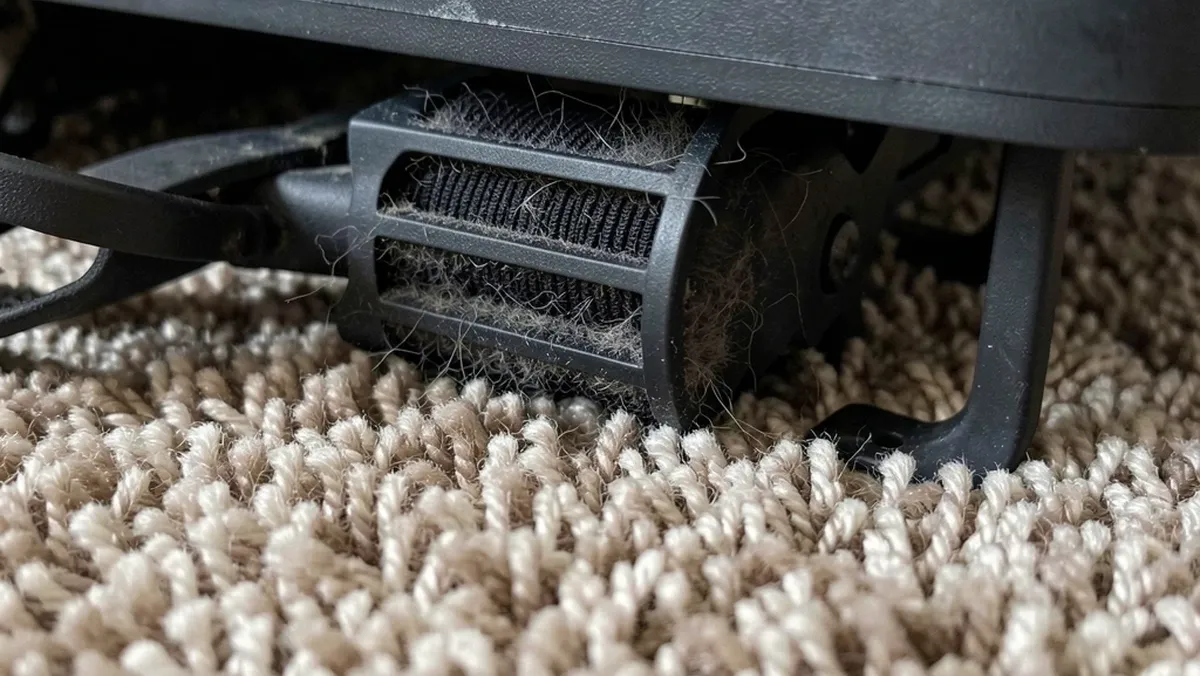
Skipping the mat or using thick carpet can cause several problems. Here are the most common ones.
Overheating. Walking pads have vents on the bottom for airflow. Thick carpet blocks these vents. The motor and electronics can overheat, which may cause the pad to shut down or get damaged permanently.
Belt damage. Carpet fibers can get caught in the belt mechanism. This creates friction and wear. Over time, the belt may start to slip or make grinding noises.
Replacing a belt is expensive and difficult.
Motor strain. When the walking pad sits on an uneven surface, the motor has to work harder to keep the belt moving. This extra strain can shorten the life of the motor.
Carpet indentations. The weight of the walking pad presses into the carpet. Over weeks and months, this creates permanent dents. You may not be able to fix these dents even after moving the pad.
Tripping hazard. If the walking pad wobbles or shifts during use, you could lose your balance and fall. This is especially dangerous if you are using the pad while working at a standing desk.
What to Do If Your Carpet Is Too Thick
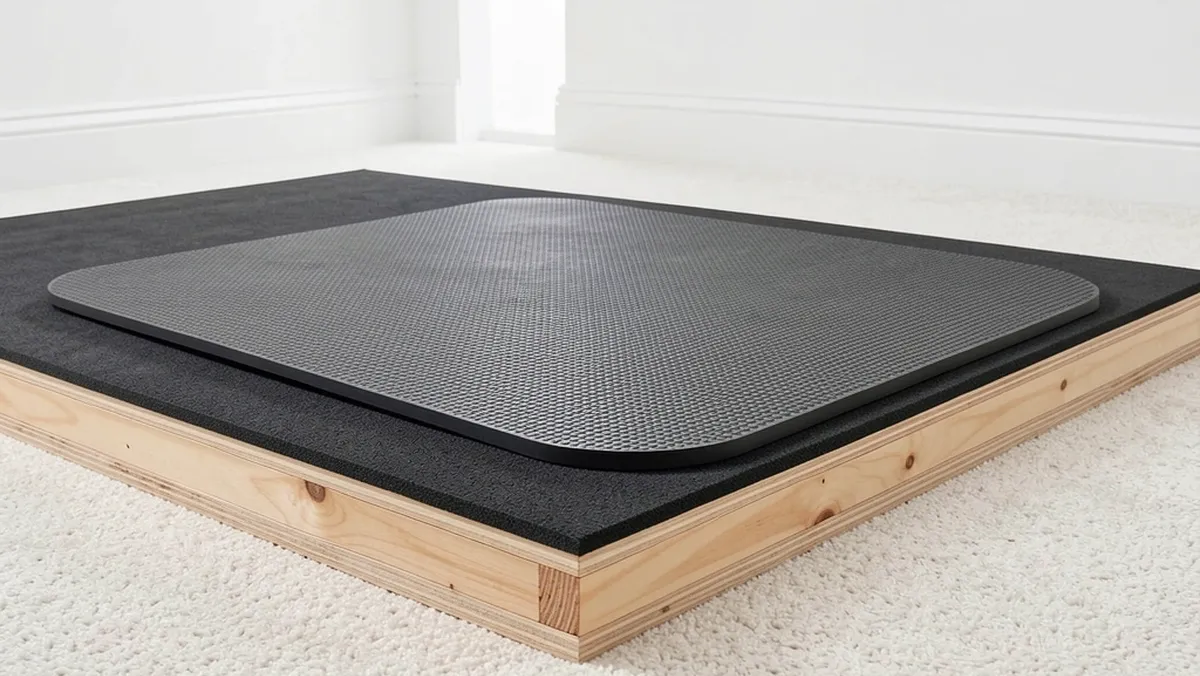
If your carpet is medium or high-pile, you still have options. You do not have to give up on using a walking pad. But you do need to make some changes.
Option 1: Use a plywood platform. This is the most common fix. Get a piece of 1/2-inch or 3/4-inch plywood. Cut it to the size of your walking pad plus a few inches on each side.
Place it on the carpet. Then put your mat on top of the plywood. Then put the walking pad on the mat. The plywood distributes the weight evenly and creates a flat surface.
Option 2: Remove a section of carpet. If you own your home and do not mind a permanent change, you can cut out a section of carpet and underlay where the walking pad will sit.
Replace it with a piece of laminate or vinyl flooring. This gives you a hard, stable surface.
Option 3: Use the walking pad only on a hard floor. If you have a hard floor in another room, move the walking pad there when you want to use it.
Many walking pads are light enough to carry from room to room. This is the simplest solution if you have the space.
Reddit Reality Check: What Other Users Have Tried
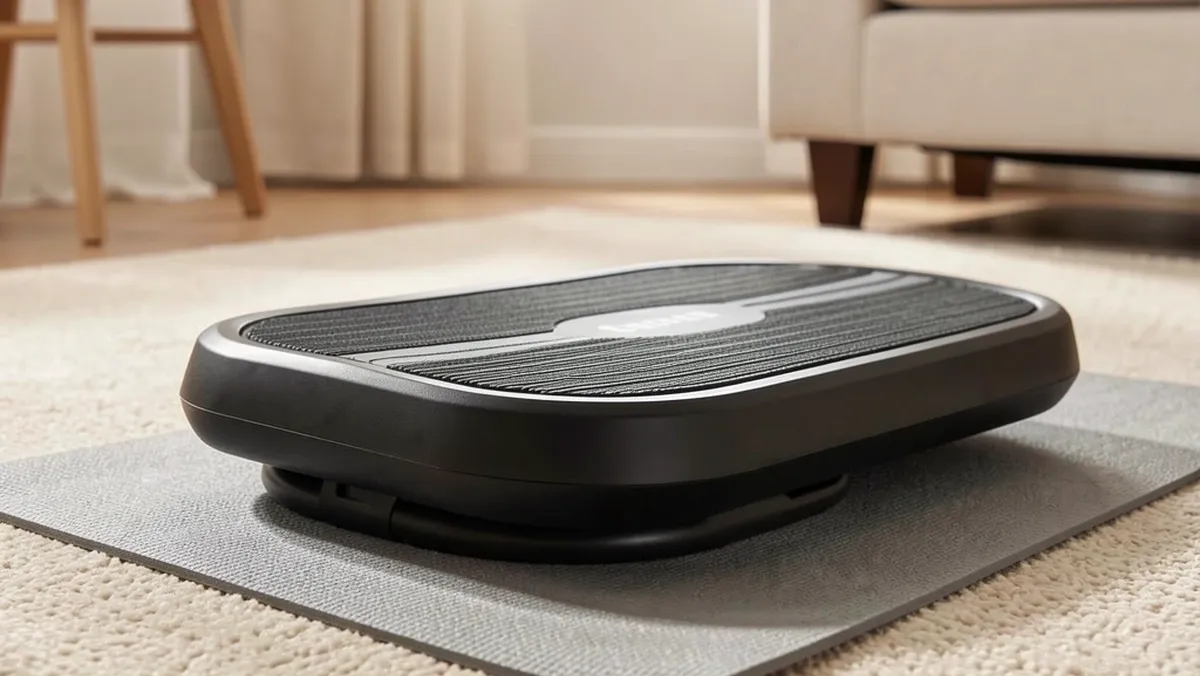
I have spent time reading what people on Reddit say about walking pads on carpet. Some of their ideas work. Some do not. Here is what I have learned.
Some users put a cheap yoga mat under their walking pad. This does not work well. Yoga mats are too soft. They compress under the weight of the pad, which means the pad still sinks into the carpet.
A yoga mat also does not provide enough airflow.
Other users stack two mats on top of each other. This can work if the bottom mat is rigid and the top mat is thin. But stacking mats can create an uneven surface if they are not perfectly aligned.
It is better to use one good mat.
A few users put the walking pad on a thick rug pad. Rug pads are designed to cushion rugs, not to support heavy equipment. They compress too much and do not protect the carpet or the walking pad.
The most successful Reddit users use a plywood board or a thick rubber stall mat. Stall mats are sold at farm supply stores. They are 1/2-inch thick, very dense, and do not compress.
They are heavy but work perfectly.
Expert Tip on Walking Pad Design
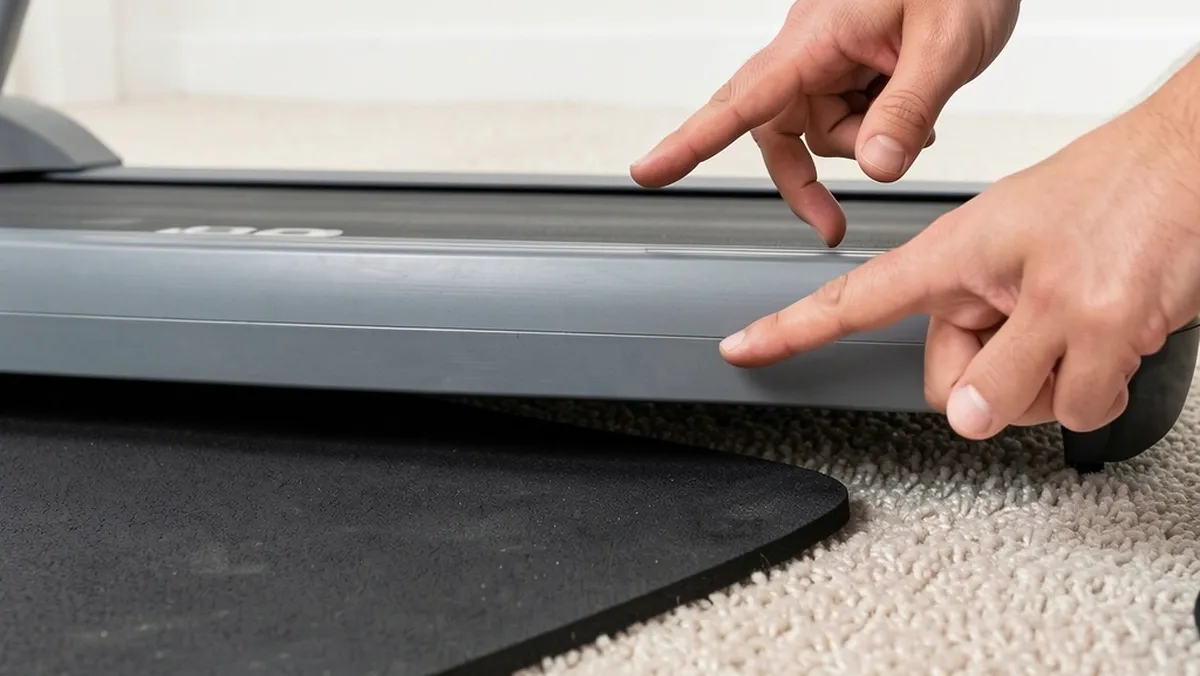
Not all walking pads are the same. Some have a lower frame than others. Before you buy a walking pad, check the ground clearance. This is the space between the bottom of the frame and the floor.
If the clearance is less than 10 millimeters, the pad is more likely to catch on carpet.
Under-desk treadmills with a low profile are especially problematic. They are designed to be slim so they fit under a desk. But that slim design means less clearance.
If you have carpet, look for a walking pad with at least 15 millimeters of ground clearance.
You can measure this yourself. Look at the side of the walking pad. You should see a gap between the belt and the bottom of the frame. If that gap is small, the pad will struggle on carpet.
Warranty Consideration
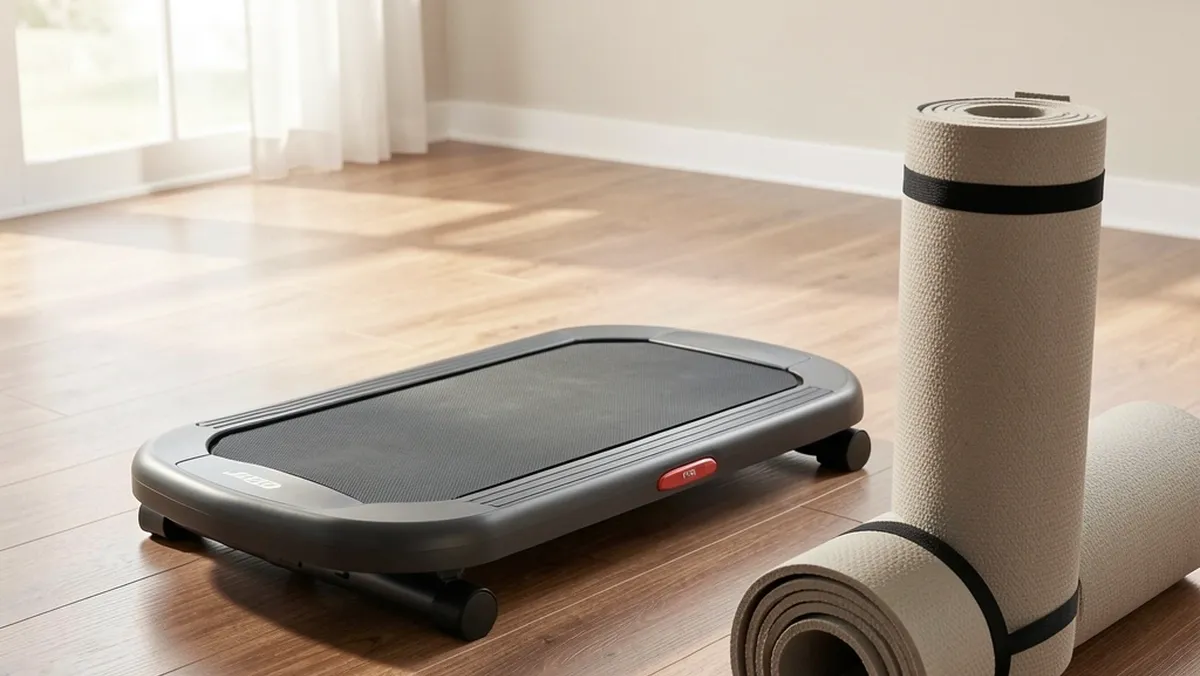
Before you set up your walking pad on carpet, check the warranty. Some manufacturers explicitly say that using the pad on carpet voids the warranty.
Others do not mention it but may deny a claim if they find carpet fibers inside the motor.
If your warranty says no carpet, you have two choices. Follow the setup steps in this guide and take the risk. Or use the pad only on a hard floor.
I recommend the second option if you want to keep your warranty intact.
If the warranty does not mention carpet, you are probably safe. But keep a record of your setup. Take a photo of the mat under the pad. This can help if you ever need to make a warranty claim.
Frequently Asked Questions
Can I use a walking pad on a carpet with a thick rubber underlay?
No. A thick rubber underlay adds too much cushion. The walking pad will sink into it, causing instability and overheating. Stick to low-pile carpet without extra padding underneath.
Will a walking pad leave permanent dents in my carpet?
Yes, if you use it without a mat. The weight of the pad presses into the carpet fibers. Over time, this creates dents that may not go away. A rigid mat or plywood board prevents this.
Can I put a walking pad on a low-pile carpet without any mat?
I do not recommend it. Even on low-pile carpet, a mat protects the carpet from wear and allows airflow. Without a mat, the walking pad may overheat and the carpet may get damaged.
How do I clean the belt if carpet fibers get inside?
Unplug the walking pad. Use a vacuum with a brush attachment to clean the belt and the area around the motor. If fibers are stuck, use a pair of tweezers to pull them out gently.
Do not use water or cleaning sprays.
Is it safe to use a walking pad on a carpeted room that has a door threshold?
It depends on the height of the threshold. If the threshold is higher than the walking pad, you may trip when stepping off the pad.
Place the pad far enough from the threshold so you have room to step off safely.
Should I place the walking pad directly on a thin rug that is already on carpet?
No. A rug on top of carpet adds another layer of softness. This makes the surface even more unstable. Remove the rug and put the walking pad directly on the carpet with a mat underneath.